 Zerebro
 Bitcoin
 Quantus
 Pearl
Pearl Starknet
 ZKsync
 NEAR Protocol
Основные сведения
- XRP ETFs стартовали с большим притоком в $164 млн. в первый день в четыре фонда.
- Шок от предложения нарастает: за один день из оборота было изъято 263 миллиона XRP.
- Будущий рост выглядит вполне вероятным, поскольку все больше эмитентов готовятся к запуску, а аналитики прогнозируют, что миллиардные притоки могут поднять цены.
24 ноября 2025 года на NYSE Arca стартовали два новых американских спотовых ETF, присоединившись к двум существующим фондам. Инвесторы влили $164 миллиона за один день, что стало вторым по величине притоком средств для XRP ETF.
Этот всплеск свидетельствует о растущем институциональном спросе и сокращающемся предложении токенов XRP. С четырьмя действующими фондами и еще несколькими на подходе, XRP теперь стоит в одном ряду с Bitcoin и Ethereum в регулируемых инвестиционных продуктах.
Два новых гиганта присоединились к рынку со своими XRP ETF
Компания Grayscale запустила свой XRP ETF под тикером GXRP. Он был преобразован из существующей трастовой структуры. В первый день работы GXRP привлек $67,36 млн. чистого притока. Фонд взимает 0% комиссионных в течение первых трех месяцев или пока активы не достигнут $1 млрд, затем комиссия составит 0,39%.
Компания Franklin Templeton представила свой ETF XRP под тикером XRPZ. Это совершенно новый ETF с физическим обеспечением. В первый день его работы был зафиксирован приток средств в размере 62,59 млн. долларов. Franklin Templeton установил комиссию на уровне 0,19%, что является одним из самых низких показателей в данной категории.
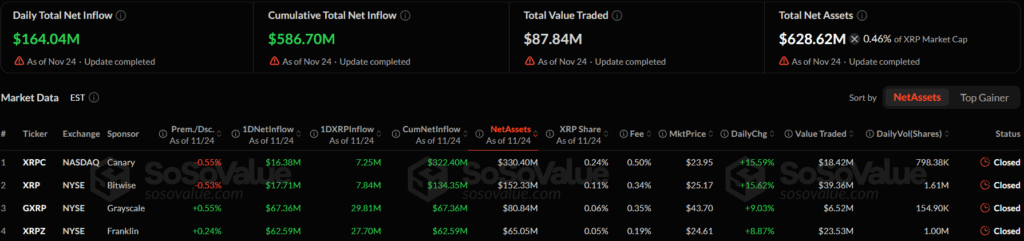
На два существующих ETF также наблюдался высокий спрос. XRPI от Bitwise пополнился на 17,71 млн. долларов. XRPC от Canary привлек $16,38 млн. Вместе эти четыре фонда достигли совокупного притока в $164 миллиона 24 ноября.
Общий объем активов под управлением всех американских XRP ETF сейчас составляет $628,62 млн. Совокупный чистый приток средств с момента первого запуска две недели назад достиг $586,70 млн.
Это был исторический момент. Теперь XRP ETFs – это регулируемые, налогоэффективные продукты, доступные через традиционные брокерские счета. Инвесторы могут выбирать между различными спонсорами, структурами комиссионных и профилями ликвидности.
Шок предложения и влияние на рынок
Каждый доллар, вложенный в эти ETF, заставляет эмитентов покупать и хранить в хранилище реальные XRP. Только в день запуска из обращения было изъято около 263 миллионов XRP.
Аналитик Штайнграбер сравнил XRP ETF с Bitcoin ETF. Он сказал, что у Биткойн-фондов были дни с притоком в $1 млрд. Если XRP ETF вырастут до 12 фондов, то день в 1 млрд. долларов будет означать примерно 83 млн. долларов на фонд. Он считает, что такой уровень спроса может быстро изменить рынок.
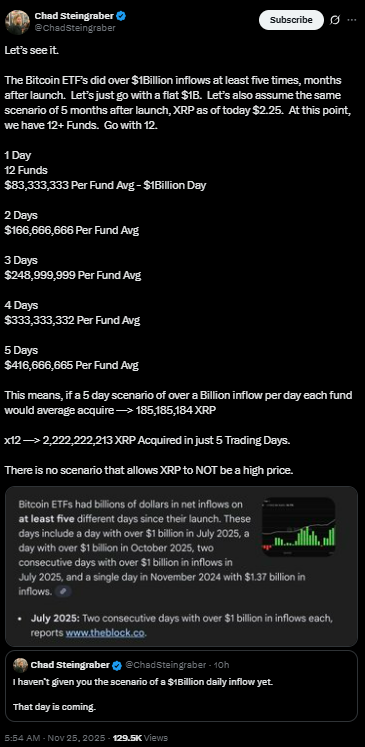
По его прогнозам, пять дней подряд миллиардных притоков могут поглотить более 2,2 миллиардов XRP. Это устранит огромное количество предложения менее чем за неделю. Штайнграбер добавил, что такое давление может резко поднять цену XRP. Инвесторы видят в этом признак сильного будущего роста.
Цена XRP отразила это волнение. 25 ноября за 24 часа она выросла на 8,5% и достигла отметки $2,26. Этот показатель опередил Биткойн, который вырос на 1,6%, и Ethereum, который подорожал на 2,1%. На момент публикации в прессе он торговался на уровне $2,22.
Более широкий контекст и будущее XRP ETFs
Урегулированные ранее в 2025 году проблемы Ripple с Комиссией по ценным бумагам и биржам открыли путь для XRP ETF. Макроэкономические условия также поддерживают рост, а Федеральная резервная система США сигнализирует о возможном снижении ставки в декабре.
На американском рынке сейчас представлены четыре разных ETF на XRP, каждый из которых обладает уникальными характеристиками. GXRP от Grayscale предоставляет временное преимущество благодаря 0%-ной комиссии в течение первых трех месяцев. XRPZ от Franklin Templeton отличается самой низкой постоянной комиссией – всего 0,19%.
XRPI от Bitwise позиционируется как вариант среднего уровня с сильными ранними притоками. В то же время, XRPC от Canary имеет все шансы стать первым участником рынка. Вместе они предоставляют инвесторам разнообразные варианты для регулируемой экспозиции XRP.
Скоро появятся новые XRP ETF. 21Shares получил одобрение SEC, а WisdomTree и CoinShares готовятся к запуску. Быстрое расширение доказывает, что XRP ETFs становятся одним из самых быстрорастущих криптоинвестиционных продуктов 2025 года.