 COGE COIN
 Harmony
 Pudgy Penguins
 Bitcoin
 Akedo
 Injective
 Lighter

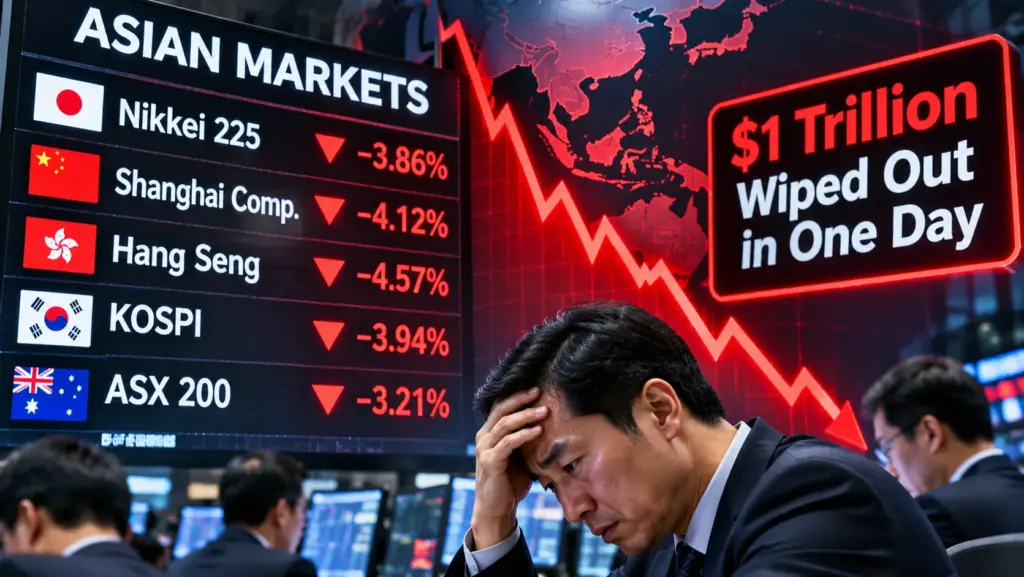
Asian stock market losses deepened on Friday, Nov. 6, as semiconductor shares plunged across South Korea, Japan and Taiwan. South Korea briefly halted trading after the KOSPI fell more than 8% intraday. Bitcoin also traded below $76,000 during the broader sell-off in risk-sensitive assets.
The Asian stock market recorded different intraday and closing losses. The KOSPI recovered part of its losses and finished 6.02% lower. Japan’s Nikkei 225 closed down 5.96%, while Taiwan’s TAIEX declined 4.51%. The declines followed a sharp Wall Street retreat on Nov. 5, when investors reassessed artificial intelligence infrastructure spending.
Asian Stock Market Loses $1.2 Trillion as AI Sell-Off Spreads
The headline figure is above $1 trillion, and several reports put the regional loss closer to $1.2 trillion. Most of the Asian stock market damage came from chip and technology names. These were the same companies that powered the rally earlier this year.
Asian stocks were already under pressure before Friday. South Korea’s main index sat roughly 45% below its June record, Taiwan was about 24% off its October peak and Japan was around 21% below its June high.
Friday’s crash sped up a correction that was already underway in the Asian stock market rather than starting a fresh one.
Money moved quickly toward safety. Asian investors bought government bonds, and the Japanese yen, Swiss franc and US dollar all drew safe-haven demand.
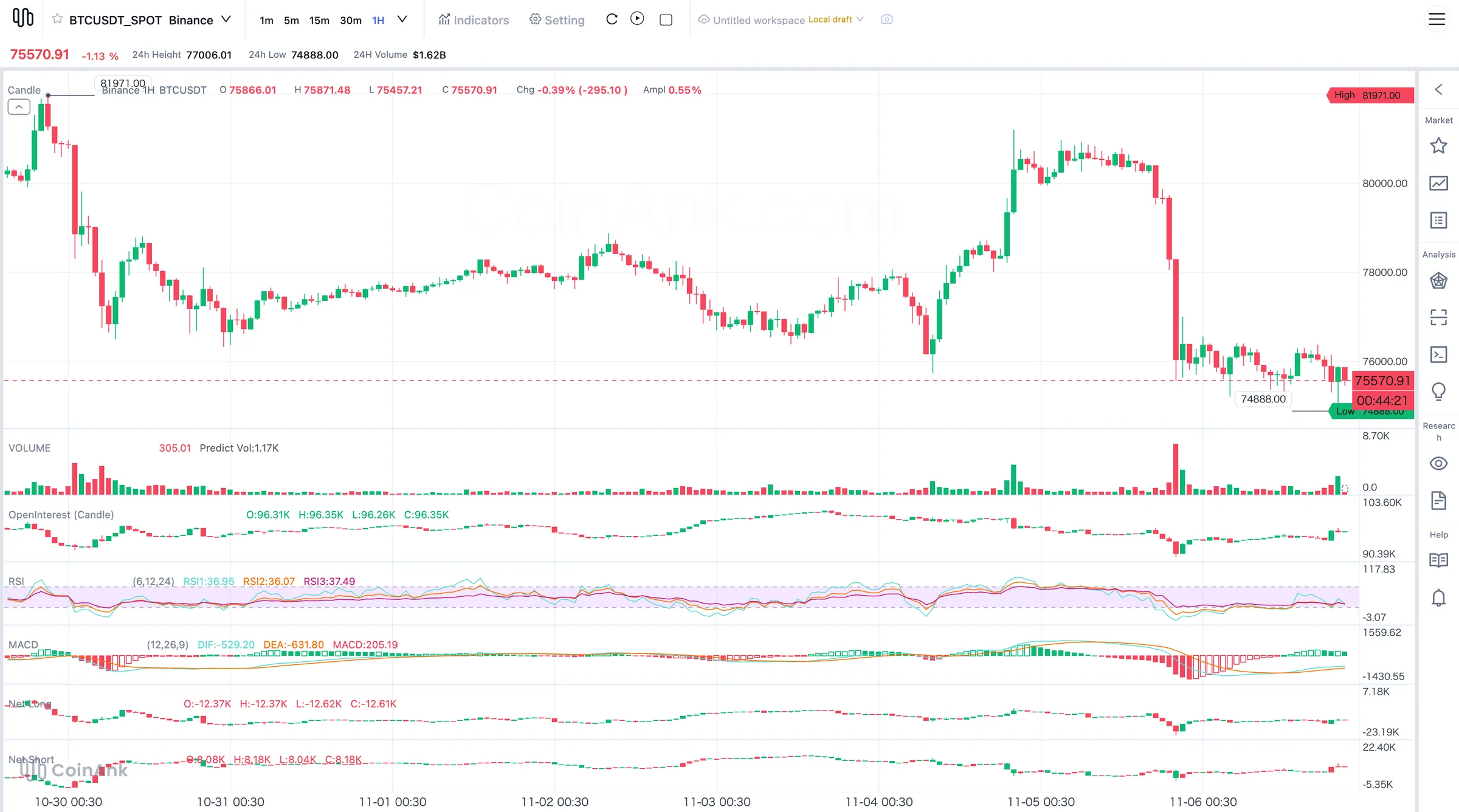
Crypto felt the pressure too. Bitcoin dropped below $76,000 without any crypto-specific bad news.
Why Japan, South Korea and Taiwan Suffered the Biggest Asian Stock Market Losses
These three markets sit at the center of the global semiconductor supply chain, so they had the most to lose when the AI trade cracked.
South Korea was hit hardest. The KOSPI plunged more than 8% intraday, which tripped a circuit breaker and halted trading for 20 minutes.
SK Hynix, a major supplier of the high-bandwidth memory used in AI computing, fell around 13% at one point. Samsung Electronics dropped about 10%.
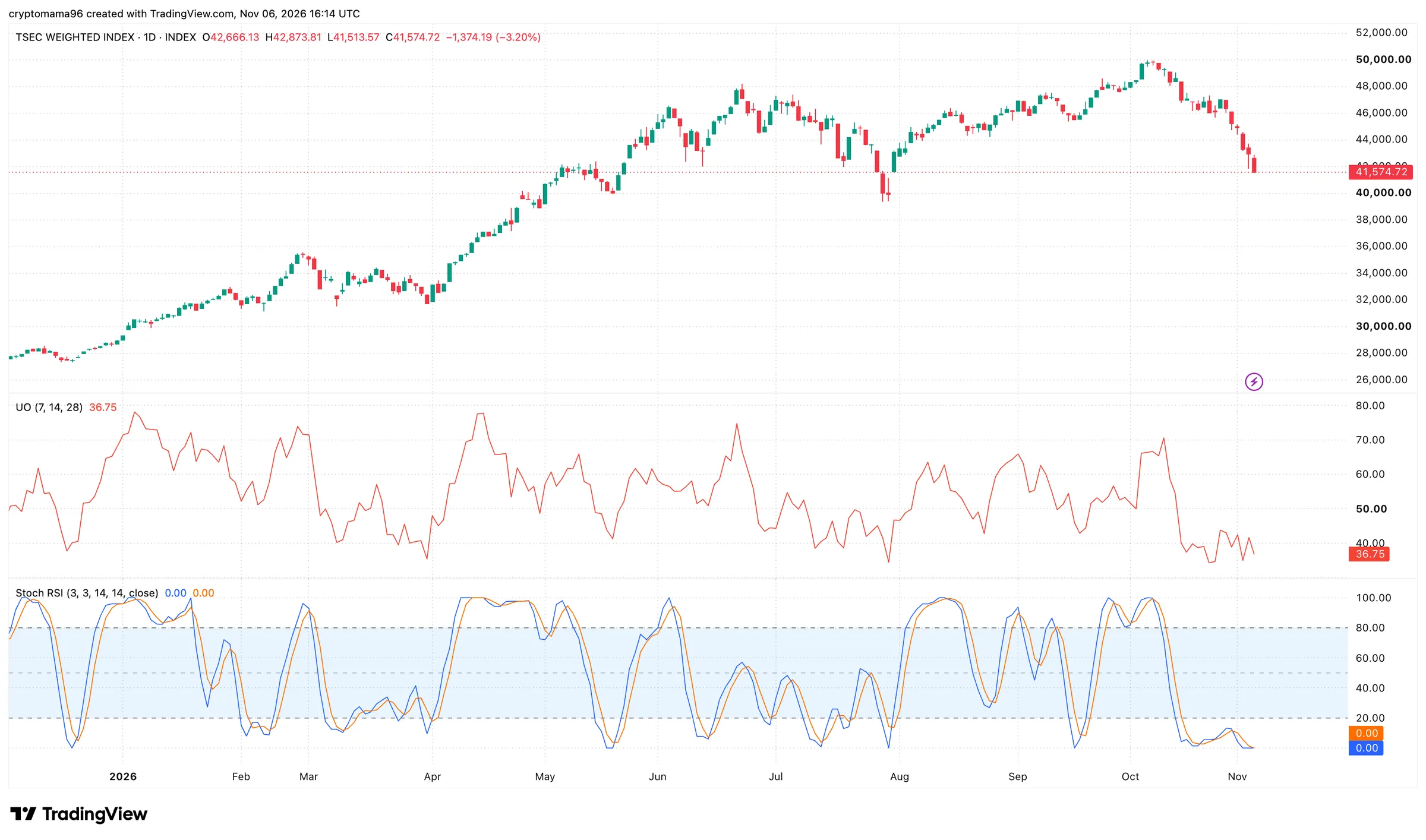
In Taiwan, the TAIEX fell as much as 8% to 9% before buyers stepped in. TSMC slid 8.5% intraday and closed about 4.7% lower. The index finished the week down 12.2%, its biggest weekly drop since 1991.
Japan’s Nikkei 225 fell about 6%, its worst day since April 2025, and sat more than 20% below its June peak, which puts it in bear-market territory.
Advantest lost around 12%, SoftBank Group and Kioxia each fell about 11%, and Tokyo Electron dropped nearly 9%.
China was the calmer corner of the Asian stock market. The CSI 300 was down about 1.5% by midday, the Shanghai Composite slipped around 1.1% and Hong Kong’s Hang Seng fell less than 2%.
State-linked investors appeared to step in and help mainland shares recover some of their early losses.
The trigger came from New York on Thursday. The Nasdaq Composite plunged 5.5%, the S&P 500 dropped 4.4% and the Dow lost 3.4%. More than $3 trillion was wiped from S&P 500 companies in one session.
The selling reached Asia overnight. Asian stocks tied to AI hardware make the memory chips, processors and testing equipment that US tech giants buy for their data centers.
How US Midterm Elections Added Fresh Pressure to AI Stocks
Politics poured fuel on the fire. Democrats made substantial gains in the US midterm elections, and traders quickly priced in tougher scrutiny of AI infrastructure and data center development.
The fear is that new rules could slow data center construction, raise electricity and water costs and add compliance spending for tech firms.
Any of those would cut into expected chip demand, and that hits the Asian stock market harder than most.
US tech is the first thing to watch now after the bloodbath. If Nvidia, AMD and Broadcom stabilize, Asian stocks could recover some of Friday’s losses.
The chip group comes next, especially TSMC, SK Hynix, Samsung, Tokyo Electron and Advantest. Their moves will show whether investors are dumping the AI trade or just trimming crowded positions.
For crypto traders, Bitcoin’s reaction matters most. A BTC bounce while equities stay weak would hint at decoupling. Another drop alongside the Nasdaq would confirm that crypto still moves with global liquidity.
This article provides market information, not investment advice. Stock and cryptocurrency prices can move sharply, and past performance does not predict future returns.