 ni hao cat
 AudaCity
 Bitcoin
 Pearl
 XRP
 Seppuku
 Pudgy Penguins

Key Insights:
- Nvidia stock plunged over 13% after Jensen Huang resigned, before recovering to $165.19.
- Colette Kress became interim CEO, while Harvey C. Jones took over as Nvidia’s first board chair.
- Nvidia’s leadership change comes ahead of its November 17 earnings and a $500 billion AI financing plan.
Nvidia stock plunged more than 10% on Thursday, November 12, after CEO Jensen Huang resigned from the company. NVDA shares fell over 13% in early trading before recovering part of their losses.
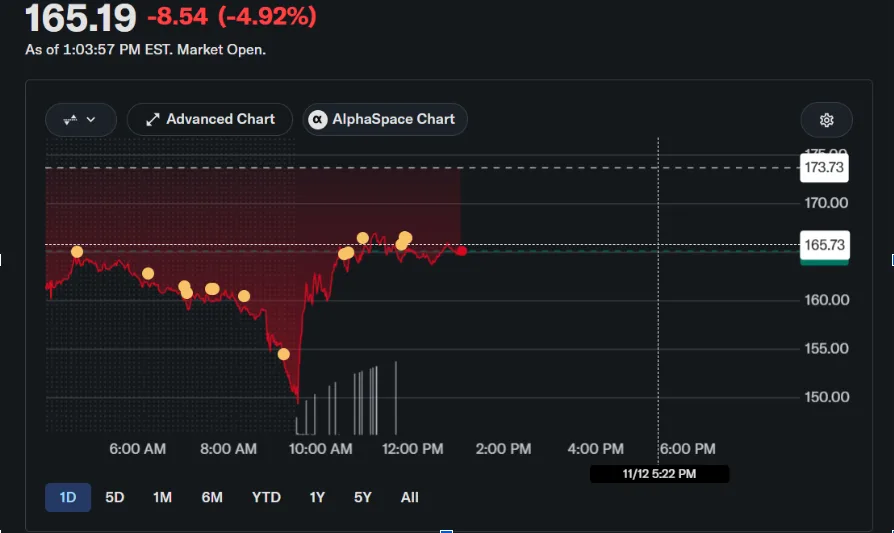
Nvidia stock traded at $165.19 around 1:03 p.m. EST, down 4.92% from the previous close. Nvidia appointed Chief Financial Officer Colette Kress as interim CEO while its board searches for a permanent replacement.
Nvidia Stock Recovers After Early 13% Crash
Nvidia shares came under heavy selling pressure following the announcement of Huang’s departure. The stock dropped sharply during early trading, extending losses that began earlier in the week.
NVDA stock briefly fell toward $150 before recovering above $160. By 1:03 p.m. EST, shares had reached $165, representing a decline of $8.54 for the session.
The intraday chart showed Nvidia stock recovering from its morning low before moving sideways around $165. The rebound reduced the earlier losses, although shares remained below Wednesday’s closing price of $173.73.
Nvidia’s leadership change also affected other technology stocks. Shares of AMD and Broadcom advanced as investors reassessed the competitive position of major AI chipmakers.
Colette Kress Takes Over as Nvidia Interim CEO
Nvidia’s board accepted Huang’s resignation as president, CEO and director, effective immediately. Huang co-founded the company in 1993 and spent 33 years leading its expansion from graphics processors into artificial intelligence computing.
Colette Kress will now oversee Nvidia while continuing her duties as chief financial officer. Kress joined Nvidia in September 2013 after holding senior finance positions at Cisco and Microsoft. The board plans to review both internal and external candidates before choosing a permanent chief executive.
Directors also appointed Harvey C. Jones as Nvidia’s first board chair. Jones has served on Nvidia’s board since 1993 and previously held leadership positions at Synopsys. The company said its operations, customer commitments and product roadmap will continue under the existing executive team.
Nvidia CEO Departure Follows Board Investigation
Huang’s resignation followed reports concerning his personal relationships and questions about corporate governance. Nvidia’s board opened an investigation after reports linked him to a Chinese businesswoman whom U.S. authorities suspect of intelligence activity.
Reports also described a separate relationship involving a senior Nvidia employee. Huang acknowledged marital infidelity in a message to employees earlier in the week. The company did not specify a reason for his resignation in its November 12 announcement.
The allegations also drew attention from U.S. lawmakers examining advanced chip exports and company security procedures. China has denied the espionage allegations. Authorities have not publicly established that Huang knowingly shared confidential information.
Nvidia Stock Outlook: $500 Billion AI Financing Plans in Focus
Nvidia’s leadership transition occurred during a major expansion of artificial intelligence infrastructure financing.
On Aug. 10, the company announced strategic partnerships with six financial institutions. Those partners included Apollo, BlackRock, Blackstone, Brookfield, Goldman Sachs and KKR.
The initiative aims to mobilize over $500 billion in third-party capital for AI infrastructure over time.
Nvidia said the financing platforms would support customers building data centers and deploying accelerated computing systems. The partners signed memorandums of understanding outlining proposed financing structures.
However, the announced target does not represent fully committed or deployed capital. Nvidia also did not identify final investment amounts for each financial institution.
Consequently, the initiative’s execution remains dependent on financing terms, customer demand and project economics.
The company has not announced that the partnerships ended following Huang’s resignation.
Investors will also monitor Nvidia’s next financial results. The company scheduled its third-quarter fiscal 2027 earnings announcement for Nov. 17.
Results will arrive at approximately 1:20 p.m. Pacific Time, followed by a conference call at 2 p.m.
The reporting period ended Oct. 25, before Huang’s departure. The earnings announcement will provide updated financial results, while management may address questions about operational continuity.
For Nvidia stock, the immediate considerations involve leadership stability, earnings guidance and progress on AI infrastructure financing.
This article provides financial and market information, not investment or legal advice. Stock prices can fluctuate sharply, while planned financing arrangements may not proceed as proposed. Allegations involving individuals do not establish wrongdoing.