
 Bitcoin
 Lighter
 Seeker
 Aster
 Solana
 Pearl
 Venice Token


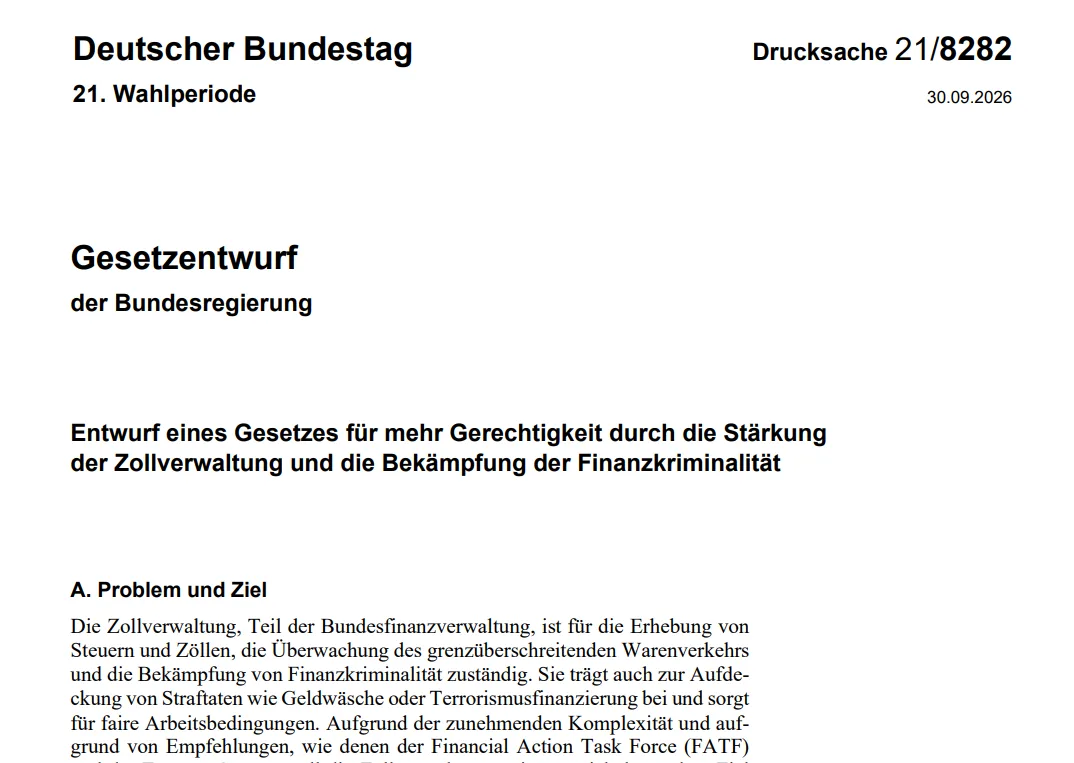
Germany crypto regulation moved closer to implementation after Bundestag lawmakers approved expanded asset-seizure powers on Nov. 12. The legislation would allow customs authorities to investigate and temporarily seize cryptocurrency holdings of questionable lawful origin.
The measures form part of a wider effort against money laundering and organized financial crime. They would generally take effect on Jan. 1, 2027, subject to legislative completion.
However, the legislation does not authorize unrestricted cryptocurrency confiscation. Authorities would face legal conditions, time limits, and judicial oversight.
What Does Germany Crypto Law Do?
The law allows customs to temporarily seize assets once they are suspected of being from illicit sources. This means law enforcement does not need to wait for court orders before seizing any suspicious assets.
Although the law is not limited to crypto, it specifically mentions cryptocurrency, as defined by the European Union’s Market, as one of the affected assets. This effectively enables crypto seizure whenever the origin is doubtful.
Under the crypto regulation, law enforcement will not need to initiate criminal action before temporarily seizing such assets.
However, there is a 30-day limit for holding seized crypto assets without criminal prosecution. Any continued crypto seizure after 30 days requires an extension by a finance court for up to 150 days.
With this, law enforcement authorities in the country have up to 180 days to hold crypto assets before commencing criminal proceedings or releasing them.
Meanwhile, there is a financial threshold for the seizure. For general assets, which likely include crypto, the threshold is over €100,000, but registerable assets such as vehicles and real estate have a lower threshold of €50,000.
New Law to Tackle Crypto Money Laundering
Unsurprisingly, one of the core reasons behind the law is to address financial crime. According to SPD legislator Ingo Vogel, the law is the biggest structural reform to customs in years, as it allows the targeting of the proceeds of crime.
He noted that the core of this law is to prevent criminally acquired assets from enjoying protection of fundamental rights.
“This instrument is used when someone has considerable financial circumstances whose legal origin is not plausible at all, but one is not yet at the point where classic criminal proceedings can be initiated,” the statement noted.
Interestingly, the powers under the crypto regulation do not extend to the permanent seizure of crypto. Confiscation of crypto assets in this manner requires a court order.
Meanwhile, the German crypto law will not become effective until January 1, 2027. For that to happen, it will also require the Bundesrat, which is the upper house representing the 16 German states, to approve the legislation
While the government wants the cryptocurrency regulation to address money laundering, it also sees it as a way to raise revenue. The government noted that it could generate up to €308 million in 2028 from the regulation.
This report provides general legal and financial information, not legal or investment advice. Cryptocurrency holders should consult a qualified legal professional regarding asset-seizure risks and applicable German law.