Dacity Coin
 Pudgy Penguins
 Pearl
Pearl Pump.fun
 Bitcoin
 Monad
Monad Injective

Key Insights:
- Bitcoin’s smaller market size makes it more sensitive to shifts compared to gold.
- Gold’s massive market cap reflects its stability, while Bitcoin shows higher growth potential.
- Despite volatility, Bitcoin’s demand remains resilient amid economic uncertainty.
Bitcoin and gold have increasingly become subjects of debate, especially in terms of their roles as assets and potential stores of value. While Bitcoin has experienced remarkable growth, its market size remains significantly smaller than that of gold.
As analysts highlight, this disparity points to the unique opportunities and risks associated with each asset. The contrast between Bitcoin’s potential for rapid growth and gold’s established stability becomes more apparent when examining their respective market sizes and performances.
Gold’s Immense Market and Stability
Gold continues to show substantial growth, with its market capitalization recently increasing by a remarkable $1 trillion in just one day. According to crypto market watcher Belle, this surge represents almost the entire value of Bitcoin. As of now, the total market cap of gold stands at approximately $22.535 trillion. This scale underscores the deep liquidity and stability inherent in traditional assets like gold, compared to newer markets such as Bitcoin.
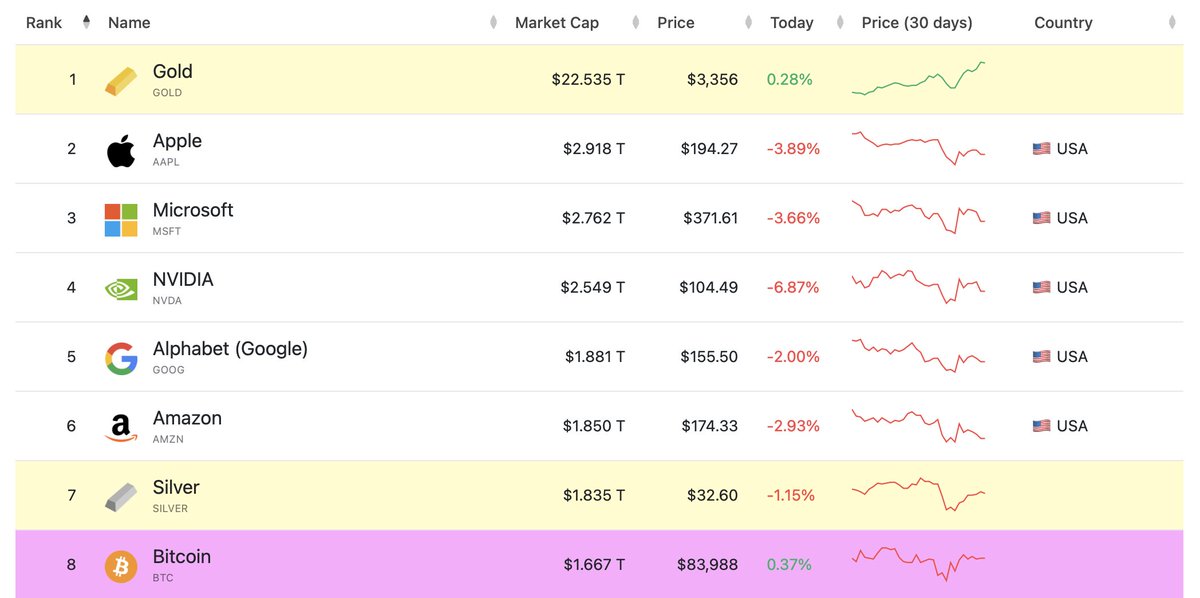
Notably, such a large increase in gold’s market cap reflects the asset’s resilience and the massive size of the traditional finance markets. In comparison, Bitcoin’s current market capitalization is about $1.667 trillion, emphasizing the stark size difference between the two. While gold’s market is vast enough to absorb significant shifts without major disruptions, Bitcoin remains much more sensitive to market fluctuations, making even modest changes in its market cap potentially impactful on its price.
Bitcoin and Gold Resilience in Global Macro Shifts
Both Bitcoin and gold have held firm amid recent global financial headwinds. Glassnode reports that hard assets are outperforming amid economic shifts, with gold hitting new all-time highs and Bitcoin maintaining a price floor above $80,000.
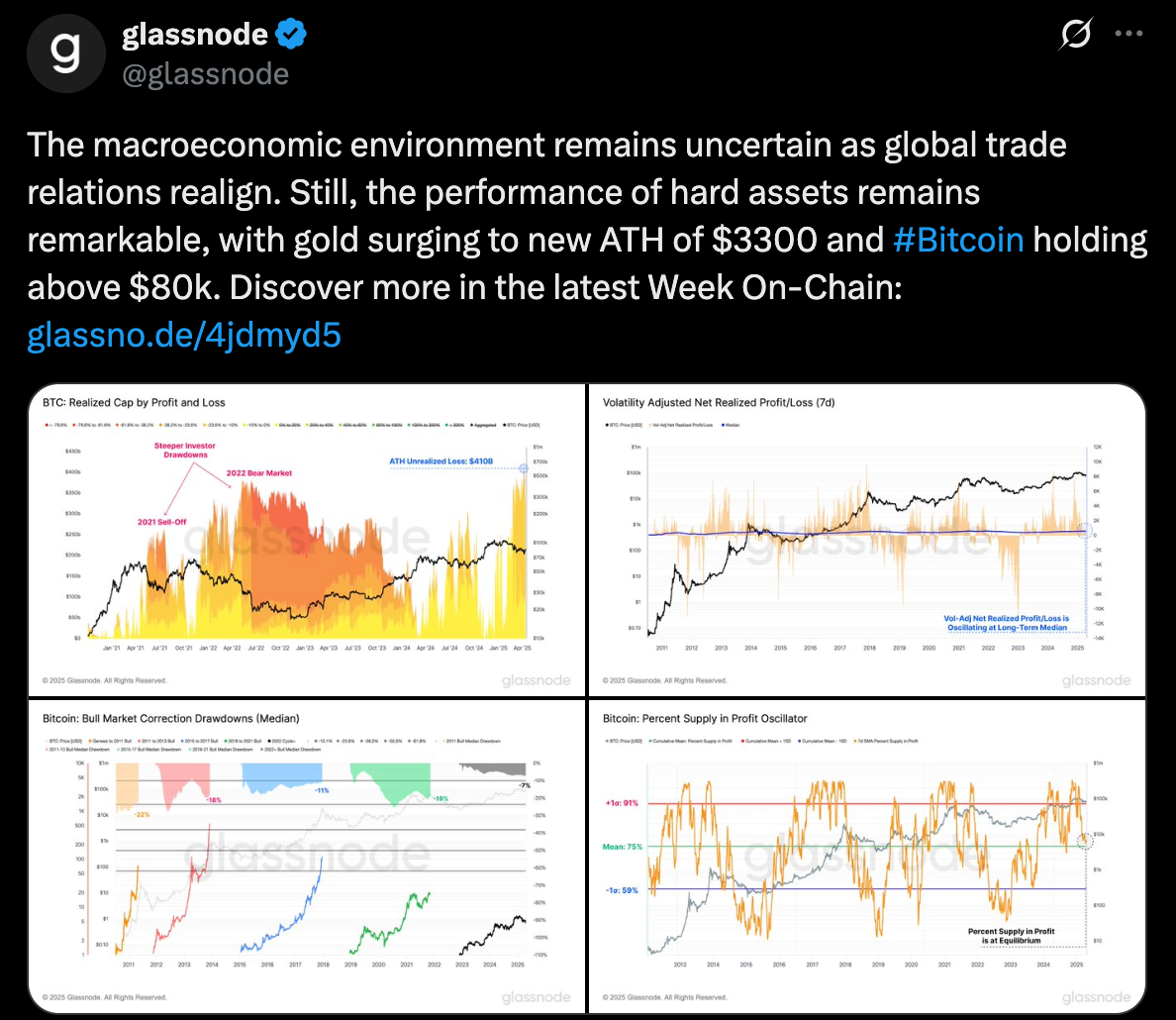
While Bitcoin’s liquidity has tightened and stablecoin inflows have slowed, the median drawdown of this market cycle remains milder than previous ones. This suggests Bitcoin’s buyer base — especially long-term holders — has grown more resilient over time.
Even as many short-term holders face unrealized losses, long-term participants remain largely in profit. This divergence in market behavior reinforces Bitcoin’s evolution as a maturing asset class.
Bitcoin Growing Role in Financial Infrastructure
According to Timothy Kotzman, Bitcoin is increasingly being considered for inclusion in corporate and government treasuries. While gold still dominates as the primary store of value in legacy systems, Bitcoin is carving out a new niche in global finance.
Its track record of outperforming traditional assets during periods of high inflation and monetary debasement has elevated its profile, particularly among institutional investors. Though still volatile, Bitcoin’s ability to rally under pressure suggests it is no longer a fringe asset but a relevant component of modern portfolio strategies.
Disclaimer
This article is for informational purposes only and does not provide any financial, investment, or other advice. The author or any people mentioned in this article are not responsible for any financial loss that may occur from investing in or trading. Please do your research before making any financial decisions.