Zylo Ecosystem
 Walrus
 Pudgy Penguins
 Pearl
Pearl Bitcoin
 Aerodrome Finance
 Quantus

Key Insights:
- Binance consistently maintains a reserve ratio above 100%, ensuring full backing for customer deposits and publishing monthly reports.
- OKX and Bybit also show strong performances, maintaining reserve ratios above 100%.
- Coinbase’s failure to release Proof of Reserves reports undermines its transparency and could erode user trust in the platform.
Binance continued to set the standard for Proof of Reserves (PoR) transparency in the crypto industry. The exchange maintained a reserve ratio above 100% throughout the last twelve months, with values ranging from 100% to 106%. This indicated that Binance held more assets than necessary to cover customer deposits.
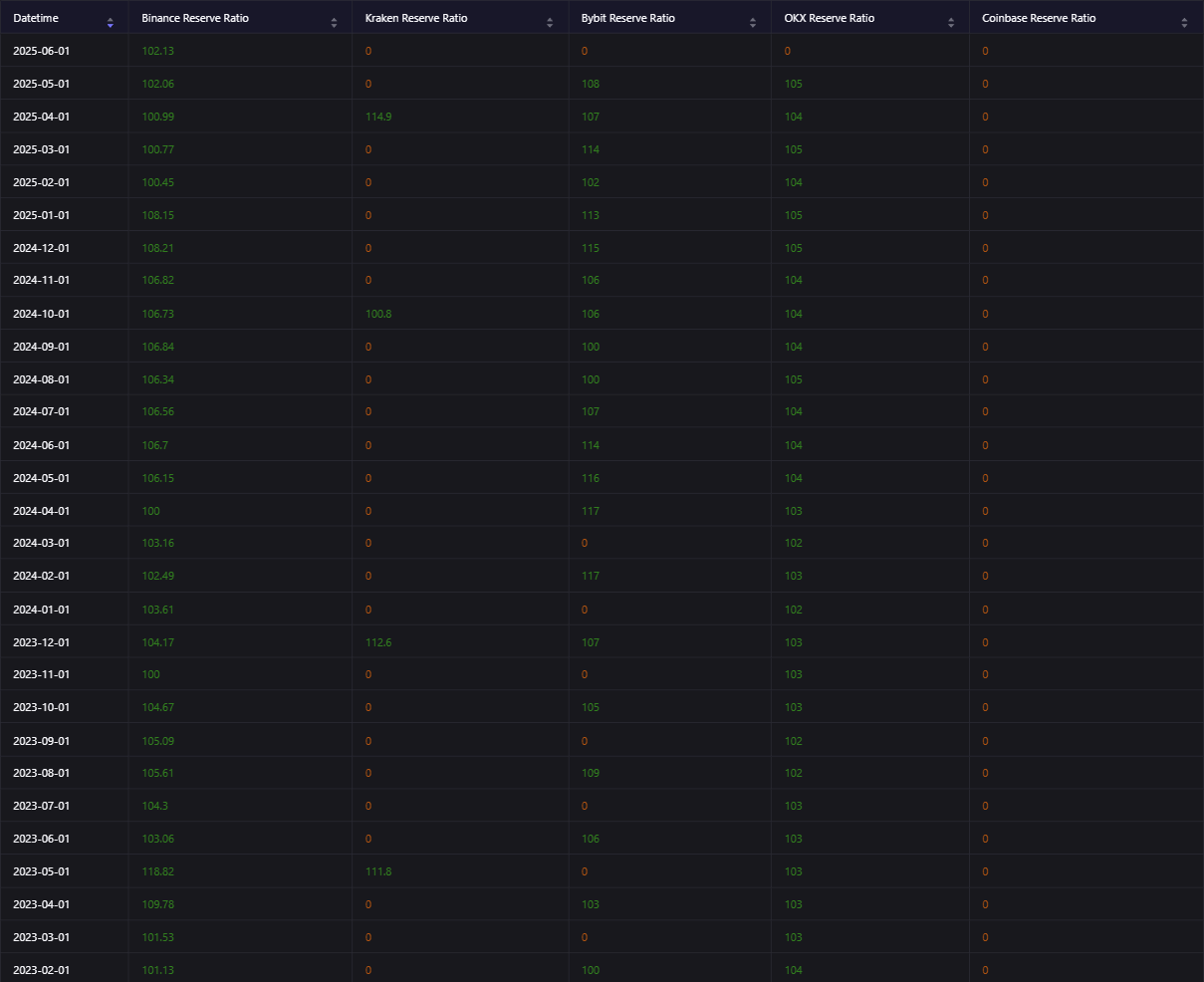
Between March 2024 and June 2025, Binance published reserve reports consistently on a monthly basis. These timely updates strengthened the perception that Binance operated with solvency and accountability. Regular disclosures allowed users to verify backing for their funds, reducing counterparty risk and increasing trust in the platform.
OKX, Bybit, Kraken Post Good Reserve Stats
The Proof of Reserves performance of OKX is also high as the reserve ratio of the platform has been over 100%. Its ratio is a little lower than that of BNB. However, the reserve ratio at OKX varies between 102-105%, which is also indicative that the exchange is covering the customer deposits. OKX has also undertaken the responsibility of submitting a monthly report and this enhances its market credibility as well.
Bybit has been giving robust Proof of Reserves, and its reserve ratio has been above 105 % to 115 %. The exchange also recently started reporting once a month instead of once every two months, which is an improvement on transparency and will allow users to be aware on what happened to their funds. The reserve ratio of Bybit is marginally less predictable compared to Binance and OKX. However, the frequency of reporting has risen as a positive development towards the aspect of transparency.
The reserve ratio held by Kraken has remained greater than 100%. However, reporting of the exchange has not been uniform as in the case with competitors. Since November 2022, Kraken produces not more than 4 Proof of Reserves reports and they show massive differences in update intervals. Even though a reserve ratio in the exchange is rather good, the fact that it is not regularly updated may contribute to the lack of trust on the side of the users.
Coinbase’s Presents no PoR Report
Coinbase is also outstanding in not presenting Proof of Reserves reports. In comparison with its rivals, the exchange has released no report whatsoever. Lack of reserve reporting at Coinbase may weaken trust of users in an industry that is characterized by trust and transparency.
The Proof of Reserves of the top cryptocurrency exchanges (Binance, OKX, Bybit, Kraken, and Coinbase) provides us with some useful information on the financial stability and the level of openness of the exchanges. However, Binance is always ahead of the game with Reserve Ratio greater than 100 % in all latest reports. The range of its Reserve Ratios is between 100 and 106% between early 2024 and mid-2025.
OKX is also satisfactory with a stable Reserve Ratio of over 100%, which has fluctuated between 102-1030 approximately in the last several months. Nevertheless, its Reserve Ratio remains a bit lower than the one of Binance.
Lack of reserve information provided by Coinbase is a major shortcoming of transparency given the size and the impact of the platform in the market. Based on how user trust plays out in the crypo sector, the inability of Coinbase to offer evidence that it does have enough reserves to bear the deposits of its users may eventually pose a massive blow to their confidence on the platform, and, possibly a future look by a regulator.
Disclaimer
This article is for informational purposes only and provides no financial, investment, or other advice. The author or any people mentioned in this article are not responsible for any financial loss that may occur from investing in or trading. Please do your research before making any financial decisions.