Dacity Coin
 Pearl
Pearl Monad
Monad Aerodrome Finance
 Pump.fun
 Pudgy Penguins
 NeoSoul
Key Insights:
- Upbit, Naver Pay Launch KRW Stablecoin for Digital Payments
- Dunamu Backs Naver Pay’s KRW Stablecoin Partnership Initiative
- KRW Stablecoin Project Unites Upbit’s Dunamu and Naver Pay
A large step forward in the digital finance industry of South Korea has just been announced. Cryptocurrency exchange Upbit and fintech giant Naver Pay have joined forces to roll out a stablecoin in Korean won (KRW).
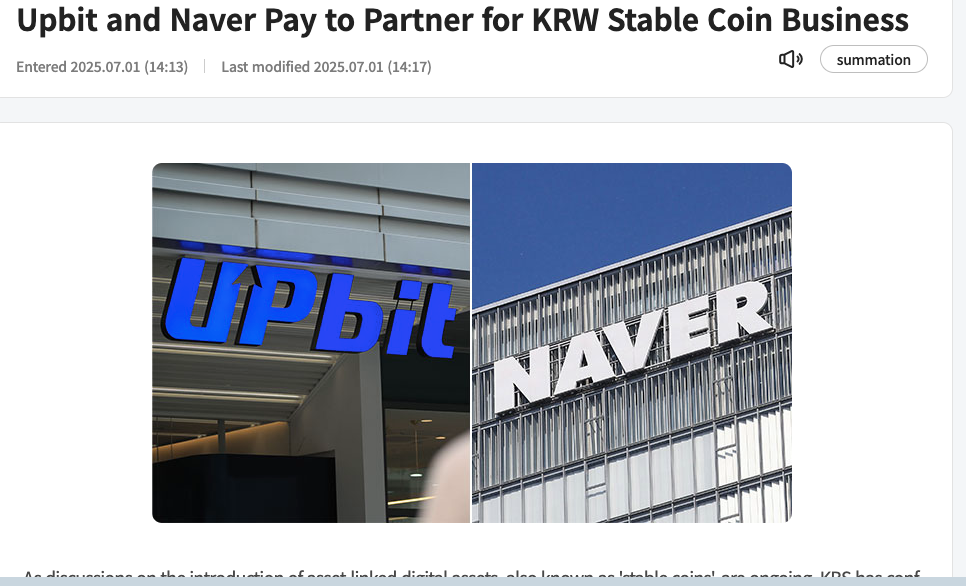
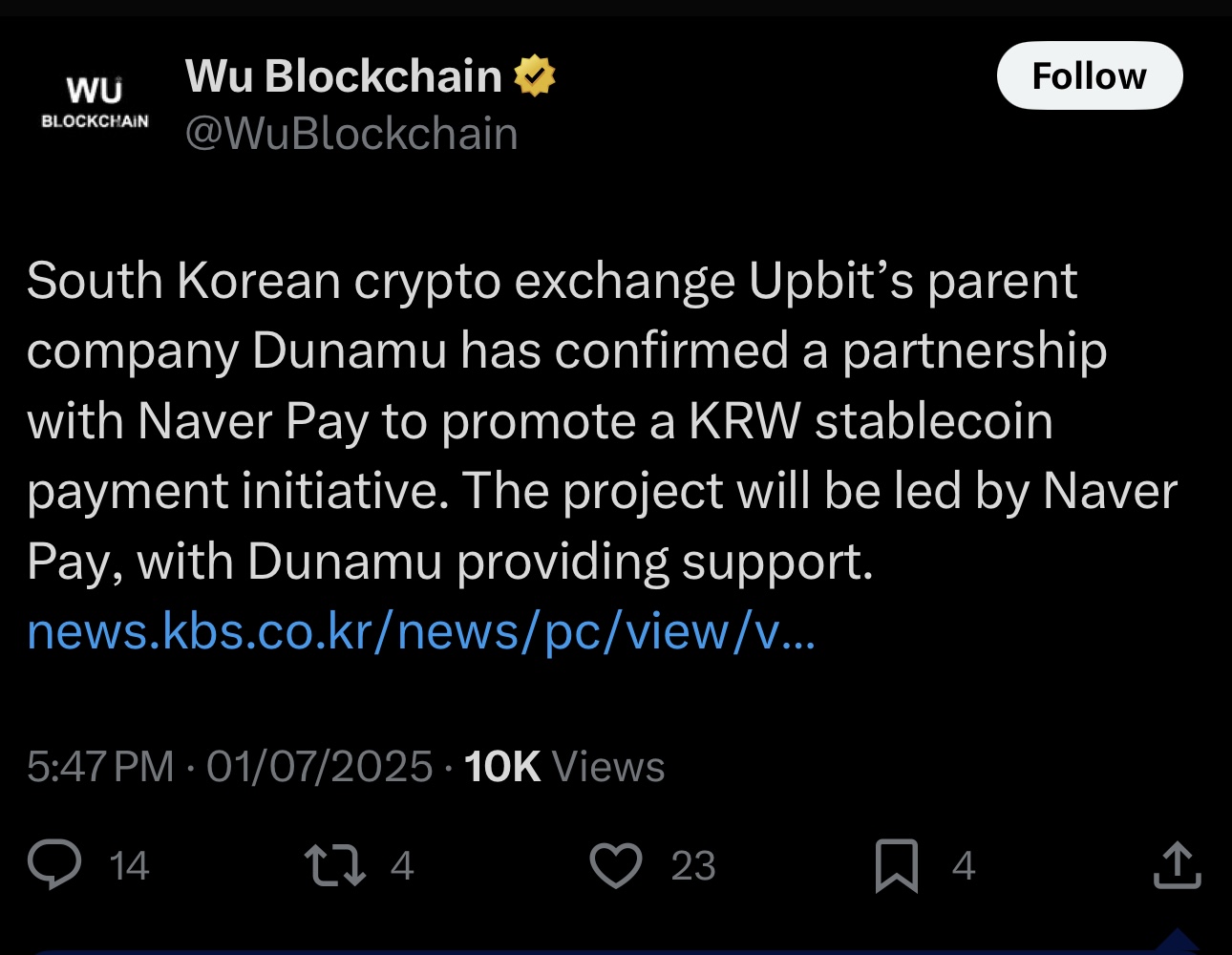
Led by the parent company of Upbit (Dunamu), this partnership will result in a blockchain-based financial service that crosses the realms between traditional finance and digital assets.
The stablecoin will be pegged 1:1 to the Korean won and is designed to be used within Naver Pay’s existing payment infrastructure. The project is underway and appears to be a significant milestone. With integrating Web2 and Web3 payment services, as reported first by crypto news sources and reports.
A Digital Payments Partnership that Will Transform South Korea
The Head Office of Upbit is in Seoul, the main crypto exchange in Asia. The Dunamu-Naver Pay alliance is an indication of a strategic change of collaboration between fintech and crypto platforms.
Dunamu, the operator of Upbit, one of the largest cryptocurrency exchanges in South Korea, is likely to offer the back-end infrastructure. With Naver Pay aiming to put the stablecoin into its well-known mobile payment app.
An unnamed industry official quoted by KBS said, “This partnership is an important first step in linking traditional online payment services with the blockchain world.”
With more than 30 million registered users, the stablecoin might also be provided as an easy-to-use and reliable solution to settle routine payments. Such as e-commerce, food delivery, and subscriptions through Naver Pay. This would make payment incredibly efficient and notably so, in a country where online payments are predominant.
Digital payments may also become more transparent, traceable, and cost-effective with the launch of a new stablecoin, the KRW stablecoin. One of the major hiccups will probably be the regulatory clarity.
Although, the companies are reportedly cooperating with the South Korean Financial Supervisory Service (FSS) to get up to speed with local regulations.
South Korea in the Stablecoin Movement with a Local Twist
Naver Pay is the most popular mobile payment tool in South Korea, with millions of users per day. Although firms such as PayPal have unveiled their own stablecoins, this is the first notable form of KRW-pegged stablecoin by South Korean tech firms. It is also worth noting that the project is not spearheaded by a central bank but by private companies, and this is a growing market-led financial innovation style.
Crypto analyst Colin Wu noted on X, “This partnership could reshape South Korea’s digital economy and encourage more fintech firms to explore blockchain-backed payment models.”
The KRW stablecoin would enable cross-border transfer, on-chain settlement, and tokenized commerce, enabling new profiles in digital financial services. Industry experts also think that the project could spur local appetite in regulated, asset-backed stablecoins. Particularly because of South Korea tight cryptocurrency protection.
The Implications of This on South Korean Fintech and Crypto Industry
This step is linked with the desire of South Korea to aspire towards being a digital financial leader. The KRW stablecoin project has the potential to become an exemplary, as it intends to involve a state-supervised crypto platform partnering with a mass fintech service. Other nations aiming to modernise their financial system without a complete banking centralization.
It also acts as a calculated move to offset the influence of foreign stable coins such as USDT and USDC as used in Asian markets.
With a locally relevant, blockchain-based payment infrastructure, Dunamu and Naver Pay are wagering on their won-pegged stablecoin. This can be adopted nationally and used in the real world.
Although it is not yet clear when it will be rolled out publicly, insiders are hopeful the stablecoin may be tested in controlled conditions prior to a broader roll out. When realized, it might make South Korea a frontrunner in adopting blockchain in everyday life.
Disclaimer
This article is for informational purposes only and provides no financial, investment, or other advice. The author or any people mentioned in this article are not responsible for any financial loss that may occur from investing in or trading. Please do your research before making any financial decisions.