Zylo Ecosystem
 Walrus
 Bitcoin
 Sui
Sui Quantus
 Quant
Quant Starknet
Key Insights:
- SEC delays ruling on Fidelity’s spot Solana ETF amid new guidance
- REX-Osprey already launched U.S. Solana ETF using non-traditional structure
- New SEC crypto framework signals broader ETF regulatory shift.
The U.S. Securities and Exchange Commission has delayed its decision on Fidelity’s proposed spot Solana exchange-traded fund, as confirmed by Bloomberg analyst James Seyffart.
Fidelity, a Boston-based mutual fund manager, filed the S‑1 registration for the ETF on June 13, aiming to introduce a direct investment vehicle for Solana. While the delay was anticipated, it arrives amid a shifting regulatory landscape, with the SEC actively developing new guidelines for crypto-based financial products.
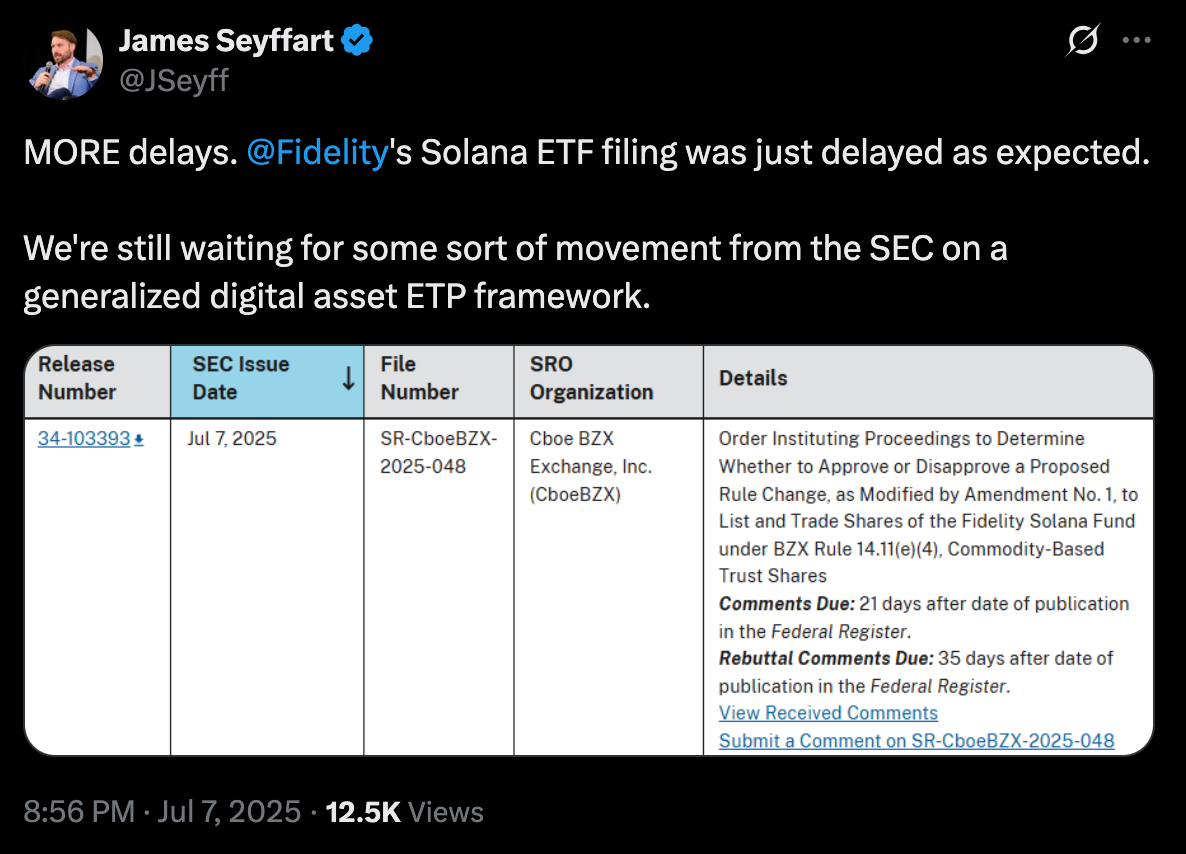
The delayed ruling is part of a broader trend, as the SEC reassesses how to regulate digital asset ETFs. According to Seyffart, the agency’s latest postponement aligns with expectations, especially as stakeholders await the final release of a new regulatory framework.
This framework is expected to set the stage for multiple ETF approvals tied to various altcoins. When asked about which digital assets could follow Ethereum, Seyffart noted that Solana and Avalanche were among the likely candidates, although timelines remain uncertain.
New ETF Launches Under Alternative Structure
While the SEC continues to delay official approvals, alternative ETF models are already reaching the market. In early July, REX‑Osprey introduced the first U.S.-based Solana ETF featuring staking rewards. This product launched under an unconventional structure that avoids the standard spot ETF approval process, drawing significant attention from market participants and observers.
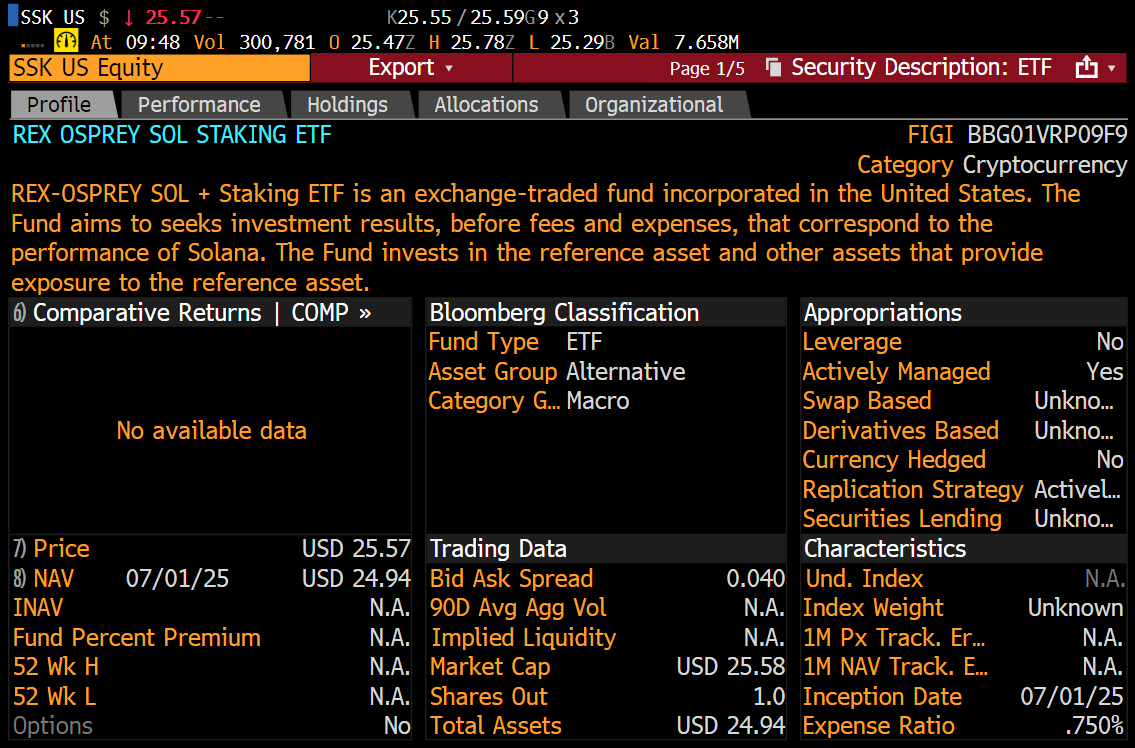
The fund allocates approximately 80% of its assets directly into spot Solana. More than half of that allocation is actively staked to earn on-chain yields for investors. These staking rewards currently range between 7% and 7.3% annually. The remaining portion of the fund includes other Solana-based exchange-traded products, mostly sourced from non-U.S. markets. Additionally, it holds a small share of liquid staking assets such as JitoSOL.
This rollout has sparked debate over whether the REX‑Osprey ETF qualifies as a true spot-based product. Polymarket has also weighed in on the matter, adding further scrutiny to the ETF’s structure and regulatory positioning. Despite the controversy, the fund’s introduction signals growing investor interest in staking-enabled ETFs for digital assets like Solana.
Revised SEC Guidance Points to Evolving Regulatory Approach
In a related development, the SEC recently published its most extensive guidance to date on crypto exchange-traded products (ETPs). Industry analysts consider the document a turning point, describing it as the agency’s first concrete step toward a more defined approval pathway for crypto ETFs. This includes pending applications for ETFs tied to assets such as Solana, XRP, and even meme coins associated with political figures.
Under new Republican leadership, the SEC has taken a more cooperative stance toward the digital asset sector. The agency has formed a dedicated task force to draft the regulatory framework for crypto funds. Furthermore, it has dropped several previous enforcement actions that had been aggressively pursued.
Bitwise Asset Management chief investment officer Matt Hougan admitted that the publication of the guidance was a landmark development in the crypto ETF sector. Bitwise already has six pending applications of different crypto ETFs. Hougan believes that the publishing of the SEC guidance indicates the shift in the acceptance of crypto exchange-traded products in the mainstream financial marketplace.
ETF Outlook Remains Cautiously Optimistic
As of this noval direction, there is a hold on spot approval. The Reuters recently released report indicates that Solana ETFs can be approved even before others working on altcoin-based proposals. However, the schedule might be dragged until fall because the SEC is still finishing its overall regulating strategy.
As the agency works through its evolving policy, the list of applicants waiting for approval continues to grow. Fidelity joins a long roster of firms seeking to launch spot-based ETFs for digital assets, all of whom are watching the SEC’s next moves closely.
Disclaimer
This article is for informational purposes only and provides no financial, investment, or other advice. The author or any people mentioned in this article are not responsible for any financial loss that may occur from investing in or trading. Please do your research before making any financial decisions.