Zylo Ecosystem
 Pearl
Pearl Walrus
 Derive
 Quantus
 Aerodrome Finance
 Sui
Sui
Key Insights:
- Traders expect Bitcoin below $100K, but sentiment shift hints otherwise.
- Futures data shows reduced leverage, easing bearish pressure on markets.
- Bitcoin consolidation near $111K could fuel breakout toward $120K.
Bitcoin price traded near $114,239 on Sept. 11 as traders assessed historic technical signals alongside renewed optimism from macro conditions and spot exchange-traded fund inflows.
Historic Bollinger Bands Compression Raises Alarm
A widely tracked volatility indicator has reached levels unseen since Bitcoin’s inception in 2009. Analyst Matthew Hyland highlighted that the monthly Bollinger Bands are now at their “most extreme level” ever recorded.
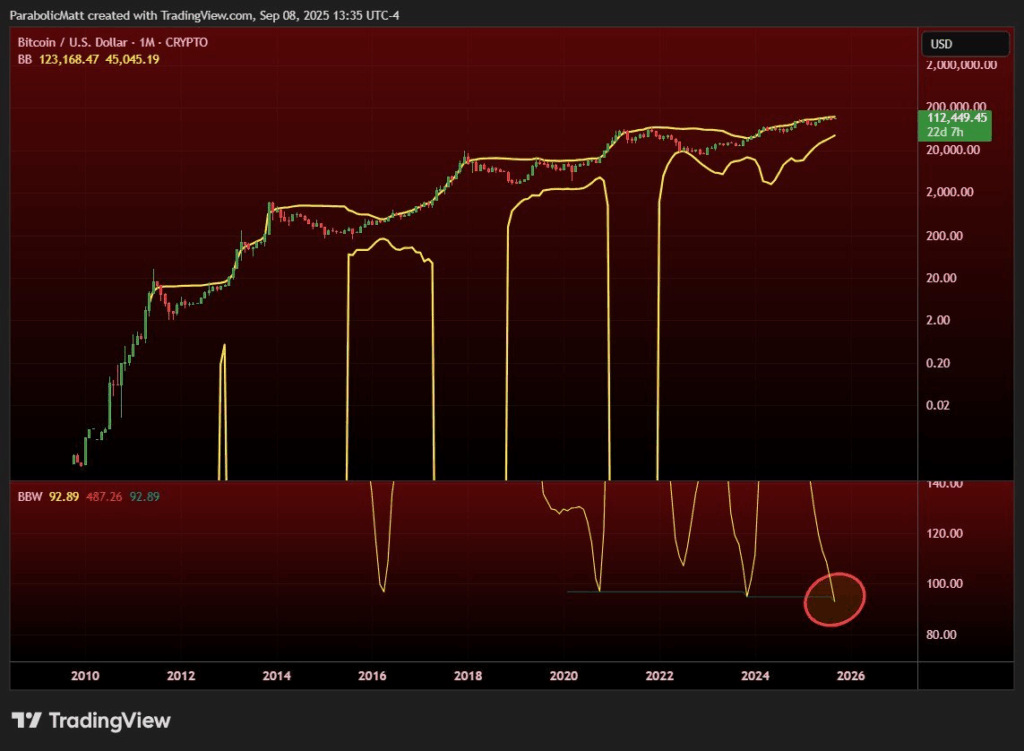
“The Bitcoin Bollinger Bands on the 1M (monthly) are at historical tightness,” analyst Crypto Ceasar wrote on X. He argued that previous squeezes led to “heavy volatility to the upside.”
Crypto investor Giannis Andreou noted that prior contractions in 2012, 2016, and 2020 all preceded sharp rallies. “The current setup is even tighter, indicating the potential for the largest move ever seen in BTC price,” he said.
The comments revived debate about a possible explosive breakout in the final quarter of 2025.
Rate Cuts and CPI Outlook Add to Momentum
Macro factors continue to feed bullish expectations. Trader KillaXBT said markets were already pricing in U.S. interest rate cuts and a favorable consumer price index (CPI) print. “Rate cuts are priced in. They are pricing in a bullish CPI before the numbers,” he posted.
The optimism gained strength after weaker-than-expected producer price index (PPI) data this week. “PPI is way lower than expected,” analyst Michaël van de Poppe said, adding that the backdrop suggested “substantial rate cuts and a better business cycle.”
The alignment between falling inflation data and pre-positioning ahead of the CPI report has reinforced hopes of liquidity flowing back into risk assets.
ETF Inflows and Institutional Demand Reinforce Upside
The institutional backdrop remains supportive. Data from market intelligence firm Santiment showed that spot Bitcoin exchange-traded funds saw inflows flip positive this week.
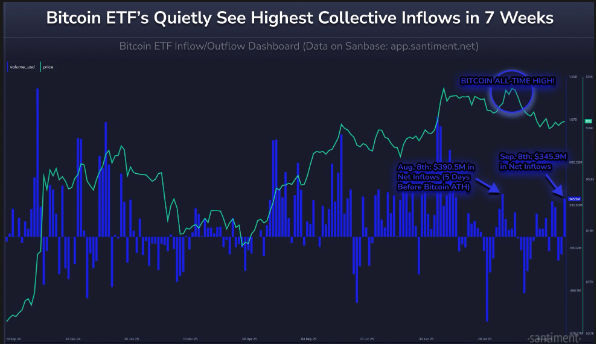
“Money is moving back into Bitcoin ETFs at a rapid rate as retailers impatiently drop out of crypto,” Santiment said. The firm added that past rallies gained momentum following similar spikes in institutional inflows.
Treasury allocations also play a role. Corporates that previously integrated BTC into balance sheets continue to reinforce a bid under the market, aligning with steady institutional accumulation trends.
The persistence of demand from spot ETFs contrasts with retail fatigue, underlining the changing structure of participation in this cycle.
Traders Split on Short-Term Timing
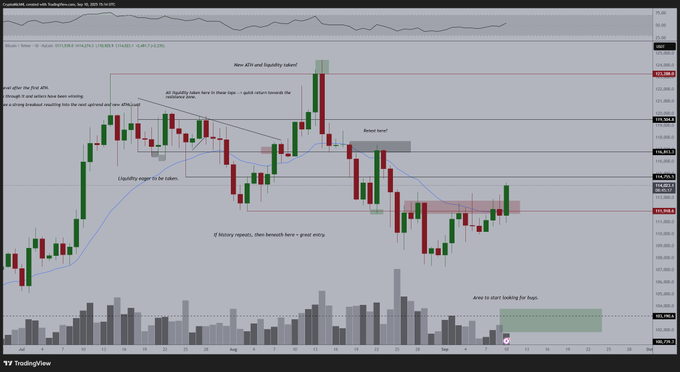
Despite the bullish long-term case, short-term caution persists. Bitcoin failed to hold above $112,000 in recent sessions after repeated attempts. Some traders warn that the breakout may take time to materialize.
Still, historical precedent has left many unwilling to ignore the setup. “Huge volatility ahead,” Hyland wrote, summarizing the broader sentiment.
With CPI data imminent, the intersection of macro triggers, technical compression, and ETF inflows has set the stage for elevated volatility into year-end.
Outlook: Q4 Shaped by Volatility and Macro
The convergence of record-tight Bollinger Bands, macro easing expectations, and renewed institutional flows has positioned Bitcoin at a historic crossroads.
If history repeats, the current contraction could precede one of the largest moves in BTC’s 16-year history. With the cup-and-handle breakout still in play and rate cuts looming, analysts remain alert to a potential rally toward six-figure targets.
At press time, Bitcoin traded near $114,239, consolidating below its August high. Traders now await fresh economic data to confirm the direction of the next major move.
Disclaimer
This article is for informational purposes only and provides no financial, investment, or other advice. The author or any people mentioned in this article are not responsible for any financial loss that may occur from investing in or trading. Please do your research before making any financial decisions.