Identity.md 6900
 Bunker Mode
 Crawlerpad
 Claudia
 Quantus
 Starknet
 Bitcoin

U.S. spot Bitcoin ETFs returned to net inflows on Sept. 17 as BlackRock’s IBIT attracted about $183.66 million, helping the broader group record approximately $159.45 million in net additions after two sessions of heavy withdrawals. The rebound came as Bloomberg senior ETF analyst Eric Balchunas argued that Bitcoin funds could eventually become three times larger than gold ETFs as younger investors gain wealth and institutional adoption expands.
The long-term comparison comes despite gold retaining a much larger asset base today. World Gold Council data put global physically backed gold ETF assets at about $615 billion at the end of August, while BlackRock’s IBIT alone held nearly $59.9 billion as of Sept. 17. JPMorgan said gold ETFs have also recovered earlier 2026 outflows faster than Bitcoin funds, but heavier hedging around IBIT could leave Bitcoin with more room for support if investors unwind protection without selling their underlying exposure.
Bitcoin ETFs Will Be 3x of Gold ETFs
Eric Balchunas, the senior ETF analyst at Bloomberg, said that Bitcoin ETFs could ultimately grow to three times the size of gold ETFs. His comments came during a recent television interview with Bitcoin Magazine.
“I think as the younger investors get more money and grow up with Bitcoin as their store of value, I do believe that Bitcoin ETFs will triple gold in assets,” noted Balchunas.
Currently, the total size of Bitcoin ETFs is over $100 billion, with BlackRock iShares Trust (IBIT) capturing 60% of it. On the other hand, the total size of Gold ETFs is $615 billion, as per the World Gold Council.
Balchunas outlined several reasons why Bitcoin ETFs could ultimately surpass gold ETFs in size. Balchunas said Bitcoin has a younger investor base, while gold tends to attract older investors. He also expects Bitcoin to see greater adoption among institutional investors as the asset matures and volatility reduces.
He further pointed to stronger enthusiasm and sales efforts around Bitcoin ETFs. Balchunas noted that while gold ETFs receive limited promotional attention, dozens of wholesalers have expertise in both crypto and gold. He added that traditional investors are actively educating clients about Bitcoin ETFs.
Morgan Stanley Says Bitcoin ETFs Could Catch Up to Gold ETFs
Bitcoin could receive more support than gold if investors reduce their hedges through exchange-traded funds, according to JPMorgan analysts led by Nikolaos Panigirtzoglou.
Bitcoin and gold ETFs recorded inflows following the Federal Reserve meeting in late July. This happened due to the returning of the debasement trade. However, the trade has weakened over the past week as inflation-adjusted bond yields rose and the Senate failed to advance the CLARITY Act.
Gold ETF demand has recovered more than Bitcoin ETF demand. Gold ETFs have now recovered all outflows from earlier this year. On the other hand, Bitcoin ETFs have recovered about half of their earlier outflows. JPMorgan analysts added that demand for Bitcoin ETFs has also weakened in recent days, leaving more room for a recovery if news flow improves.
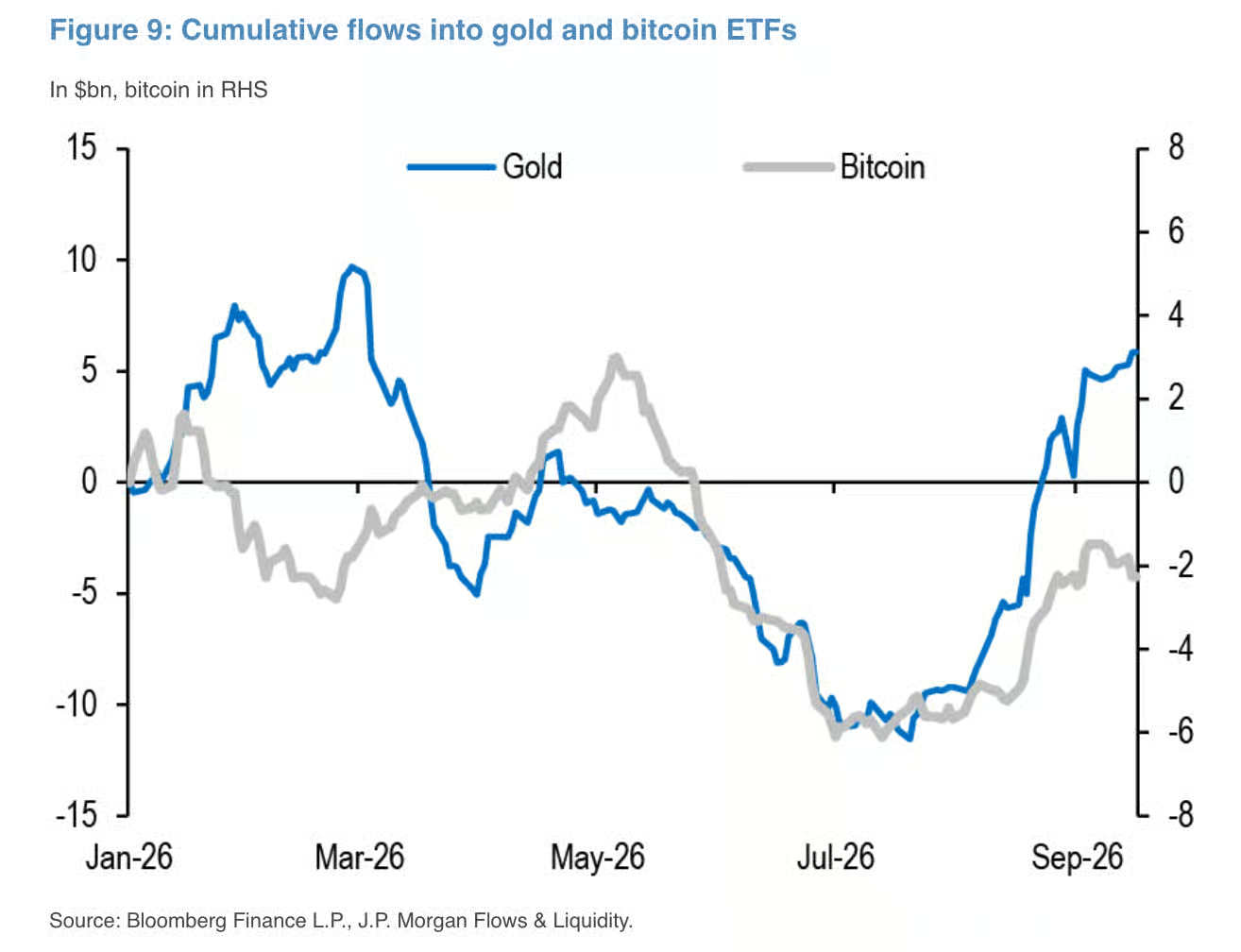
The analysts at JPMorgan also added that the futures positioning remains elevated in both gold and Bitcoin. It shows that both of these assets are currently experiencing some form of institutional demand.
The key difference is ETF short interest. Short interest in BlackRock Bitcoin ETF (IBIT) remains near its highest level of the year. On the other hand, short interest in the SPDR Gold Shares ETF (GLD) is below its historical average.
BTC ETFs See Inflows Again
So far, September has been a month of net outflows in Bitcoin ETFs, with outflows surging over the past week. However, reversing this trend on Thursday, Sept. 17, Bitcoin ETFs saw inflows at $159 million, as per data from Farside Investors.
BlackRock’s IBIT saw the most inflows at $183.66 million. Fidelity’s FBTC recorded $16.64 million in net outflows, while VanEck’s HODL saw $7.57 million in outflows. The remaining Bitcoin ETFs saw zero net flows.
This article is for informational purposes only and does not constitute financial or investment advice. ETF flows, analyst projections and positioning data do not guarantee future Bitcoin performance.