Quack AI
 Bitcoin
 Lighter
 Injective
 Pearl
Pearl Zcash
Zcash Sui
Sui- Bitcoin price has surged 9% since January 13, sparking optimism.
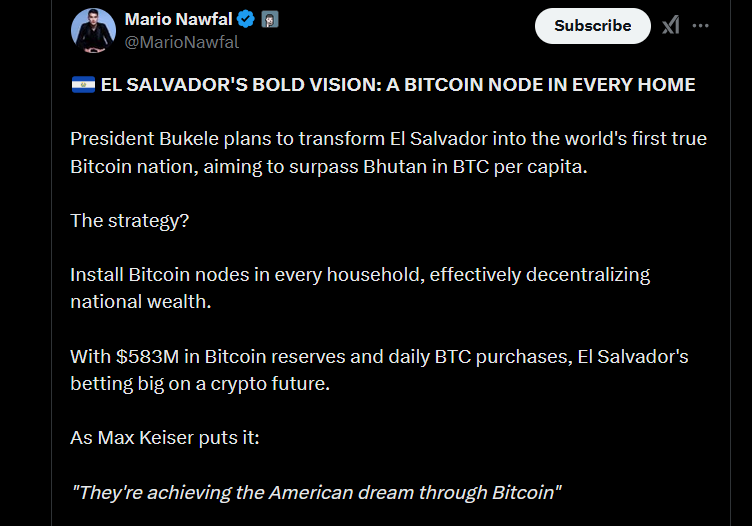
- El Salvador’s bold plan is to install Bitcoin nodes in every household.
- Bitfinex and Tether expand operations in El Salvador with new licenses.
The global spotlight on the price of Bitcoin has risen, particularly in crypto-friendly countries such as El Salvador. This occurred notably after its recent return to the trend following a downturn. A new impetus appears to be on the horizon as Trump’s inaugural event approaches.
Bitcoin had dipped below its 50-day EMA band. However, a liquidity sweep was triggered, as this downturn quickly reversed when major whales seized the opportunity to buy.
This move of whales eliminated the bearish sentiment. Also, since January 13th, the Bitcoin price has experienced a remarkable 9% surge, drawing further optimism among investors.
In light of this, a new development has emerged in El Salvador. President Nayib Bukele has famously committed to purchasing one Bitcoin per day. He has revealed plans to position the nation as the world’s first “true Bitcoin nation.”
The nation with a staggering $583 Million in Bitcoin reserves, Bukele’s government intends to surpass Bhutan in Bitcoin holdings. Similarly, a cornerstone of this strategy is the installation of Bitcoin nodes in every household across the country.
His strategy is directly aimed at decentralizing national wealth. If successful, the initiative could change the country’s tech infrastructure. This could solidify El Salvador’s leadership in the global crypto space.
This ambitious plan could place El Salvador at the cutting edge of blockchain adoption. However, it has sparked debates regarding its feasibility and potential economic consequences.
The Bitcoin Node Strategy Of El Salvador
El Salvador has made a bold New Year’s resolution to advance its vision of decentralizing national wealth. The country aims to enhance economic autonomy by installing Bitcoin nodes in households nationwide.
This strategy shift is accelerating toward a decentralized nation-state model. This initiative is designed to reduce reliance on traditional banking systems. It offers citizens access to decentralized financial networks and more secure, accessible financial tools.
Proponents believe it could empower the population with greater financial independence. This plan has strengthened El Salvador’s prior actions. Two examples are adopting Bitcoin as legal cash and utilizing it to finance debt reduction initiatives.
Similarly, government officials claim that the widespread deployment of Bitcoin nodes will boost the decentralized economy. However, the initiative has faced skepticism. Critics have questioned its feasibility and the challenges posed by the country’s existing infrastructure.
Past projects received minimal support from the public, with low participation rates. This previously pessimistic response has led some people to doubt the broad acceptance of the new node initiative.
They are concerned about the technical complexities and high energy demands involved. Likewise, the Financial experts warn about the costs of maintaining and operating these nodes.
This includes the need for specialized technical expertise and reliable internet access. These steps could also strain the national budget and raise environmental concerns.
The opponents also argue that installing a Bitcoin node in every household is an unrealistic goal. They describe it as a “grand illusion.” Moreover, El Salvador’s recent $1.4 Billion loan agreement with the IMF could also limit the country’s ability to pursue these ambitious plans fully.
El Salvador To Become A Safe Haven For Crypto Firms
It is evident that firms, specifically in the crypto sector, are facing a lot of troubles amid increasing regulatory scrutiny. However, amid this, El Salvador has positioned itself as a haven for crypto firms looking to establish a base.
Its crypto-friendly policies have attracted major players like Bitfinex and Tether. Even they have secured operational licenses that allow them to operate legally in the region.
These developments reflect a rising confidence within the business community. Also, Bitfinex Derivatives has recently obtained the Digital Asset Service Provider (DASP) license. It did that to expand its presence in Latin America and bolster its regional offerings.
Likewise, Tether, the world’s largest stablecoin issuer, has also announced plans to relocate its operations to El Salvador. This move is seen as a vote of confidence in the country’s economic policies and a testament to its growing crypto infrastructure.
Moreover, on January 13, Tether confirmed it had secured the DASP license. That paved the way for the company to establish a physical office in the country and fully transition its operations there.

These moves underscored that El Salvador has a strong ambition to become a global hub for cryptocurrency innovation. The influx of crypto firms promises to bring new jobs, investments, and technological advancements to the region.
Additionally, it is also further solidifying the country’s place in the crypto world. The government’s plan to install Bitcoin nodes in every household reflects its broader vision of building a Bitcoin-based economy.
Bitcoin price Overview On Daily Chart
Bitcoin price has recently surged again, briefly surpassing the $100K mark on several occasions. However, it has struggled to maintain that level.
The BTC price may climb with increased momentum and successfully break past the $100K threshold once more. If this happens, it could trigger a sustained rally.
Many analysts remain bullish on Bitcoin for 2025, citing the potential impact of upcoming U.S. administration policies. That included the possibility of a Bitcoin reserve, which could fuel further price gains.
Moreover, growing adoption among financial institutions is expected to support Bitcoin’s upward trajectory. Suppose the price rise, key resistance levels beyond $100K to watch are $103K and $108K.
However, if Bitcoin faces rejection at the declining trendline, the bullish case may be invalidated. A head and shoulders pattern could emerge as a potential bearish signal.
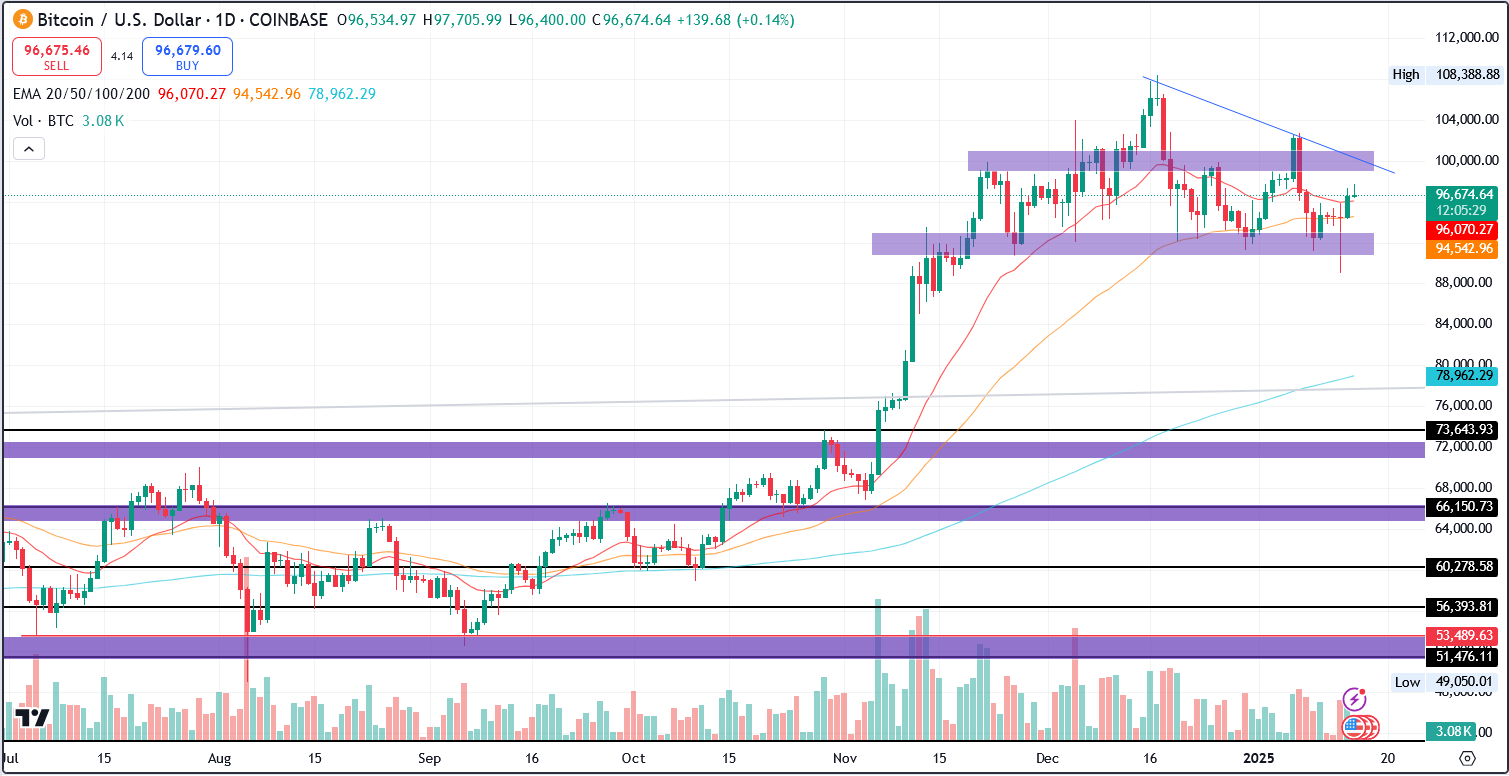
Furthermore, technical indicators suggest a shift in sentiment. The RSI has moved slightly above the neutral 50 mark, currently at 51.03. At the same time, the MACD histogram has shown a decrease, confirming that the bearish momentum was weakening.
Disclaimer
In this article, the views, and opinions stated by the author, or any people named are for informational purposes only, and they don’t establish the investment, financial, or any other advice. Trading or investing in cryptocurrency assets comes with a risk of financial loss.