Wisp
Wisp Doge Pepe
 Aerodrome Finance
 Zylo Ecosystem
 Pudgy Penguins
 Pearl
Pearl Starknet
Key Insights
- Analyst Alex Becker favors Cardano for higher upside over Solana.
- Cardano’s LEOs upgrade aims to boost speed without losing security.
- U.S. strategic reserve includes Cardano, highlighting its resilience.
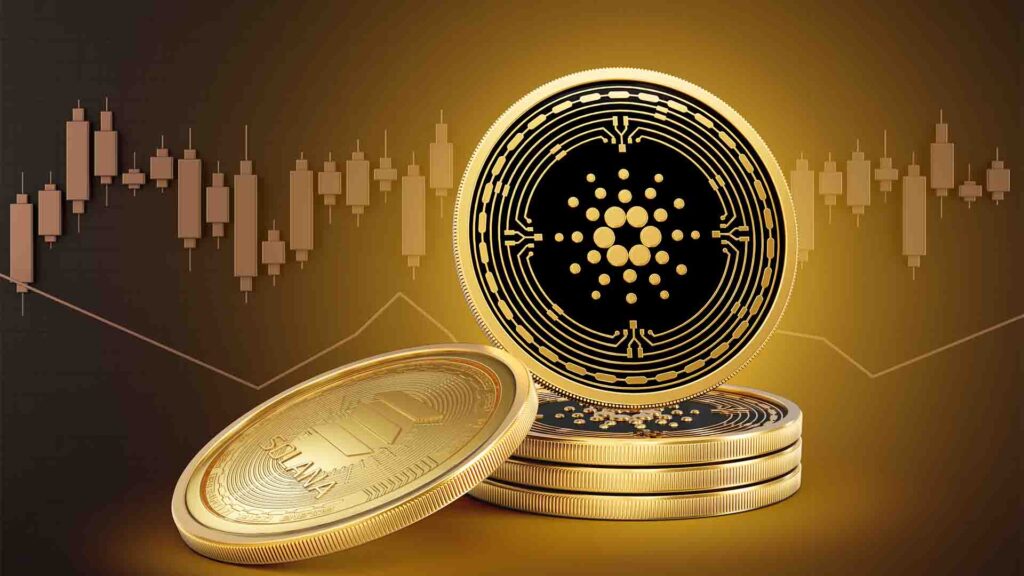
Cardano (ADA) currently trades with a significantly lower market capitalization than Solana (SOL), yet some analysts see ADA as having the potential for higher returns in the near term. As of late May, Cardano’s price hovered between $0.735 and $0.765, down from a recent high above $0.83 on May 23.
Meanwhile, Solana maintained a price near $174.76, with a market cap close to $91 billion, compared to Cardano’s valuation below $28 billion. This market disparity has led to varied projections from crypto analysts regarding the two tokens’ future performance.
Cardano Analyst Perspectives on Cardano and Solana
Among prominent voices, YouTuber and crypto analyst Alex Becker recently shared his outlook on several altcoins, including Cardano and Solana. Becker acknowledged both ADA and SOL as strong blockchain platforms but suggested Cardano might deliver greater upside potential during the current cycle.
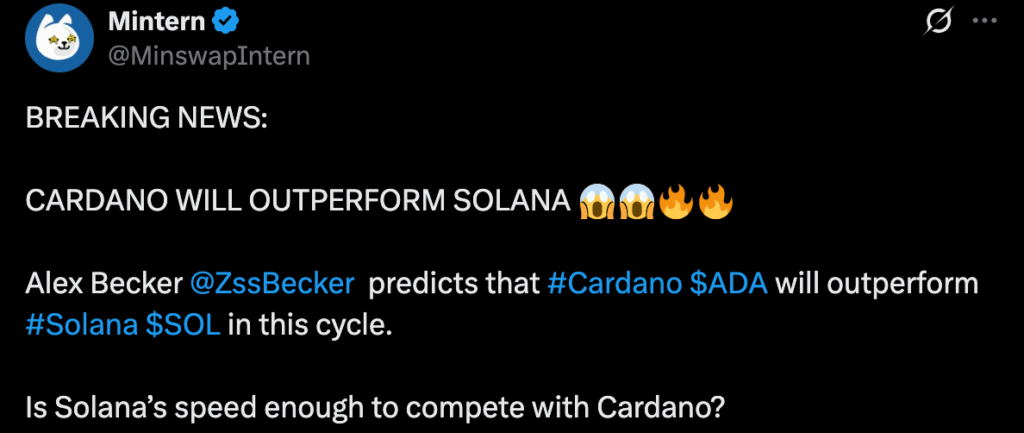
He categorized Ethereum as a more conservative investment yet positioned ADA as offering a possible 5x to 8x return from its current price level. For example, an 8x increase would place ADA around $6.10, a significant rise compared to present trading levels.
Despite recognizing Solana’s past performance and market stability, Becker recommended investors consider ADA and other mid-cap tokens like Sui for higher-risk, high-reward opportunities. He highlighted that Solana’s resilience and potential remain intact but leaned toward Cardano for those seeking more aggressive gains.
Becker also mentioned Avalanche (AVAX) and Chainlink (LINK) in his analysis, noting AVAX’s expected growth tied to sports and gaming sectors, and Chainlink’s utility often being overlooked by market participants.
Becker’s stance on Cardano has remained bullish despite his critical remarks about the Cardano community. Earlier in March, he predicted ADA could reach $5, a forecast he later reinforced after accumulating significant ADA holdings.
His subsequent comments framed ADA as “extremely bullish,” emphasizing Cardano’s technical strengths and undervaluation. Becker noted Cardano’s speed, decentralization, and reasonable design compared to other blockchains, underscoring his view of ADA as an “easy bet” capable of reaching between $3 and $5 in the medium term.
Cardano’s Development and Market Position
Parallel to analyst sentiment, Cardano’s founder Charles Hoskinson commented on the token’s place within the broader crypto ecosystem. During a March podcast interview, Hoskinson compared ADA and XRP as resilient blue-chip assets. He contrasted these with Solana, which he categorized as “mid-tier.”
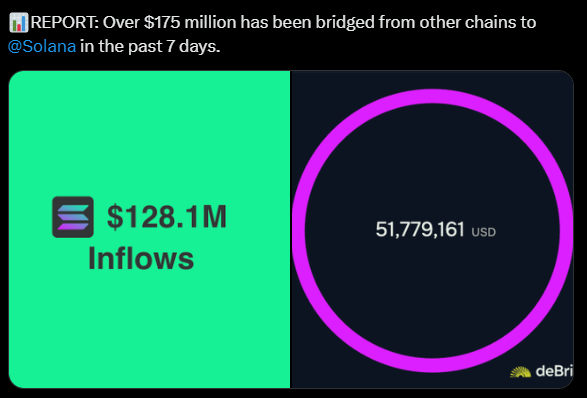
Hoskinson pointed out that the U.S. government selected five cryptocurrencies for its strategic reserve, including Bitcoin, XRP, Solana, Ethereum, and Cardano. He credited ADA’s longevity and ability to withstand market downturns as factors behind this choice.
Hoskinson also acknowledged Solana’s notable recovery following the FTX collapse, highlighting the token’s bounce from $8 to a record $294 by January 2025. He recognized both Solana and Ethereum as leading smart contract platforms but maintained that Solana occupies a mid-level position relative to Cardano and others.
Cardano Upcoming Upgrades and Market Impact
Going forward, Cardano’s upcoming LEOs upgrade might shape its future. Major analysts, including JRNY TV on YouTube, believe the upgrade is meant to make Cardano process about 1,500 transactions per second. As a result of this advance, throughput can rise without undermining the blockchain’s central beliefs of being decentralized and secure.
Because Cardano is now faster, users may pay less and have a better experience on the network which could draw more decentralized applications to the platform. Because of this advantage, Cardano is comparable in speed to Solana and still protecting user assets. If all goes as predicted, the upgrade could help ADA to reach between $18 and $26 by the year 2025, analysts say.
Cardano will get support from two additional developments: Midnight AirDrop aimed at private smart contracts, and the joining of wrapped Bitcoin to encourage liquidity. Many institutions are likely to become interested in ADA as the market grows and wait for spot ETFs. All these reasons help explain forecasts that say ADA’s price may be around $9-$10 in 2030, as long as the ecosystem keeps expanding.
LEOs Upgrade and Ecosystem Growth Outlook
Cardano’s upcoming LEOs upgrade is expected to increase network throughput to approximately 1,500 transactions per second without compromising decentralization or security. YouTube analyst JRNY TV called the upgrade a turning point for user experience, transaction speed, and decentralized application (dApp) performance.
If successful, this upgrade could put Cardanoon par with Solana in terms of speed, while maintaining more conservative and secure infrastructure.
Additional developments include the Midnight airdrop—designed to enable private smart contracts—and the integration of wrapped Bitcoin, intended to boost liquidity. Analysts say these features may attract institutional interest, especially as discussions around potential spot ETFs gain momentum.
Price forecasts suggest ADA could reach $18 to $26 by the end of 2025 if network adoption continues to accelerate. Long-term projections estimate a $9–$10 valuation by 2030, assuming Cardano maintains ecosystem growth and consistent developer activity.
Disclaimer
In this article, the views and opinions stated by the author or any people named are for informational purposes only. And they don’t establish the investment, financial, or any other advice. Trading or investing in cryptocurrency assets comes with a risk of financial loss.