Wisp
Wisp Doge Pepe
 Zylo Ecosystem
 Crawlerpad
 Basic Attention
 Pearl
Pearl Quantus

Key Insights
- Turkey blocks PancakeSwap and 45 other crypto platforms for non-compliance.
- The Capital Markets Board (CMB) enforces stricter crypto regulations to ensure services are licensed in Turkey.
- PancakeSwap ban signals Turkey’s growing crackdown on unauthorized crypto services.
Turkey’s Capital Markets Board (CMB) has announced blocking one of the most popular decentralized exchanges (DEX) worldwide, PancakeSwap, along with 45 similar websites. It is one of the moves by the authority to control the rising imports of cryptocurrency services.
According to them, these have been offered to the Turkish residents on an unsanctioned basis.
Through this, the Turkish government has been tightening its regulation of crypto-related activity to comply with the global regulatory industry. They also seek to minimize the risk factors associated with unlicensed operations of digital asset services.
It could not be stated with 100% certainty why the blockade occurred. However, in the official reports, the failure of these platforms to comply with recently adopted crypto regulations in Turkey was mentioned.
The CMB relied on authorities under laws passed in 2024. Those laws mandate the regulator to close down the foreign crypto service providers unlicensed in the country.
The Regulatory Landscape in Turkey
Crypto regulation in Turkey has changed throughout the years. The CMB announced stricter regulations in March 2024, requiring Crypto asset service providers to be subject to particular licensing requirements and transparency.
Such a structure will entail platforms to submit comprehensive information about their customers. It also requires them to account statements monthly, thus making the crypto space highly accountable.
Nevertheless, even after the regulation tightening, cryptocurrency is still purchasable, held, and traded by the residents of Turkey.
Notably, although Turkey still prevents access to unlicensed services, it allows licensed exchanges to exist. Such a legal framework has seen some providers of crypto services, like Bank Pozitif and Taurus, provide regulated crypto services to the people.
PancakeSwap is a decentralized exchange (DEX) based on the Binance Smart Chain. It is one of the most important in the decentralized finance (DeFi) sector.
This DEX recorded over $325 billion in trading volume in June 2024. Thus, it is one of the largest DEXs and one of the prominent DEXs, such as Uniswap and Curve.
With a weakened national currency and ongoing inflation, people have resorted to crypto assets as a store of value. It has led to the rapid uptake of crypto in the country. That’s because the depreciation of the Turkish lira has presented it as a relatively stable option.
Interestingly, by June 2024, the Turkish lira had surpassed the Euro to become the third-largest fiat currency to spend on cryptocurrencies. That signifies the increased demand of the latter.
Impact on the Crypto Community and the Market
The raid on PancakeSwap and other crypto exchanges has evoked an interest in the further consequences of this move in Turkey. The ban might be a major blow to the availability of decentralized finance services in the region, as it’s one of the largest DEXs in the world.
The lack of choices might be driven by the traders and investors who depend on services such as PancakeSwap. They use it to provide liquidity, exchange the tokens, and move towards some other solutions or have to work within a more limited sphere.
Although it is being done, the crypto market in Turkey is not likely to be crushed. Regulated exchanges and financial institutions offering regulated crypto services have remained operational.
The initiative proposed by Turkey may eventually offer safer alternatives to people living in the country in the long run.
Nonetheless, the relocation underscores the global policy of heightened regulatory interest in cryptocurrency. Nations, such as Kazakhstan, Venezuela, and the Philippines, are also going after unvetted crypto activities.
Turkey’s Move Aligns With Global Regulatory Momentum
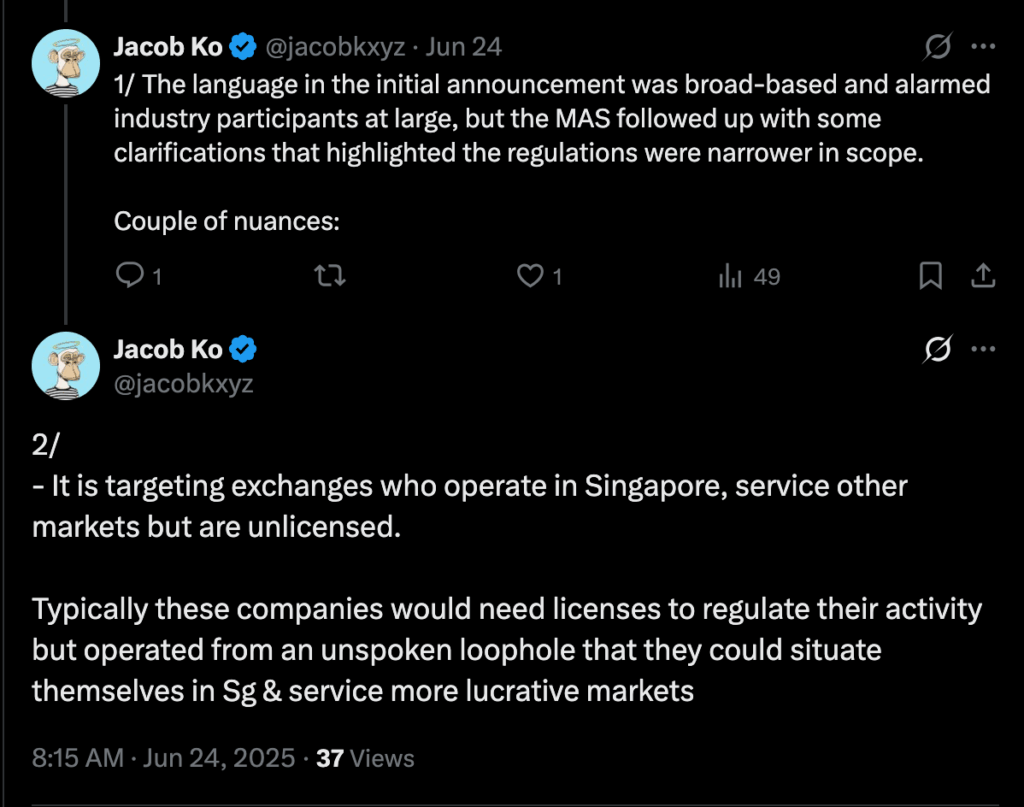
Turkey’s actions mirror similar steps taken by governments worldwide. Singapore has enforced mandatory licensing for exchanges under its Payment Services Act. Hong Kong introduced a new regime requiring all virtual asset trading platforms to register with the Securities and Futures Commission.
Even outside Asia, governments in Venezuela, Kazakhstan, and the Philippines have ramped up surveillance and enforcement efforts targeting decentralized finance platforms and cross-border token flows.
These efforts reflect a global pivot toward tighter crypto regulation, especially in economies grappling with inflation, capital volatility, or retail investor exposure to high-risk products.
Turkey’s PancakeSwap ban signals a shift from regulatory discussion to enforcement. While the move narrows access to decentralized services, it also pushes the local market closer to a regulated model aligned with international standards.
Whether these changes can balance consumer protection with crypto adoption remains uncertain. But the message is clear: unauthorized platforms operating without licenses will no longer be tolerated, whether centralized or decentralized.