Dacity Coin
 astronaut
 Celestia
 Injective
 Bittensor
 Quantus
 Pearl
Pearl

Key Insights:
- Nvidia surpassed $4 trillion market cap, driven by AI infrastructure boom.
- AI chips fuel blockchain-based compute demand, powering tokens tied to decentralized AI.
- Crypto markets react as Nvidia ramps up global expansion and U.S. policy shifts favour digital innovation.
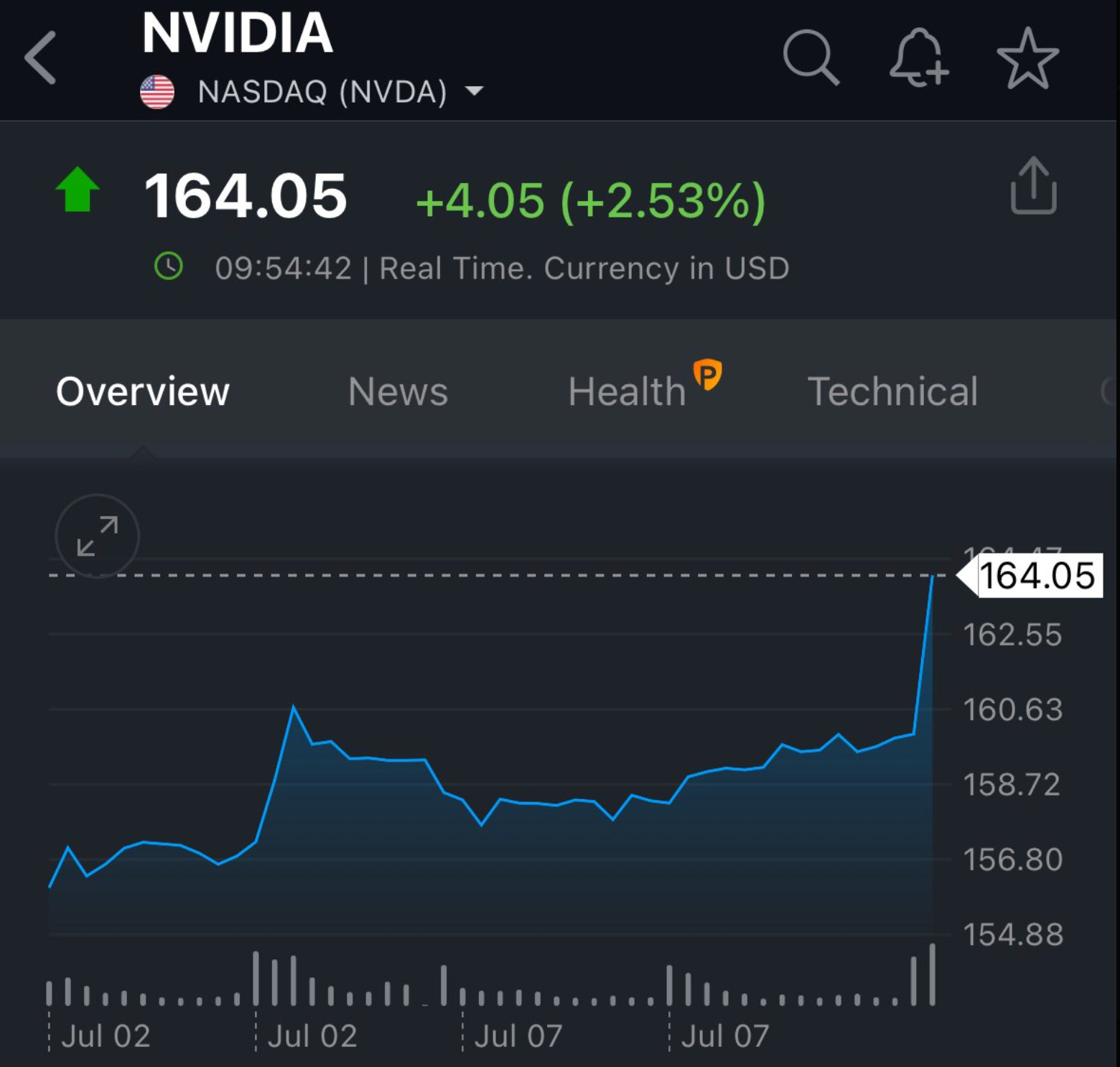
Nvidia reached a $4 trillion market capitalization on July 9, becoming the most valuable publicly traded company in the world. This surge has reignited interest across crypto markets, especially in tokens linked to AI and decentralized compute.
As Nvidia’s valuation skyrockets, the crypto sector is drawing parallels between centralized chip dominance and the emerging Web3 infrastructure.
Nvidia Fuels AI Boom, Sends Signals Across Crypto Markets
Nvidia’s stock rose 2.7% to close at $164.32, pushing the company’s market value past the historic $4 trillion threshold. This followed consistent institutional demand and strong earnings, even in the face of recent geopolitical hurdles.
Nvidia powers the core infrastructure behind Microsoft, Amazon, and Google’s AI systems, and this role has made it the undisputed leader in the AI chip space. Similarly, crypto markets are now reflecting this momentum as tokens like Render (RNDR), Akash (AKT), and Fetch.ai (FET) gain trading volume.
As AI infrastructure spending is expected to surpass $200 billion by 2028, the opportunity for decentralized alternatives is growing. Blockchain-based compute protocols are now positioning themselves as scalable and permissionless counterparts to Nvidia’s centralized model.
Jensen Huang’s AI Roadmap Echoes Across Decentralized Networks
Nvidia CEO Jensen Huang recently pointed to four accelerating factors that are fueling global AI growth: reasoning models, lifted export restrictions, enterprise adoption, and industrial reshoring. He said, “It’s fairly clear now that AI is going through exponential growth,” during the company’s earnings call in May.
These drivers are not just boosting demand for Nvidia chips but also align with Web3 goals, as decentralized developers seek to provide infrastructure for autonomous agents and AI-powered smart contracts. While Nvidia builds RTX Pro Enterprise servers, crypto networks are delivering similar capabilities through tokenized compute markets.
In addition, Huang’s reference to AI infrastructure as a new global pillar alongside compute, storage, and networking is mirrored by crypto’s push to embed AI tools into blockchain-based ecosystems. This includes AI-powered trading bots, decentralized data labeling, and on-chain inference engines.
Despite losing $2.5 billion in sales from export restrictions on its H20 chips to China, Nvidia still posted $44.1 billion in quarterly revenue. This performance reinforces the demand strength of AI infrastructure and encourages crypto founders to explore sovereignless AI networks.
Centralized Expansion Meets Crypto’s Borderless AI Future
Responding to soaring demand, the company has embarked on an enormous expansion strategy in Israel, putting out a request for land proposals close to its Yokneam plant, in response to the influx of demand. The company is planning to construct a 180,000 square-meter AI campus and, according to sources, it received dozens of bids by municipalities which approached it.
Nvidia first entered Israel by acquiring Mellanox Technologies for nearly $7 billion in 2020 and has since tripled its workforce in the country. It also built Israel’s most powerful AI supercomputer, which later became the blueprint for Elon Musk’s Colossus system.
As Nvidia centralizes infrastructure, crypto-based GPU marketplaces such as Bittensor and Gensyn are providing decentralized alternatives that can decentralize computing around the world and without borders or centralized control. These networks are picking up popularity as more investors consider the non-traditional tech giants.
The chipmaker is also in the collaboration of Project Stargate, a 500 billion-dollar AI infrastructure project spearheaded by the Trump administration. Such an alliance is an indicator of a close relationship between state-sponsored AI production, corporate technologies, and blockchain initiatives are still developing in open systems.
Dror Bin, CEO of the Israel Innovation Authority, said the Nvidia campus could add several thousand jobs, reinforcing the company’s long-term commitment to global AI leadership. Meanwhile, rival Intel is trimming its global workforce, widening the gap in high-end chip development.
Disclaimer
This article is for informational purposes only and provides no financial, investment, or other advice. The author or any people mentioned in this article are not responsible for any financial loss that may occur from investing in or trading. Please do your research before making any financial decisions.