streamoors
 IGNITION
 Sword Inu
 no crying in the casino
 Altai the Tiger
 Pearl
Pearl Pudgy Penguins

The US Federal Reserve is considering issuing limited-access master accounts to eligible financial institutions. Fed Governor Chris Waller announced during the Bank’s Payments Innovation Conference. His remarks highlighted key developments in the realm of crypto banking.
Crypto journalist Eleanor Terret was the first to break the news. She noted that Waller referred to this type of account as a “skinny master account.” The Fed master account is the primary account of a regulated financial institution with the US Fed Reserve.
Skinny Master Accounts: A Gateway for Crypto Banking Access to the Fed
According to Terret, these limited-master accounts could finally allow crypto companies to gain direct access to the Fed’s banking rails. Waller stated that the skinny master accounts will be available to all eligible financial institutions.
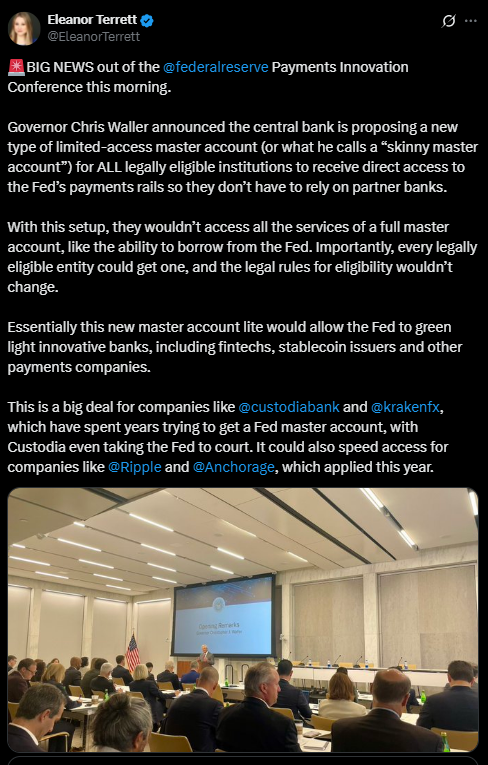
The governor explained that this account provides access to financial institutions that wish to utilize the Fed for payment services. However, such accounts will not have access to all the services that a full master account holder has access to.
Waller said:
Unsurprisingly, many expect that crypto and fintech companies will be the primary beneficiaries. Several fintech and crypto companies have been pushing to obtain the Fed’s master account for several years now.
However, the regulator has pushed back against issuing the master accounts to these financial institutions, citing risks. That could change with the proposed skinny master, opening the door for these institutions to get onboarded.
Terret noted this also, stating:
Custodia Bank and Kraken Bank, both active in crypto banking, have applied for a master account with the US Fed. However, their applications were rejected. Other companies, such as Ripple and Anchorage, also used this year.
US Regulators Grow Increasingly Pro-Crypto
Meanwhile, the likelihood of crypto entities obtaining Fed master accounts represents a significant shift in Fed policy. The US Central Bank has consistently opposed granting master accounts to institutions involved in crypto banking.
It cites the risks tied to digital assets as a significant concern for financial stability. Wyoming-based bank Custodia even fought back against the rejection. It sued the Federal Reserve Board of Governors and the Federal Reserve Bank of Kansas for delaying the decision on its application.
In 2024, a U.S. District Court issued a ruling on master account applications. It determined that Federal Reserve Banks have the discretion to approve or deny these applications.
With the Bank now suggesting its willingness to shift its approach to the crypto industry, it represents another pro-crypto development. Several US regulators, including the Securities and Exchange Commission (SEC), have made pro-crypto moves since the Donald Trump administration started.
Recently, the Office of the Comptroller of the Currency (OCC) granted a conditional banking charter to Erebor. The bank focuses on crypto banking services tailored for cryptocurrency companies.
OCC Comptroller Jonathan Gould noted that permissible digital asset activities have a place in the federal banking system. Many in the crypto community consider all these developments to be positive news for the industry.
Most view it as a sign that traditional finance (TradFi) is leaning into crypto infrastructure. However, Bitmex co-founder Arthur Hayes has a more controversial opinion. He believes that it could destroy commercial banking and described it as Trump’s revenge for the debanking of his family.