 Wisp
Wisp Doge Pepe
 Zylo Ecosystem
 Crawlerpad
 Pearl
Pearl Starknet
 NEAR Protocol
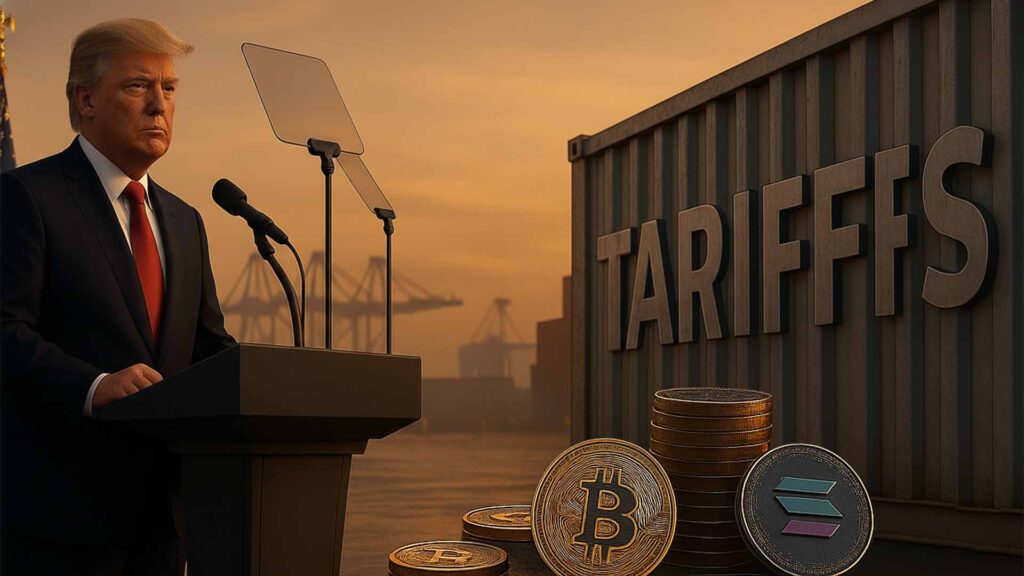
U.S. President Donald Trump and Chinese President Xi Jinping recently held a pivotal meeting in Busan, South Korea. The summit led to an unexpected shift in trade policy, halting the escalation of Trump tariffs.
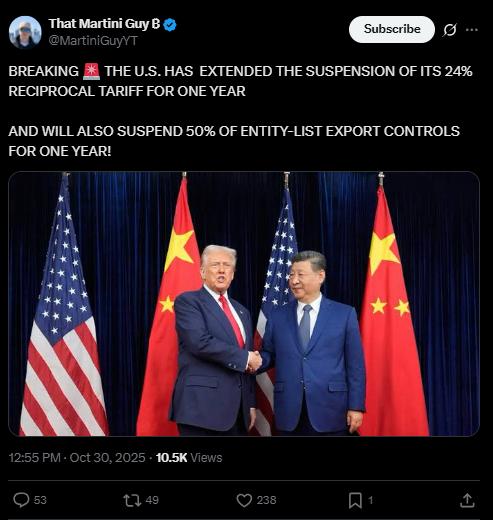
The U.S. agreed to extend the suspension of its 24% reciprocal tariff for one year, easing months of tension from aggressive hikes. This truce follows uncertainty that rattled global markets.
The development could have a significant impact on economies worldwide, including the cryptocurrency sector, signaling a potential turnaround.
Details of the Trump Tariff Halt and Summit
The Trump-Xi summit took place in Busan during the APEC gathering. It was their first in-person encounter in six years. Trump declared major adjustments to the Trump tariffs. Tariffs on fentanyl were immediately reduced from 20% to 10%.
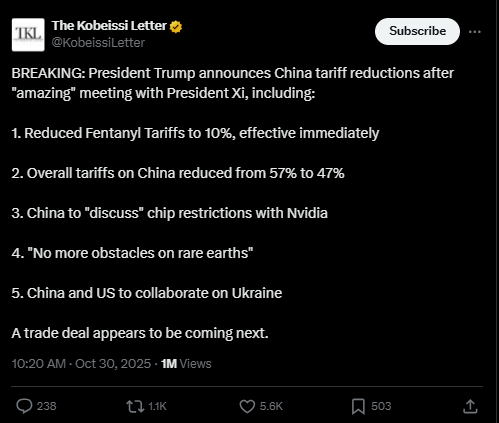
Trump tariffs on China decreased from 57% to 47% overall. China and Nvidia agreed to talk about chip restrictions. The leaders eliminated barriers to the export of rare earths.
They also promised to work together towards bringing peace to Ukraine. A one-year truce halts a planned reciprocal tariff hike of 24%.
This pact extends the pause on new export control expansions. The summit refers to a potential trade agreement and marks a practical thaw in U.S.-China relations. Trump described the meeting as “amazing.” China’s reaction remains cooperative but cautious.
Impact of the Previous Trump Tariff Threat on Markets and Crypto
President Trump announced on October 10th that, effective November 1, all Chinese imports would be subject to a 100% tariff. China’s export restrictions on rare earths prompted this action.
Following the news, U.S. markets fell rapidly. The S&P 500 had its worst day since April, dropping 2.7% (182.60 points). Tech firms like Nvidia and AMD suffered as the Nasdaq fell 3.56% (820 points).
The Philadelphia Semiconductor Index also experienced a decline. Bitcoin dropped to about $104,782 (about 8.4%). Ethereum fell 5.8% to roughly $3,637. Dogecoin experienced losses ranging from 9% to 16%.
In a single day, Trump’s meme coin, $TRUMP, dropped as much as 63%. For the first time in four months, the VIX index surpassed 22. Economic concerns worsened with the U.S. government shutdown, which has been in place since October 1.
SNAP benefits were in trouble, and 750,000 workers were placed on leave. Global supply chains were disrupted, and the combined effects of the Trump tariff and shutdown eroded investor confidence. Rare earths and semiconductors were particularly impacted.
How This Halt Will Affect the Crypto World Now
The halt in Trump tariffs brings new hope for the crypto world. Lower tariffs from 57% to 47% could boost global trade. This may increase liquidity in markets. CNBC notes that trade ease historically lifts risk assets.
Bitcoin could see bullish momentum. Analysts predict a 5-10% price rise in the short term. Ethereum and other altcoins may follow. The rare earth deal stabilizes supply chains. This benefits tech firms like Nvidia. Their stock gains could spill into crypto.
The Ukraine collaboration reduces geopolitical risks. This supports investor confidence. The one-year truce delays further Trump tariff hikes. It offers stability until November 2026.
Crypto communities on X see this as a positive signal. However, the “discuss” clause on chips adds uncertainty. Long-term effects depend on follow-through.
The cryptocurrency market may rally if negotiations are successful. A failure could reverse gains. Overall, the halt eases pressure on crypto prices.