
 Wisp
Wisp Identity.md 6900
 Bunker Mode
 Crawlerpad
 Claudia
 Quantus
 NEAR Protocol

Ethereum crypto has fallen below a key support group and plummeted below the $2,800-$2,850 range. Ethereum has maintained its level across several responses in the past quarter.
Chart data shows that Ethereum crypto started trading in December in a falling formation. Each time it has attempted to break the resistance band at the levels of $2,950 to $3,020, it has not been successful. Selling pressure intensified on November 25, resulting in a clean break below the red-shaded support zone at $2,800-$2,850.
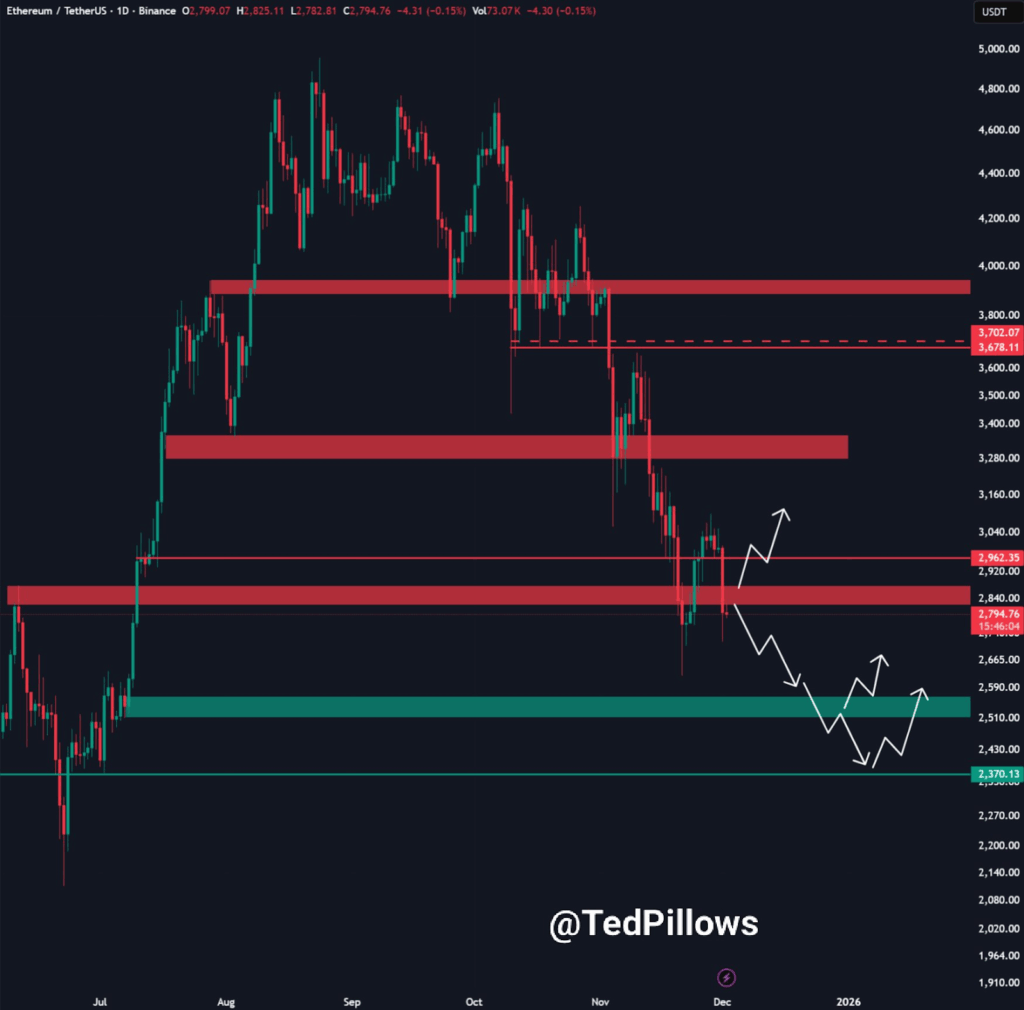
The formation exhibits a row of lower highs extending back to early October, when ETH was trading within the range of $3,800. The decline accelerated in mid-November, and the asset dropped to $2,740 between November 16 and 17. Every retracement that occurred during this period stalled at short-term supply zones, solidifying the bearish pattern.
The daily graph also indicates the areas of possible reaction in case the downward trend persists. The next level of interim is the $2,590-$2,620 range. The level has served as a stabilizing zone in the past in reaction to the pullbacks in August and September. The following large area is priced at approximately $2,370, which aligns with a previous consolidation block in July.
ETF Flow Data Shows Heavy Outflows Despite Institutional Accumulation
Although the pressure on spot prices is still apparent, the trading of ETFs on 1 December provided additional context to the existing market conditions. According to the ETF flow data, outflows were recorded at approximately $79 million across key Ethereum exchange-traded vehicles on December 1. This is one of the greatest one-day redemptions in the past two weeks.
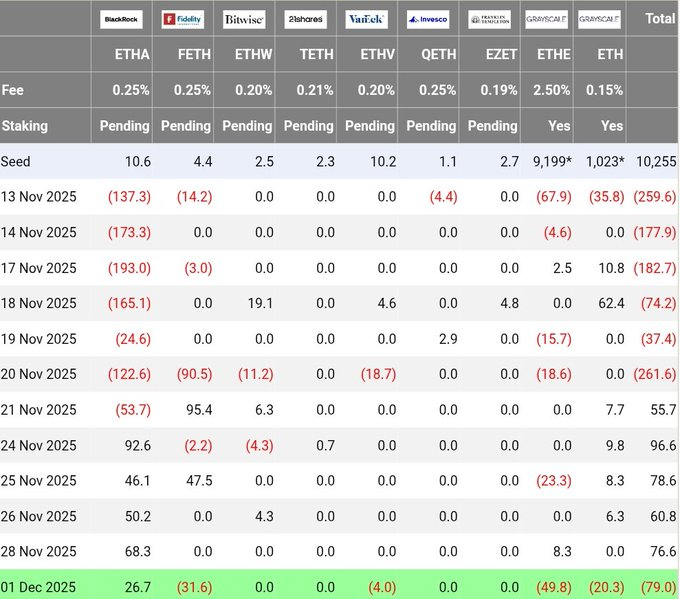
The highest percentage of outflow was made by the Grayscale ETHE product with a total $20.3 million, and the ETHA of BlackRock with a total of $31.6 million of net redemptions. Further selling was shown in ETHV (21Shares) and ETF (Bitwise).
This notwithstanding, independent data show that BlackRock was still buying Ethereum, which added 26.7 million on the same day. The difference between the expansive selling of ETFs and institutional, targeted accumulation demonstrates a mismatch in the short-term sentiment in the ecosystem. The outflow streak can be traced back to the middle of November. However, there were a few days, including November 17 and November 20, when combined redemptions were more than $180 million.
During November 13-1 and December 1, net flows in the listed products were cumulative, with the largest negative days at -259.6 million. This indicates persistent demand for ETF investment products during the worst days of the price decline.
Falling Wedge Pattern Shows Ethereum Crypto Compression Despite Bearish Conditions
Within the 12-hour timeframe, Ethereum crypto is forming a falling wedge, a pattern often associated with decreasing volatility and a constricting figure. The chart indicates a definite upward directional trend since the highs of early October, at approximately $4,000. We observe a downward trend line connecting the consecutive lows at the end of August and November.
The trend is that Ethereum is gaining ground, moving even further towards the apex of the wedge. This tightening process was intensified after November 10. Every rebound was unable to penetrate the downward upper boundary. The analyst who shared the chart pointed out that ETH did not break out, though it still trades in the wedge, which implies that the structure remains intact.
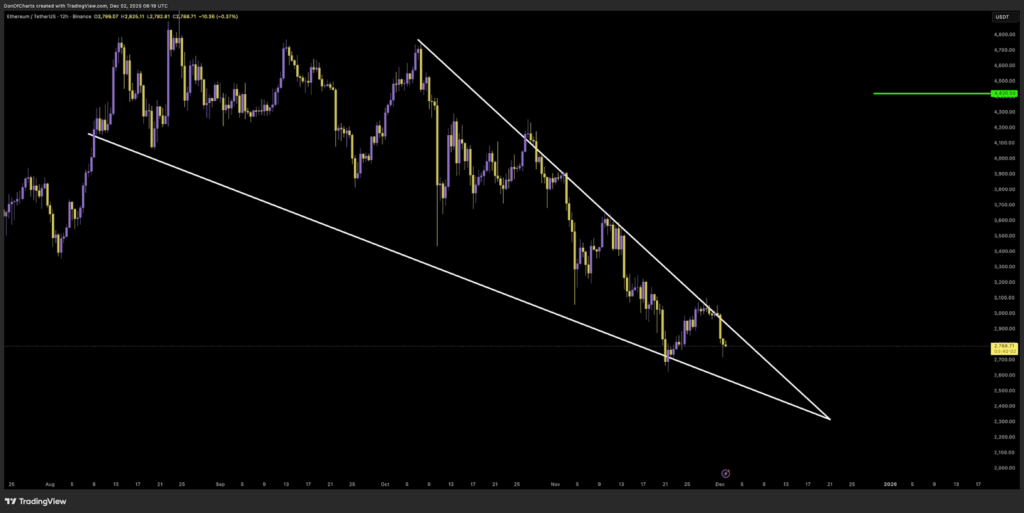
Historical price action in similar patterns typically indicates long-term consolidation, followed by a breakout. The bottom boundary of the wedge is already converged to the area of $2,450-$2,500. The area corresponds with the support areas on the first chart. The upper limit coincides with the range of $3,000-3,050. This further confirms its importance because the level serves as the initial tone to return to in the event Ethereum tries to recover.