
 Gato The Cat
 Solana
 Backpack
 Lighter
 Injective
 Hyperliquid
 Bitcoin

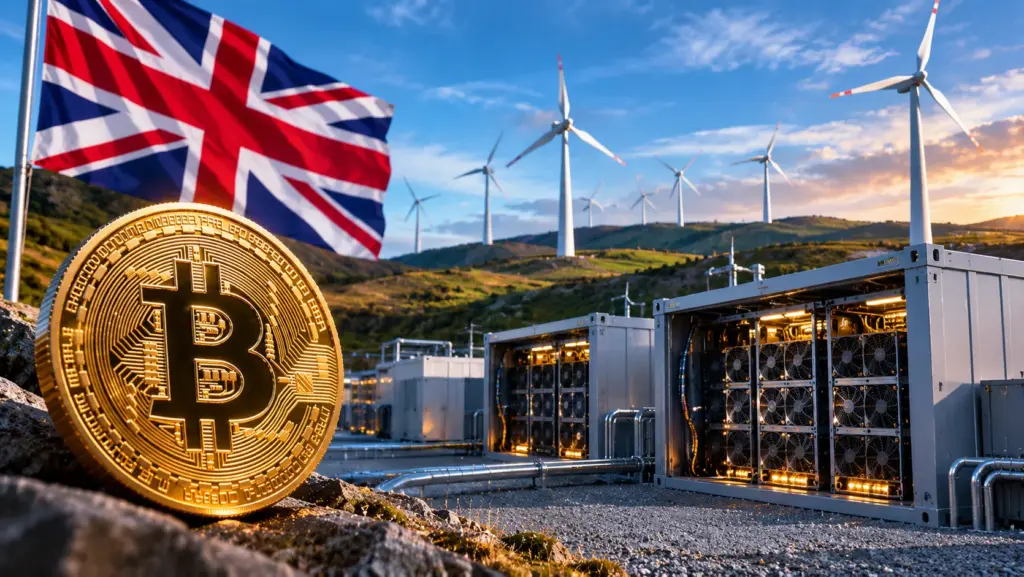
Digital asset advocacy group Bitcoin Policy Institute (BPI) has said the United Kingdom could divert excess wind energy to Bitcoin mining. In a research paper titled "Britain’s Bitcoin Opportunity" by Conner Brown and Joey Garcia, the authors noted that the UK is well-positioned to benefit from BTC mining.
According to the paper, while the UK currently accounts for around 0.1% of Bitcoin mining hashrate due to high electricity prices, it has the potential to host more computing power if it can solve its excess wind energy.
Currently, the UK faces grid constraints because wind farm output in Scotland exceeds transmission capacity. To keep the grid stable, the country’s energy operator has been paying over £1 billion annually to wind farms to turn off and to gas-powered plants to turn on at certain times of the year.
Brown and Garcia noted that consumers bear these curtailment costs and that Bitcoin mining could solve the problem.
New Paper Identifies Bitcoin Mining Flexibility as Key to Cutting UK Curtailment Costs
The researchers noted that the excess energy being forced to shut down could be diverted towards Bitcoin mining. While they acknowledged that AI data centers and traditional industries could also use the energy, they highlighted BTC mining flexibility as making it more suitable.
Unlike other industrial and retail electricity uses, which require stable supply, BTC mining is more flexible. This ensures it can use cheap energy when available and shut down or reduce usage for long periods when energy supply is reduced.

"Bitcoin mining is different: its advantage is comparative rather than unique: it is modular, quick to deploy and relocatable (requiring only a power source and an internet connection, including satellite connectivity), able to curtail fully and for long periods without disrupting any customer’s workloads," they wrote.
Meanwhile, the authors also praised the UK government’s policy on advanced computing infrastructure as a national strategy. However, they criticized the conception of AI compute as productive and of Bitcoin mining as wasteful, noting that Bitcoin mining’s flexibility makes it a natural shock absorber for the grid.
Interestingly, the paper also identified other energy sources that Bitcoin flexibility allows it to tap into within the UK. These include methane-emission sites at stranded landfills and agricultural biogas sites in the country.
BPI Paper Says Britain Has Foundation to be Global Crypto Leader
Meanwhile, the paper highlighted other advantages of Bitcoin in Britain beyond cheap renewable energy. It noted that the UK already has the regulatory and intellectual foundation to be a global leader for Bitcoin.
While the authors acknowledged that UK policy on crypto has fluctuated for years, they noted that clarity is slowly returning, with the policy environment in the UK now more permissive toward Bitcoin and crypto assets.
The country is set to transition to a comprehensive crypto regulatory regime by 2027, with the Financial Conduct Authority taking the lead. Other regulators in the country are also growing more permissive, with restrictive policies now seeing pushback.
However, the paper noted that the UK still has several friction points that will limit its ability to become a global crypto hub. It stated that these obstacles are self-inflicted and can be resolved through pragmatic implementation.
This article summarizes policy research and does not constitute investment advice. Bitcoin mining economics depend on electricity costs, equipment performance, regulation, and market prices. Cryptocurrency investments carry substantial financial risks.