 Pudgy Penguins
 Reboot
 DENIM
 Bitcoin
 Hyperliquid
 Zcash
 Aerodrome Finance

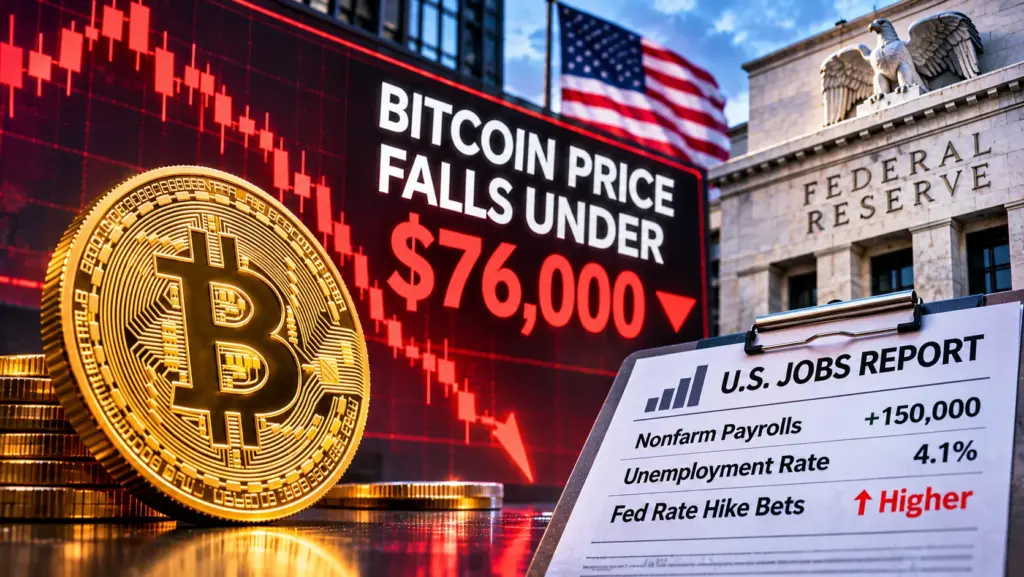
Bitcoin price traded below $76,000 on Nov. 6 after stronger U.S. jobs data reinforced expectations of higher interest rates. The Bureau of Labor Statistics reported 165,000 new payroll jobs in October, while unemployment declined to 4.1%. The release followed a technology-led selloff and $430.2 million in Thursday’s U.S. spot Bitcoin exchange-traded fund withdrawals.
Bitcoin price had already weakened before the employment figures arrived at 8:30 a.m. Eastern Time. Friday’s reaction added pressure to a market struggling to sustain its post-election recovery.
Bitcoin Price Drops as US Jobs Data Beats Forecasts
Bitcoin was trading around $76,000 before the October employment report, following a steep decline during Thursday’s session. Minutes after the release, the BTC price slipped toward $75,200 before buyers pushed the price back toward its earlier level.
According to the Bureau of Labor Statistics, U.S. employers added 165,000 jobs in October, exceeding forecasts of approximately 65,000. The unemployment rate also fell from 4.2% to 4.1%, showing that the labor market remained relatively firm.
Concurrent with the report, the government also revised August and September payroll figures higher by a combined 84,000 jobs. September’s employment gain increased to 60,000 from 29,000, while August’s figure rose by another 53,000.
According to the report, hiring was strongest in professional and business services, which added 70,000 jobs during October. Healthcare and transportation businesses also increased employment, while average hourly earnings rose 0.4% from September.
The employment figures arrived after Bitcoin’s post-election recovery had already begun losing momentum. BTC briefly traded above $80,000 following the U.S. midterms before falling sharply as technology stocks weakened.
Fed Rate Hike Expectations Increase After Strong Payrolls
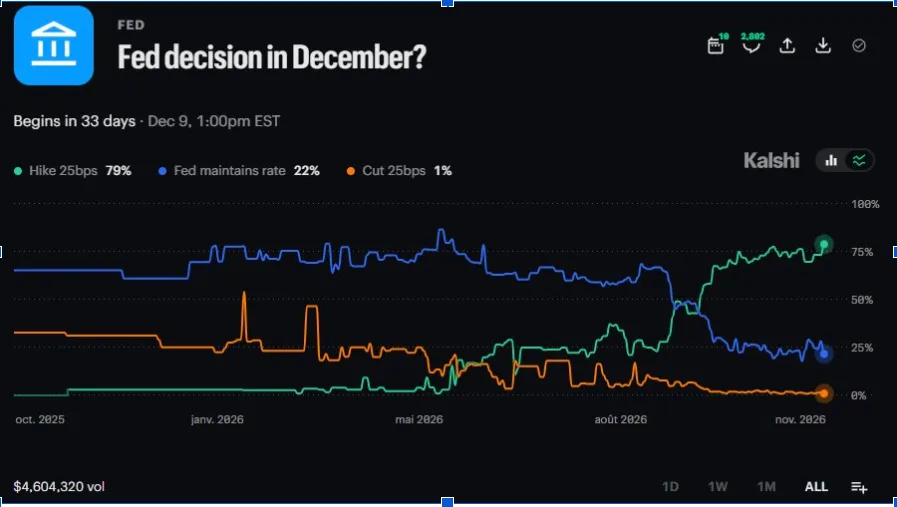
The stronger employment report has caused traders to raise their expectations for another Federal Reserve interest rate increase in December. Moreover, the Fed funds futures indicated an approximately 79% probability of a quarter-point hike, compared with roughly 75% before the announcement.
The change followed evidence that hiring remained stronger than economists expected, while unemployment declined slightly. In addition, wage growth also remained firm, giving policymakers another employment reading to consider alongside inflation figures.
The U.S. dollar strengthened following the release, while Treasury yields moved higher as traders adjusted their interest rate expectations. Higher yields can reduce demand for assets such as Bitcoin and gold, which do not provide regular interest payments.
Bitcoin was not the only one falling after the release, Gold also reacted to the report, falling from approximately $4,062 to $4,032 per ounce before recovering toward $4,050. Amid this decline, Goldman Sachs has lowered its GOLD price forecasts as it assessed the Fed’s tighter policy outlook. The bank cut its end-2026 target to $4,150 per ounce from $4,650 and its end-2027 target to $4,800 from $5,400.
As we reported, the Federal Reserve maintained its benchmark interest rate at 3.75% to 4% during its October meeting. Policymakers will receive further inflation and employment data before deciding whether another increase is necessary in December.
Bitcoin ETF Outflows Add to Crypto Market Selling Pressure
Bitcoin’s reaction to Friday’s report followed heavy selling across U.S. financial markets on Thursday after the US midterm elections. BTC had already fallen from above $80,000 toward $75,000 as technology shares recorded substantial losses.
The decline coincided with renewed Bitcoin ETF withdrawals, which reached $430.2 million on November 5. These outflows reversed the previous session’s inflows and brought November’s total net withdrawals through Thursday to approximately $869.8 million.
Fidelity’s FBTC recorded $199.9 million in withdrawals, while BlackRock’s IBIT lost another $105 million. The selling also affected other funds, including Grayscale’s GBTC and Ark Invest’s ARKB.
With Bitcoin falling below $76,000, traders are monitoring whether buyers can defend the recent $75,000 support area. A move below Thursday’s low near $75,100 would expose that level again, while a recovery above $76,000 would ease immediate pressure.
This article provides market information, not investment advice. Bitcoin and leveraged investments can produce substantial losses.