streamoors
 IGNITION
 no crying in the casino
 Sword Inu
 Altai the Tiger
 NEAR Protocol
 Quantus

- Retail Bitcoin holdings drop as small investors reduce exposure.
- As short term holders reduce holdings, long term holders are accumulating.
- ARK Invest predicts Bitcoin could hit six-figure valuations by 2030.
Bitcoin’s price movement has faced resistance after briefly surpassing the $100,000 mark. Following this climb, the cryptocurrency’s value dropped below $98,000 as bearish sentiment gained control.
The latest data places Bitcoin at $98,557, reflecting a 0.31% decline over the past 24 hours and a 3.29% drop over the last week. Meanwhile, market indicators suggest a hesitancy among retail investors to buy at these levels.
Retail Reluctance Amid Bitcoin Price Decline
On-chain data highlights a reduction in Bitcoin holdings among retail investors. According to an analysis by Ali Martinez on X, the number of addresses holding between 0 to 1 BTC has steadily decreased.
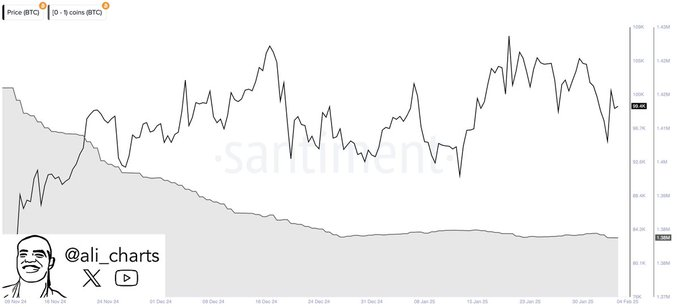
The metric has declined from approximately 1.42 million to 1.38 million addresses, suggesting weaker retail participation.
This shift may indicate growing caution among retail investors, who could be either cashing out or avoiding entry at the current price range.
Additionally, the decreasing number of smaller wallets points to increased wealth concentration among larger holders. While retail interest has waned, long-term holders continue to expand their positions.
Separate data from IntoTheBlock indicates that addresses holding Bitcoin for over a year have increased by 0.65%, reinforcing long-term confidence in the asset.
Long Term Holders Are Accumulating
The data segments holders into three categories: hodlers (over one year), cruisers (one to 12 months), and traders (under one month).
Recent trends show an increase in hodlers by 0.65% and cruisers by 0.80%, suggesting that some traders are transitioning into mid-term holders.
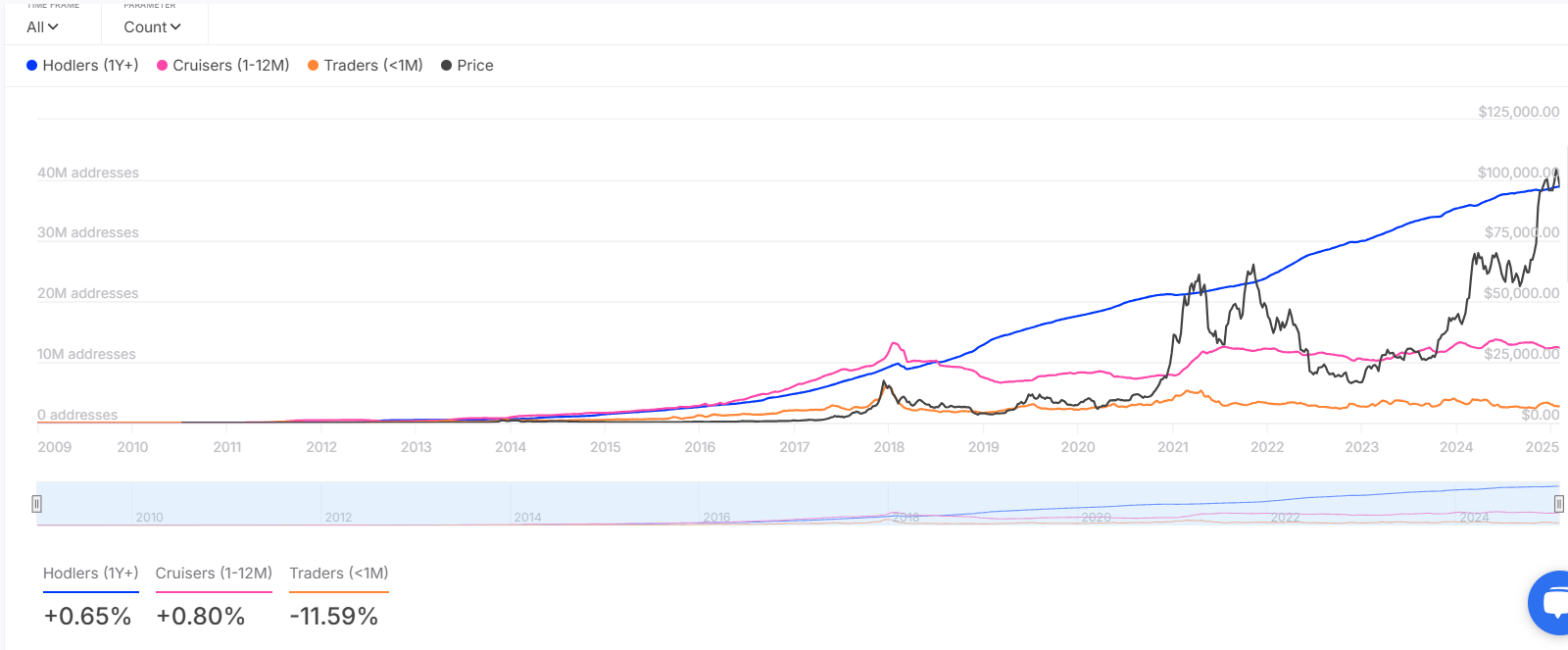
However, the number of traders has dropped by 11.59%, reinforcing the decline in short-term speculative interest.
Network transaction data further highlights changes in market participation. Small transactions, ranging from $0 to $100, have recorded significant declines.
Transactions between $0 and $1 have fallen by 41.97%, those between $1 and $10 have dropped by 60.21%, and transactions between $10 and $100 have decreased by 7.45%.
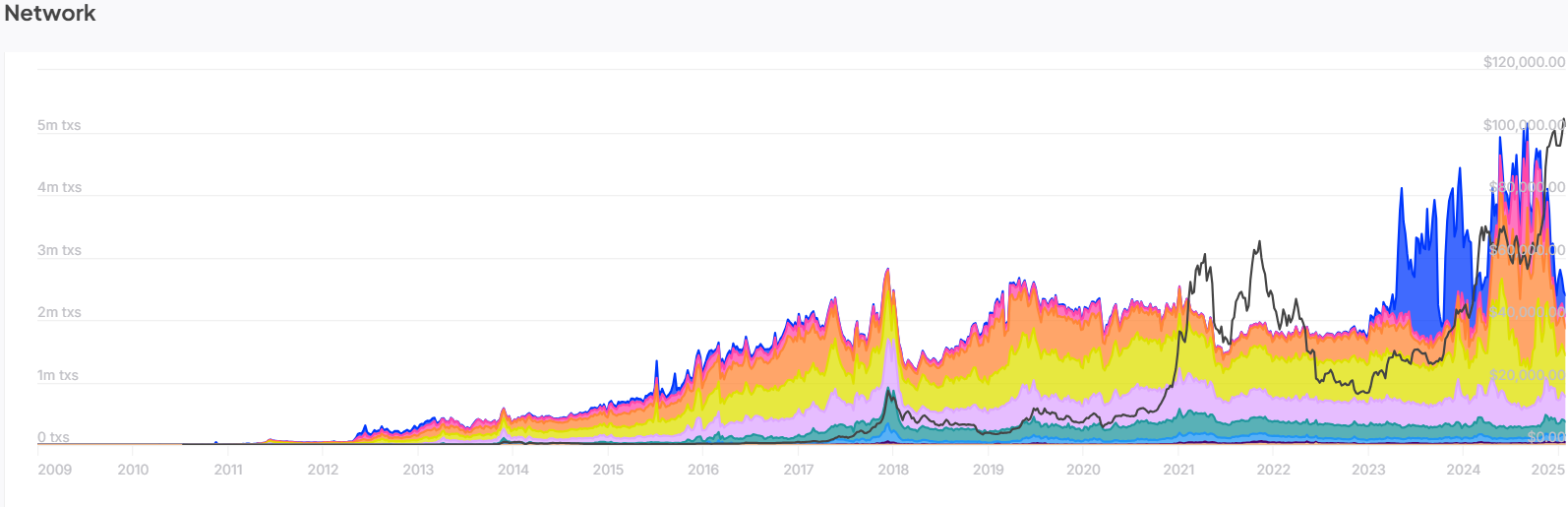
This reduction signals lower engagement from smaller investors. Meanwhile, mid-sized transactions between $100 and $1 Million have also declined, with $100k-$1 Million transactions seeing the most significant drop at 8.69%.
Despite these declines, whale transactions have surged. Transfers in the $1 Million to $10 Million range have increased by 29.03%, indicating that institutional investors and large holders are playing a more prominent role in market activity.
MicroStrategy Pauses Bitcoin Acquisition
In related news, MicroStrategy, a firm co-founded by the vocal Michael Saylor, has temporarily halted its weekly Bitcoin purchases after 12 consecutive weeks of acquisitions.
The Virginia-based firm, which has become a major corporate Bitcoin holder, ended its buying streak last week. The decision followed an extended crypto rally, largely influenced by shifting policies under the current U.S. administration.
During its most recent accumulation phase, MicroStrategy acquired over $20 Billion worth of Bitcoin, bringing its total holdings to approximately $44.7 Billion.
This represents more than 2% of Bitcoin’s total supply, underscoring the company’s long-term investment strategy. Meanwhile, institutional interest in Bitcoin remains strong.
Projections for Bitcoin Price
Amid the plummeting buyer activity, a recent report from ARK Invest projects a significant price increase for Bitcoin by 2030.
The investment firm’s “Big Ideas 2025” report outlines potential price targets, estimating Bitcoin could reach $300,000 in a bear case, $710,000 in a base case, and $1.5 Million in a bullish scenario.
ARK attributes these forecasts to growing institutional adoption, corporate treasury allocations, and nation-state interest in Bitcoin.
Notably, the emergence of spot Bitcoin ETFs has accelerated institutional participation. These investment products currently hold over $116 Billion in assets, with net inflows exceeding $40 Billion in just over a year.
Disclaimer
This article is for informational purposes only and provides no financial, investment, or other advice. The author or any people mentioned in this article are not responsible for any financial loss that may occur from investing in or trading. Please do your research before making any financial decisions.