Pearl
Pearl Bitway
 Pudgy Penguins
 Quantus
 Walrus
 Quant
Quant Artificial Superintelligence Alliance

Key Insights
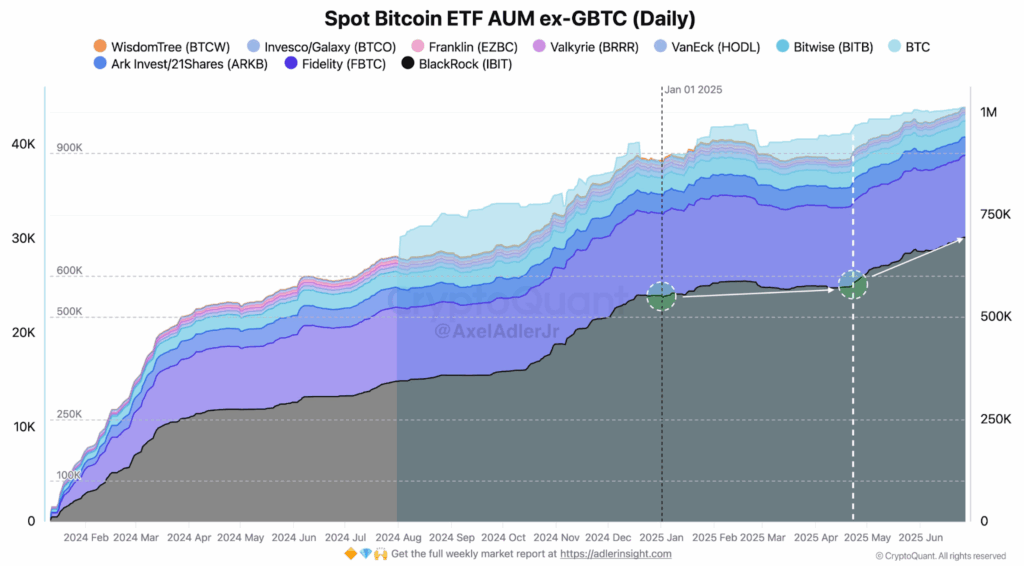
- Spot Bitcoin ETF (excluding GBTC) gained 124,000 BTC in assets under management since early April.
- Short positions increased over the past week, while overall leverage remains below December 2024 levels.
- BlackRock’s IBIT led ETF growth, contributing nearly 95% of the total AUM increase.
Bitcoin markets witnessed significant structural movement as ETF inflows accelerated, short activity climbed, and overall leverage declined. Over the last 87 days, spot Bitcoin ETFs (excluding GBTC) added 124,000 BTC to their combined AUM. While institutional interest remains strong, market indicators suggest a cautious approach from speculators.
Bitcoin ETF Inflows Surged Since April
Since the beginning of April 2025, the number of spot Bitcoin ETFs has increased their AUM by 124,000 BTC, reaching 1,056,000 BTC. This reflects an increment of 124,000 BTC, which is an average of 1,430 BTC per day. BlackRock’s IBIT alone contributed 118,000 BTC, highlighting its dominant role in institutional accumulation.
The rest of the ETFs increased by 6,000 BTC in the same duration, which shows a concentration of demand.
In case the present rate of inflow remains unchanged, the ETF holdings are likely to reach over 1.18 million BTC by the end of September. This would also bring BlackRock’s IBIT holdings near 817,000 BTC.
The increasing ETF inflows are indicative of the long-term optimism in traditional finance, despite the temporary market risks.
The figures are an indication that the demand for institutional exposure to Bitcoin is still increasing. However, the signals of trading in the derivatives markets show a more reserved attitude of short-term traders.
Traders Hedge With Shorts While Bitcoin ETF Momentum Builds
In the last seven days, short positions have been constantly rising on derivative platforms. It seems that traders are protecting themselves against a potential decline or anticipating volatility in the future. The price action demonstrates a bounce off sub-$100K levels, and it could form a base for further moves.
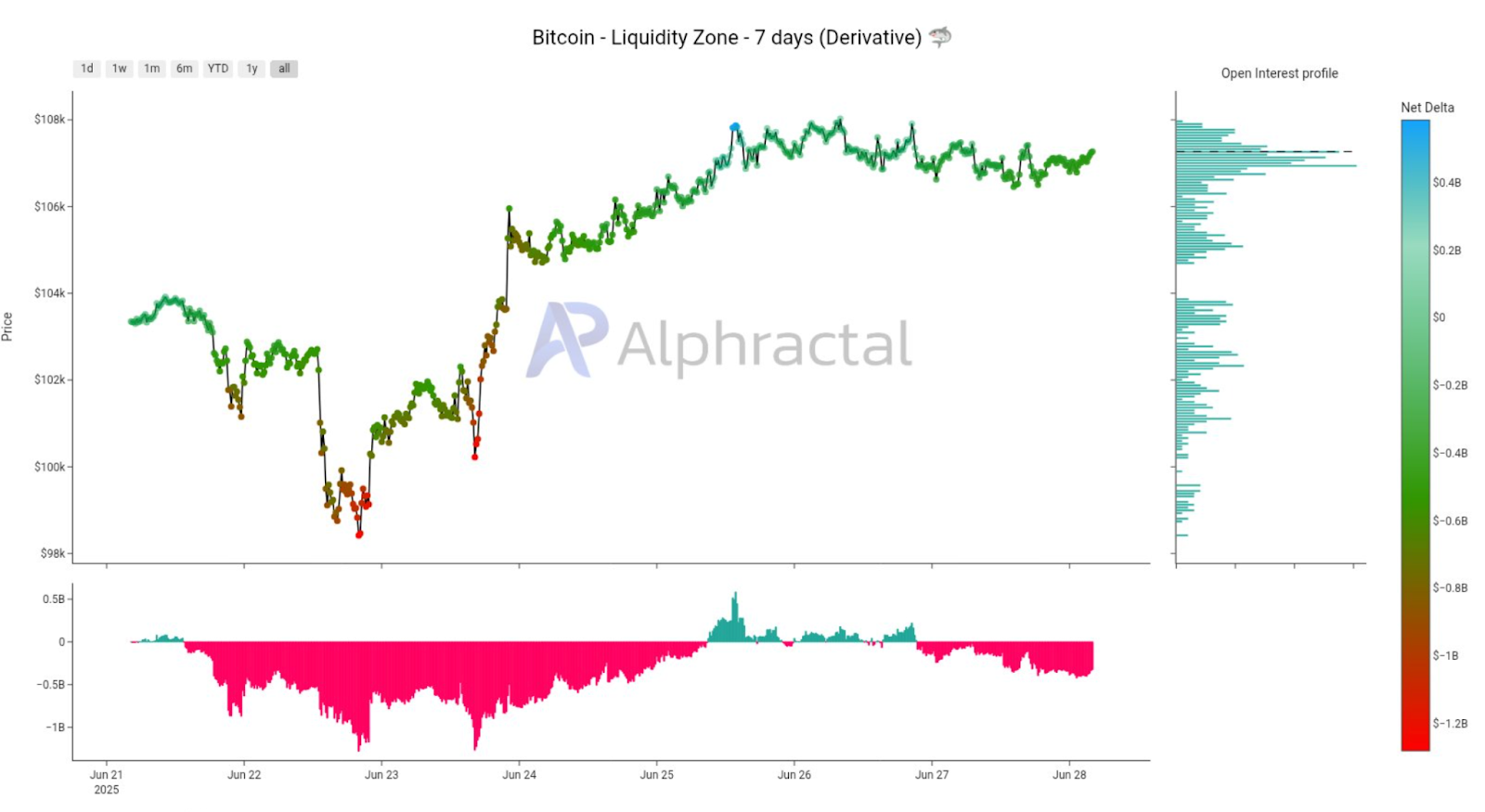
Although bearish positioning is occurring, the overall tone has not turned into panic selling. The rise in short interest may be a form of hedging and not an outright position against Bitcoin. This is an indicator of uncertainty, yet not the reversal of the general bullish trend.
On-chain analytics and liquidity bands indicate the price is gearing to take off in a massive rally. There is a tendency to see historical patterns and positioning before powerful rally or corrections. Therefore, the existing market behaviour can be associated with accumulation, not with distribution.
Market Leverage Declines as Risk Appetite Cools
Meanwhile, the Open Interest to Market Cap ratio indicates decreased leverage on the December 2024 level.
This measure represents the speculative risk in derivatives, and the current value shows a more healthier market. A reduced leverage means more stability and minimizes the risk of liquidations cascades.
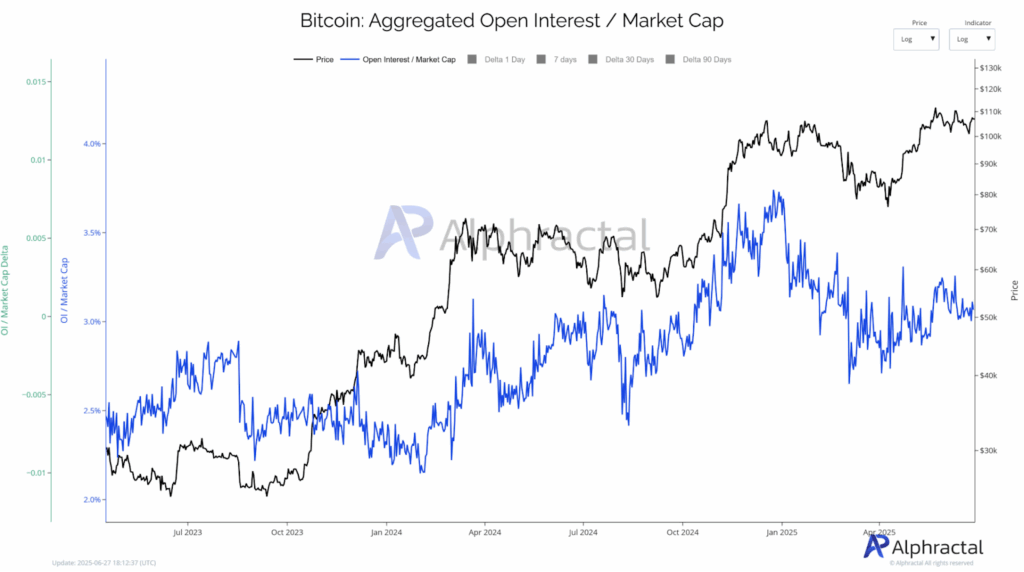
Leverage has been soaring throughout early 2025, but recent signs are pointing towards a decline towards more sustainable levels. With a less risky environment, there is a tendency towards institutional entries and long-term positioning. This change enhances the stability of the market against sudden volatility.
In the meantime, ETF net inflows indicate the ongoing demand of capital allocators. The U.S. BTC ETFs had net inflows of 501.2 million dollars on June 27 alone. Another $77.5 million was added to ETH ETFs, and it is the general trend of digital assets.
Long-Term Holders Remained Firm as Supply Tightened
CryptoQuant data showed that long-term holders continued to accumulate, while short-term selling increased. The long/short-term holder ratio returned to levels seen during Bitcoin’s $60,000 and $100,000 phases in previous cycles.
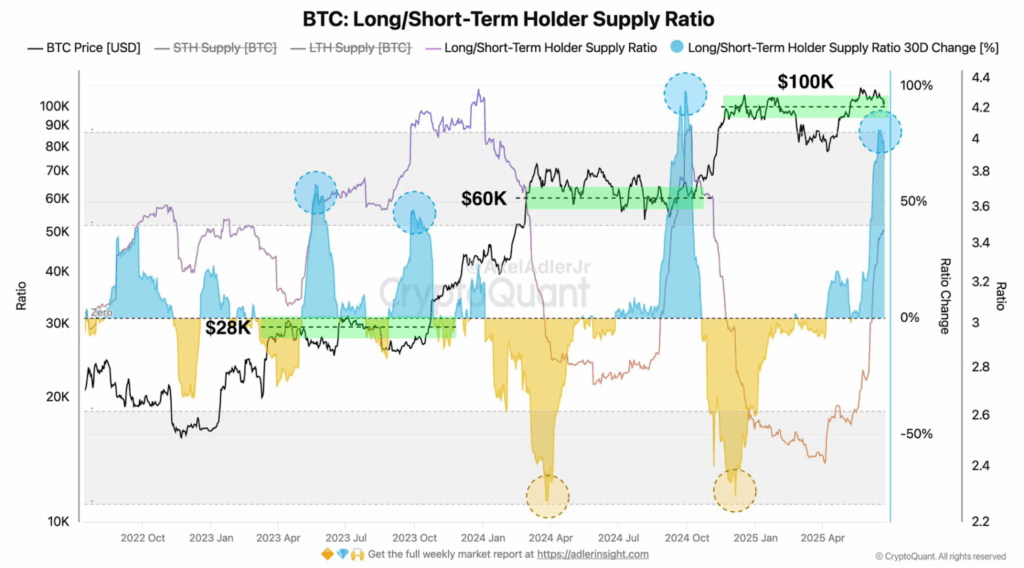
The declining supply on exchanges indicated reduced sell pressure. Concentration in stronger hands further restricted liquidity, reinforcing the bullish setup.
This holder behavior combined with rising ETF allocations and subdued leverage—pointed toward a breakout scenario. However, traders remained cautious of macroeconomic events and regulatory signals, particularly around ETF flow cycles.