
 no crying in the casino
 NEAR Protocol
 Starknet
 Pyth Network
 Pearl
Pearl Quantus
 Pudgy Penguins

Key Insights:
- Tuttle Capital targets July 2025 for crypto ETF launch date.
- Rex-Osprey’s Solana Staking ETF could influence market timing.
- SEC’s proposed 75-day review could streamline crypto ETF approvals.
Tuttle Capital has filed a post-effective amendment to its Registration Statement, marking a significant step toward the potential launch of several crypto-focused exchange-traded funds. The amendment sets July 16, 2025, as the effective date for a range of new products, including the Tuttle Capital 2X Long Daily Target ETFs.
These funds will cover a diverse array of digital assets, such as XRP, Solana, Litecoin, Bonk, BNB, Cardano, Chainlink, and Polkadot, among others. This move signals that these crypto-related ETFs may soon enter the market, though regulatory hurdles and market conditions could cause delays.
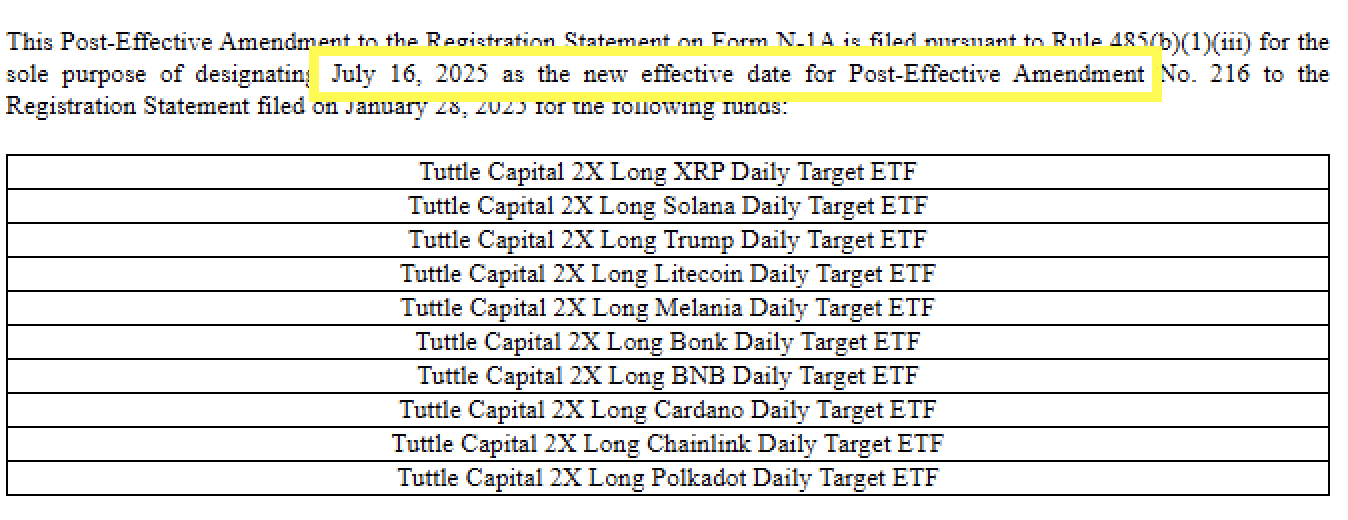
However, it’s important to note that the amendment does not guarantee immediate launches. Past filings suggest that the effective date often indicates the product is close to being listed, but the process is still subject to regulatory and market delays.
As Eric Balchunas, an analyst at Bloomberg, pointed out, the July 16 date may signal a shift toward the imminent launch of these ETFs, following the recent approval of Canada’s first spot XRP ETF in June.
Rex-Osprey Solana Staking ETF Launch
In the broader context of crypto ETFs, Tuttle Capital’s announcement comes just ahead of another notable development in the space. The Rex-Osprey Solana Staking ETF ($SSK) is set to launch the following day, becoming the first U.S. ETF to stake Solana tokens. This launch is expected to attract interest from investors seeking exposure to Solana through a regulated exchange-traded product.
The $SSK ETF launch is significant as its success or failure could have a ripple effect on the timing and success of other crypto-based ETFs. While analysts are optimistic about the product’s potential, the manner in which the $SSK ETF was approved has raised some concerns.
Unlike other ETFs, the approval was not an official sanction by the U.S. Securities and Exchange Commission. Instead, the SEC’s non-opposition allowed the ETF to proceed. This unique approval process has sparked debate about the regulatory framework for cryptocurrency-based products in the U.S.
SEC Developments Could Change Crypto ETF Approval Process
Meanwhile, the SEC appears to be taking steps to streamline the approval process for crypto ETFs. According to an X post by journalist Eleanor Terrett, the SEC is reportedly collaborating with exchanges to create a new listing standard for crypto ETFs.
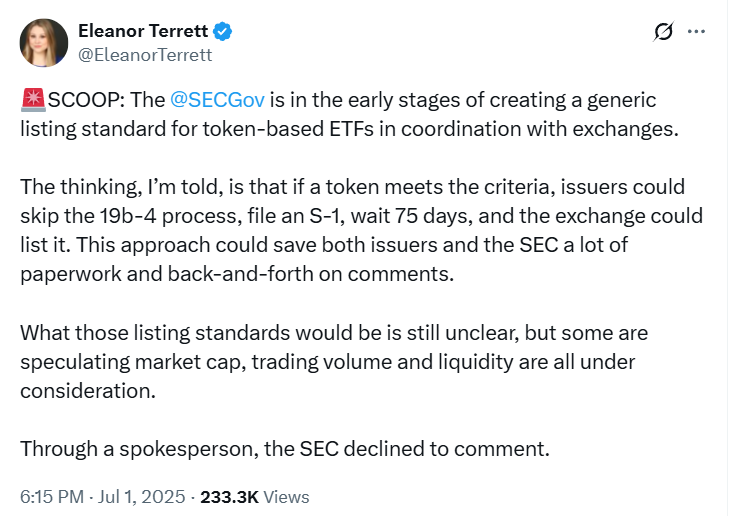
If implemented, the proposal would allow issuers to file an S-1 registration and wait only 75 days before a product can be listed, significantly reducing approval delays.
Currently, the SEC’s review process for crypto ETFs involves multiple stages, including two 45-day windows under Rule 19b-4, which adds up to 90 days. Issuers can often face even longer delays, with some waiting six to eight months for final approval.
The new framework, which removes the 19b-4 step and focuses solely on S-1 filings, could result in a more predictable and efficient approval timeline. This proposed shift may mark a turning point in how the SEC approaches token-based ETFs, with an emphasis on disclosure rather than rule updates. However, the proposal is still in the early stages, and no official timeline has been set.
SEC is Easing Approach on Crypto
The recent turn of events implies that SEC U.S. is softening its stance on crypto financial products. The suggestion to introduce an effective review term every 75 days of crypto ETF might prove useful in simplifying the approval work, making it more efficient and predictable. If implemented, this change would be a significant step toward the integration of token-based ETFs into the broader financial market, potentially reducing the delays and friction that have characterized previous approval timelines.
This change may be especially profitable to an issuer, such as Bitwise. The company’s Ethereum ETF staking proposal, which was recently delayed by the SEC, would likely benefit from the faster approval process. A more certain schedule would make the journey of crypto ETF less cumbersome and would also streamline the pace at which they would be adopted into mainstream investment funds.
Disclaimer
This article is for informational purposes only and provides no financial, investment, or other advice. The author or any people mentioned in this article are not responsible for any financial loss that may occur from investing in or trading. Please do your research before making any financial decisions.



