
 NEAR Protocol
 Pyth Network
 Uniswap
 Pearl
Pearl Quantus
 Aerodrome Finance
 Starknet

Key Insights:
- Shanghai regulator explores policy direction on crypto and stablecoins
- JD.com and Ant Group eye stablecoin licenses in Hong Kong
- Experts urge yuan-based stablecoin to counter US dollar-linked crypto
Shanghai’s State-owned Assets Supervision and Administration Commission (SASAC) recently convened a high-level policy meeting on digital currencies and stablecoins.
This development signals a strategic reassessment in China’s financial regulatory direction, despite the country’s long-standing crypto ban.
With global momentum growing and Chinese tech firms pushing forward, regulators appear more open to exploring structured crypto adoption.
Shanghai Hosts Strategic Policy Session on Digital Currencies
On July 10, 2025, the Shanghai SASAC organized a central study session. Around 60 to 70 government and policy officials participated. Qing, the Party Secretary and Director of SASAC, presided over the meeting.
He emphasized the need to deepen understanding of digital currency developments. This gathering marks a significant shift in regulatory tone as China cautiously re-evaluates crypto’s role in future financial architecture.
According to a post on the commission’s official WeChat account, the meeting emphasized strengthening research into blockchain and crypto finance. Li Mingliang, Chief of the Policy Group at Guotai Junan Securities, delivered a detailed briefing.
He explained the evolution of stablecoins and current global regulatory approaches. He also highlighted how state-owned enterprises could strategically integrate digital currency technologies.
The regulator’s direction suggested a move toward strategic agility. The agenda focused on aligning emerging digital finance models with existing industrial and economic goals.
Reuters reported that this approach reflects Shanghai’s ambition to maintain its lead as a global financial center and regulatory pioneer.
Chinese Tech Giants Push for Stablecoin Licenses in Hong Kong
A central group study session occurred at the Shanghai SASAC on July 10, 2025. Around 60 to 70 government and policy officials attended.
He Qing, the Party Secretary and Director of SASAC, chaired the meeting. He urged participants to strengthen their understanding of digital currency trends.
This gathering marks a significant shift in regulatory tone as China cautiously re-evaluates crypto’s role in future financial architecture. Both companies have been lobbying for a yuan-pegged stablecoin to challenge the dominance of USD-linked crypto.
They aim to offer a faster, more cost-effective digital settlement tool within China’s financial system. This move reflects growing pressure to keep pace with global corporations like Amazon and Walmart. They are exploring the development of stablecoins in the US.
Hong Kong and mainland China have separate legal systems, which allow firms to test crypto solutions in a controlled environment. These experiments happen within a regulatory sandbox.
Despite the isolation, the outcomes influence national policy discussions. The rising demand for cross-border digital finance adds urgency to these debates.
Experts Recommend CNY-Based Stablecoin with Centralized Oversight
The Guotai Haitong Securities policy expert shared key insights on the future of crypto development. They also offered influential views on stablecoin adoption and regulation. The professional emphasized that the center must control and regulate a stablecoin pegged to the yuan.
They promoted a dual issue model- a combination of wholesale and retail mechanisms on blockchain infrastructure. Yang Tao, the Deputy Director of the National Finance and Development Laboratory, suggested a two-currency model with CNYC and CNHC.
CNYC would be an onshore-offshore RMB stablecoin, and CNHC its offshore version. The model is intended to facilitate cross-border transactions, settlement of real-world assets, and wider international usage of the RMB.
Yang also suggested the introduction of an electronic fence to guarantee compliance, traceability of funds, and risk mitigation. He stressed the need for a strong legal system to support healthy growth and prevent instability.
China’s central bank has expressed caution toward digital currencies. In June 2025, Governor Pan Gongsheng warned that they pose a systemic risk to traditional regulatory frameworks.
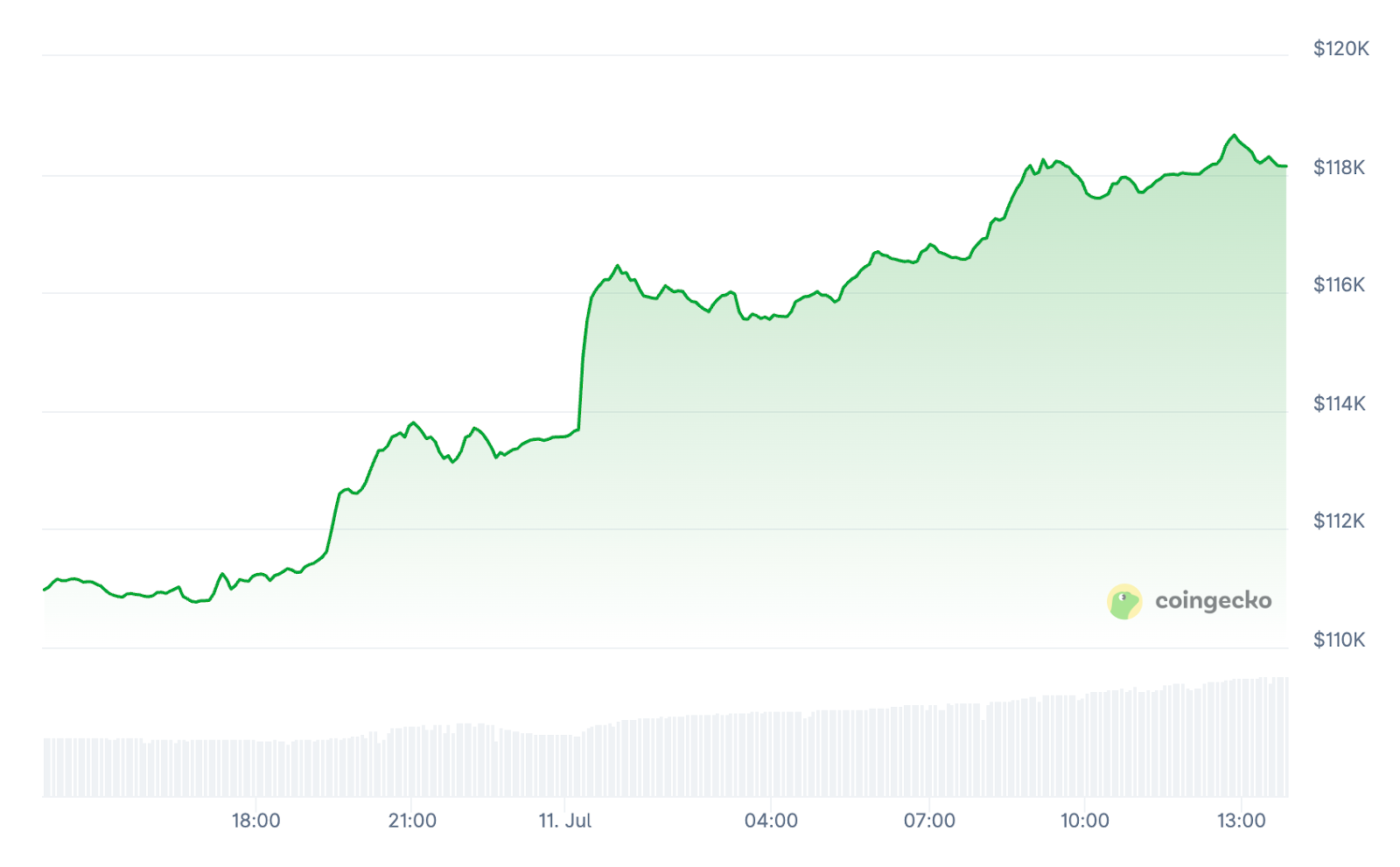
Bitcoin has hit a new high of approximately $118,000. This surge has drawn greater attention from Chinese regulators. Nationwide bans on crypto assets are still in place.
Meanwhile, Shanghai is adjusting its policies and involving key stakeholders. The goal is to embrace digital transformation while protecting financial stability.
Disclaimer
This article is for informational purposes only and provides no financial, investment, or other advice. The author or any people mentioned in this article are not responsible for any financial loss that may occur from investing in or trading. Please do your research before making any financial decisions.



