Minter
 Bittensor
 Quack AI
 NEAR Protocol
 Pons
Pons Pearl
Pearl Bitcoin
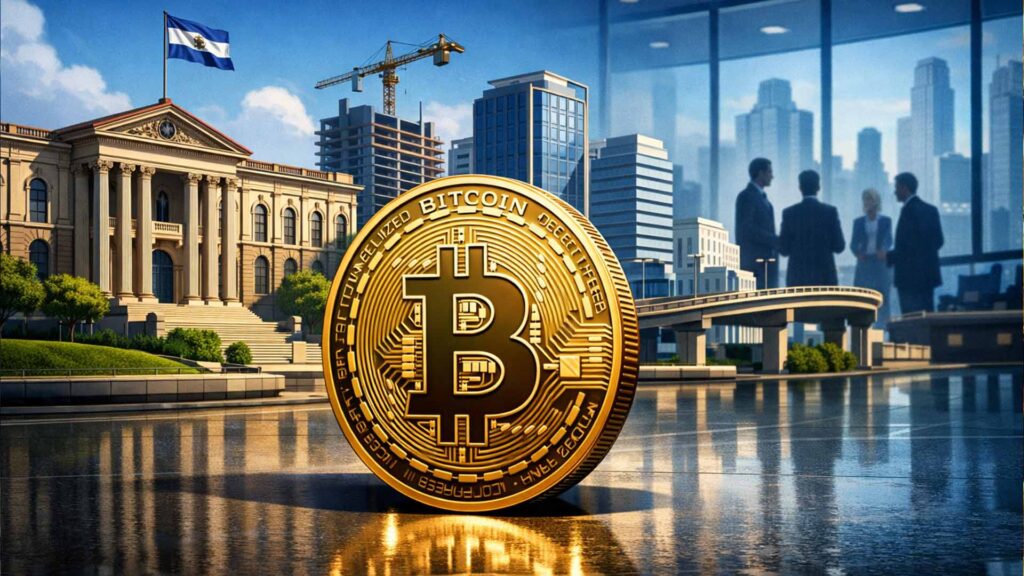
El Salvador is attracting global attention with its bold economic strategy under President Nayib Bukele. Bitcoin news continues to spotlight the country’s unique path, as growth accelerates, security improves, and investor confidence rises.
The IMF now projects GDP to expand by about 4% in 2025, supported by remittances, investment flows, and fiscal reforms.
Since adopting Bitcoin as legal tender in 2021, El Salvador has sought to strike a balance between innovation and international standards. Despite tensions with the IMF, the government continues to buy Bitcoin, betting on long‑term gains.
Bitcoin News: IMF Forecasts Growth and Stability
The IMF expects El Salvador’s economy to grow faster than previously estimated. They cited record remittances, rising investment, and renewed confidence among businesses and consumers.
The 2025 budget aims to reduce deficits while expanding social spending. It’s a combination designed to strengthen fiscal discipline while addressing social needs.
Security policies have sharply reduced crime, which in turn has boosted tourism and improved the business climate. Bitcoin news highlights ongoing tensions between the government and the IMF, which has called for stronger risk controls on crypto.
El Salvador has agreed to certain changes. This includes making Bitcoin use voluntary for merchants and removing the option to pay taxes in cryptocurrency. Even so, the government continues daily Bitcoin purchases, signaling its commitment to the strategy.
While growth is not solely driven by Bitcoin, unrealized gains from the holdings provide a financial buffer. Analysts note that El Salvador is branding itself as innovative, combining traditional reforms with a high‑risk bet on digital assets.
Reforms Drive Confidence
Fiscal discipline remains at the core of El Salvador’s turnaround. Deficits are shrinking, and the primary balance target is on track. Social programs are expanding in line with IMF demands, supported by the Extended Fund Facility worth $1.4 billion.
Reforms include pension studies, stronger anti‑money laundering laws, reduced domestic borrowing, and growing reserves.
President Bukele has quoted Hemingway’s line “Gradually, then suddenly” to describe the shift. This emphasizes that years of groundwork are now producing visible results.
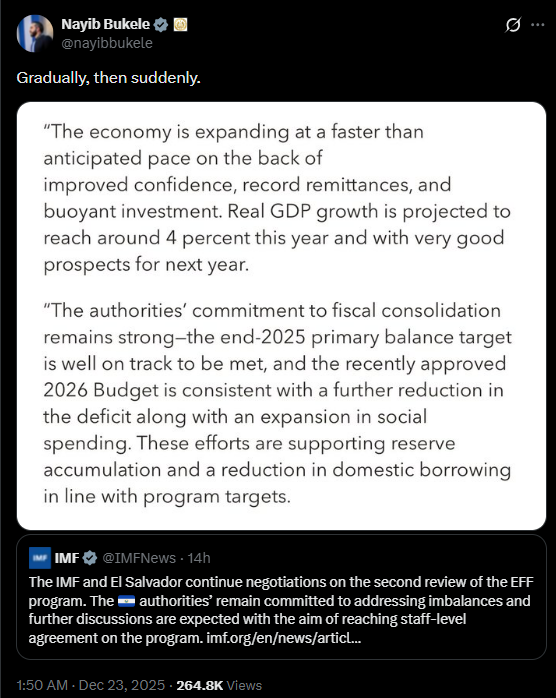
Remittances, which account for 20–25% of GDP, continue to fuel household spending. Investments in technology are rising, while security crackdowns have reduced gang violence, improving conditions for business.
The IMF has praised the government’s commitment to reforms, though challenges remain. Market volatility could disrupt plans, but confidence from abroad is growing, helping attract new funds.
The 2026 budget continues this trajectory, prioritizing education, health, and infrastructure to build resilience.
Bitcoin News: Holdings and Future Bets
El Salvador currently holds about 7,509 BTC. The government values the reserve between $670 million and $740 million, with prices hovering near $90,000 to $ 100,000 per coin.
Daily purchases continue despite the IMF’s advice against new public purchases. On‑chain data shows growth in holdings, though some analysts suggest this may reflect consolidations. Transparency remains a key issue in ongoing talks.
Citizen adoption of Bitcoin is mixed. Many still prefer the US dollar, and volatility discourages daily use. The Chivo wallet, plagued by fraud and technical bugs, is being phased out, with private firms expected to take over. Bitcoin news outlets describe this as a pragmatic step.
Tourism has benefited from Bitcoin branding, with Bitcoin Beach attracting visitors and fintech firms investing in the country. Geothermal energy powers Bitcoin mining, providing a renewable energy source. Plans for Bitcoin City remain stalled, but the vision persists.
Critics argue that Bitcoin has brought more costs than benefits, while Bukele insists that long‑term gains will justify the strategy. As a reserve, Bitcoin provides a hedge against risks, and potential profits could fund future projects. El Salvador continues to lead in this area, with other nations closely watching.