astronaut
 Pearl
Pearl Zcash
Zcash Walrus
 NEAR Protocol
 Starknet
 Pudgy Penguins
- McKinsey released a report detailing the current situation of AI.
- The report dwells on the working of organizations and how it would affect the existing workforce.
The latest McKinsey Global annual AI report discusses companies already leveraging genes and points toward the required talent shifts. The survey speaks about the companies which allocated substantial budgets for Artificial Intelligence. These organizations are going all in for both traditional and generative AI.
Active Members of the genAI Club – McKinsey
As mentioned above, many organizations have already generated profit from leveraging AI and using the technology more in their vertices than others. They are leveraging multiple aspects of the technology, including traditional machine learning capabilities, chatbots, and robotic process automation.
Leveraging this aspect, they wish to upscale their product and service development, development-cycle optimization, and enhance existing products and services. Also, using it for better HR management, like organization designing, workforce deployments, etc.
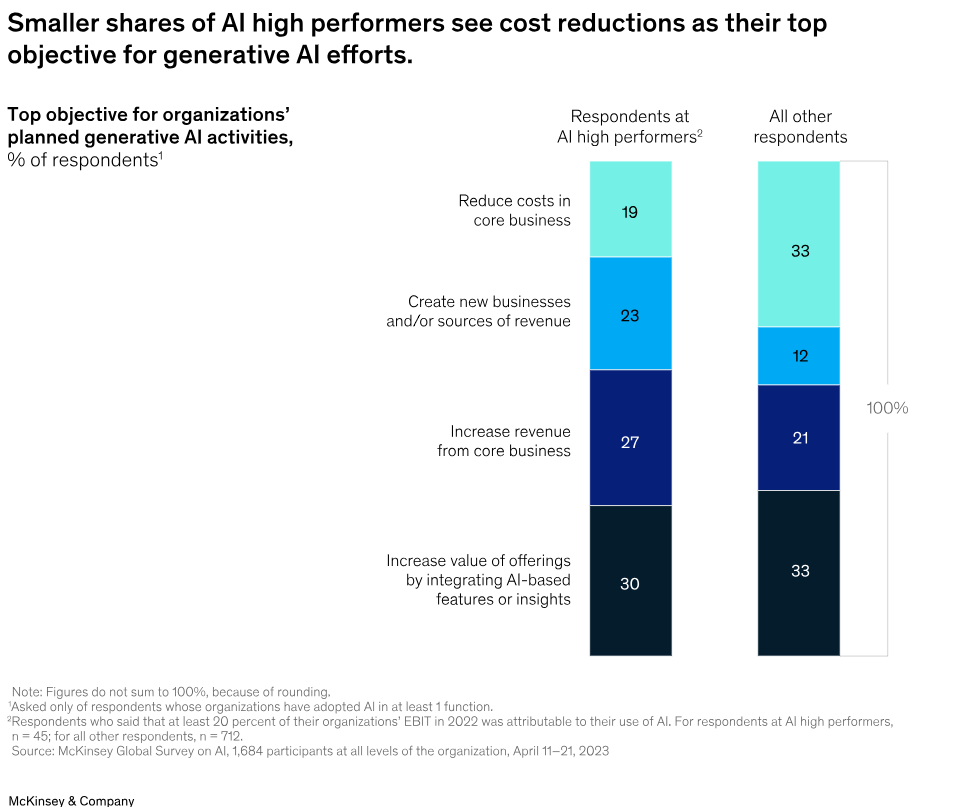
As mentioned in McKinsey Global’s previous report, high-performing organizations tend to invest more than 20% of their digital budget in AI. They also use the technology in multiple aspects of the operations. Respondents are also eager to use AI in the organization’s four or more business functions.
The report’s findings suggest that even high-performing organizations fail to master the best practices regarding AI adoption. For instance, machine-learning-operations (MLOps) approaches. Even they are way ahead in making this approach functional. Many MLOps practices and technologies must be adopted to transform the use cases of AI usage in these organizations.
How Would AI Will Affect the Existing Workforce
McKinsey’s latest survey discusses the possible role changes these organizations are willing to make to accommodate AI. In the past few years, hiring data engineers, AI data scientists, and machine learning engineers has grown significantly. But only a few respondents agreed to have hired AI-related software engineers.
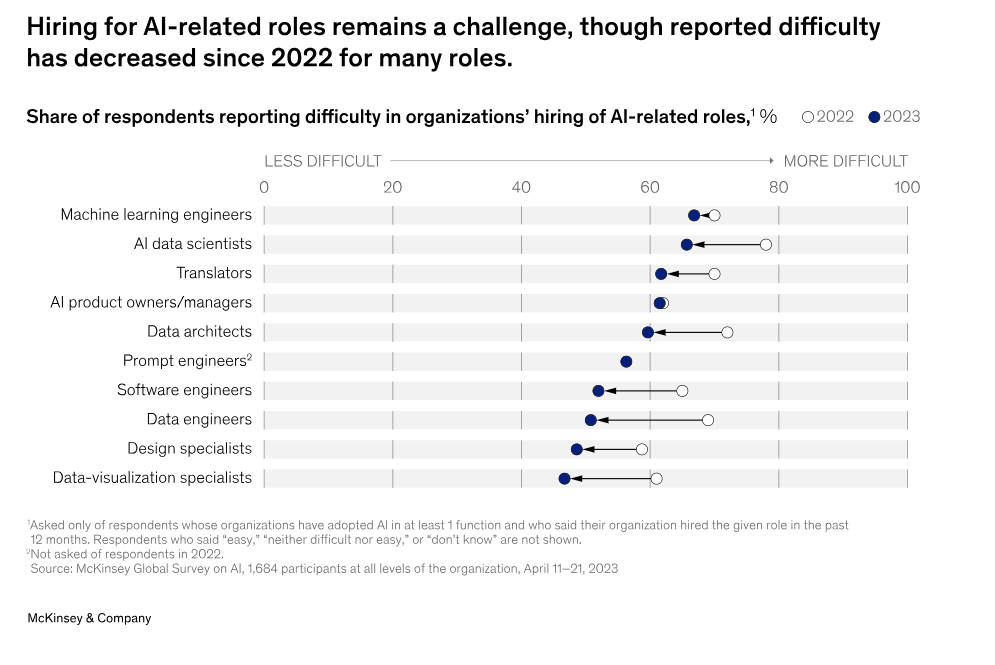
The hiring dropped from 39% to 28% compared to the previous survey. Looking ahead three years down the line, the respondents foreshadow that AI adoption would swap many roles in the companies. It would require more employees to be reskilled rather than separated from the workforce.
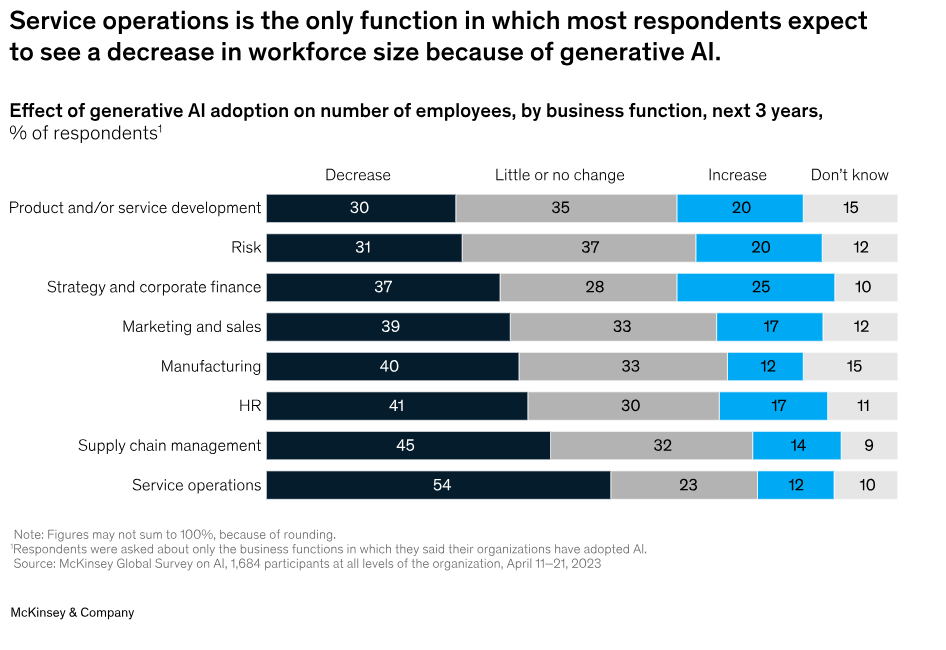
Forty percent of respondents argue that nearly 20% of the workforce would need to be upskilled, while 8% of respondents think about resizing. Most respondents believe that the vertical of services operations would experience maximum resizing due to AI adoption, as the adoption would lead to greater automation of entire roles.
High performers in artificial intelligence are thinking of upskilling their workforce at the optimum level to leverage the technology better. Most believe a minimum of 30% of the crew would need upgradation. Because AI comes with its perks and is a relatively new technology with immense possibilities, workers handling them must be skilled.
Recently the actors and writers in Hollywood went on strike; though the primary demand was higher pay, they were also concerned about AI replacing their work. Especially writers felt more competition with the technology, as it can write dialogues, screenplays, etc, in much less time. Though the quality of content is debatable, it’s still a concern.
Similarly, many industries and verticals are experiencing major competition from artificial intelligence. Many fear it would replace them and kick them out of their jobs. Similar to what happened when machines returned humans some time ago. But things can be different if they upgrade themselves and try to leverage the technology to their advantage.