Celestia
 LayerZero
 Sui
Sui Injective
 Pi Network
 Quantus
 Pudgy Penguins
- Scammers behind the Squid Game Token exploited the popularity of Netflix’s hit show to steal $3.3 million from investors.
- Despite clear warning signs, such as restricted selling and false claims of a gaming platform, investors poured money into the token.
- The scheme culminated in a dramatic rug pull, where SQUID skyrocketed to $2,860 before plummeting to zero in mere minutes, leaving investors empty-handed.
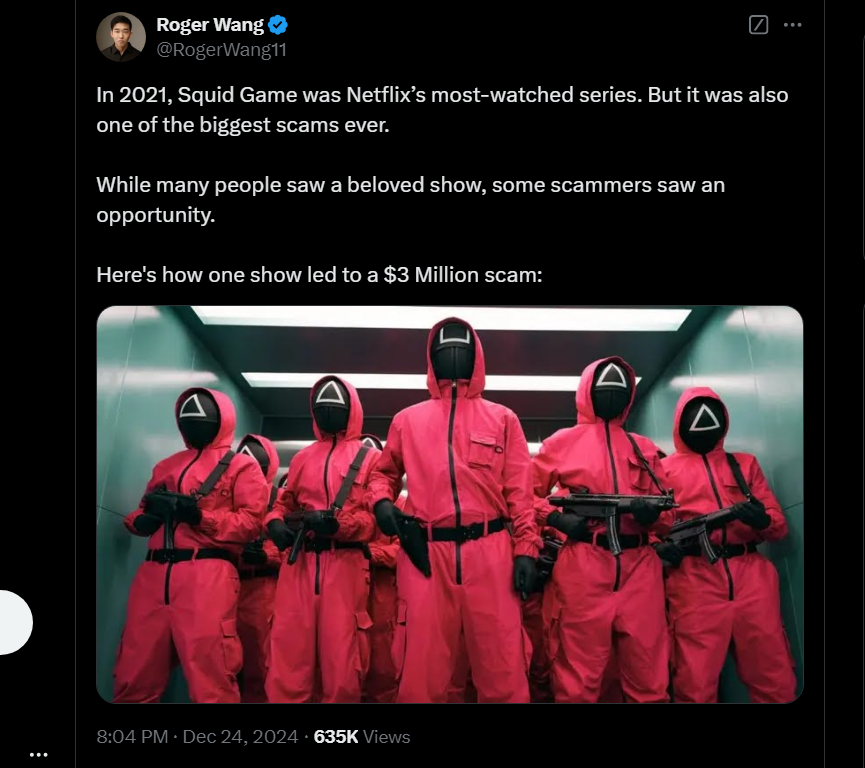
When Netflix’s “Squid Game” debuted in September 2021, it quickly captured global attention, becoming a massive hit for its gripping concept. The show’s shocking twists and societal commentary resonated deeply with audiences, which became one of Netflix’s most-watched series.
Similarly, it also inspired a wave of merchandise and real-life game adaptations. Likewise, its widespread popularity also made it a prime target for opportunistic scammers.
Exploiting the show’s fame, fraudsters launched a cryptocurrency scam that promised a play-to-earn game based on the series. The SQUID Token surged from mere cents to an astronomical $2,860 before crashing to zero in minutes.
This resulted in $3.3 million stolen from investors. The rug pull left victims unable to withdraw their funds while the perpetrators vanished without a trace.
Moreover, in December, Netflix released the second season, reigniting fan excitement. However, just a day after its launch, blockchain security firm PeckShieldAlert issued warnings about fraudulent tokens inspired by the show. Their post was made as a cautioning measure for users to stay vigilant against scams that occurred in 2021.
Alert: Squid Game Tokens Flooded in the Market
The release of the highly anticipated Squid Game second season announcement on December 26 reignited global excitement. Still, it also sparked the creation of numerous cryptocurrency tokens bearing the series’ name on various exchanges.
These Squid Game-themed tokens have raised red flags within the crypto community. Concerns about their legitimacy and the financial risks they pose continue to grow.
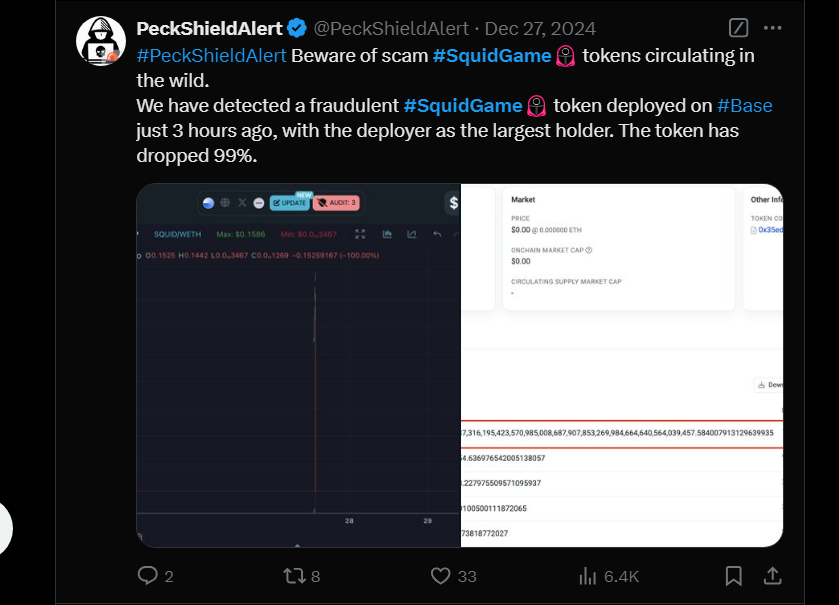
On December 27, blockchain security firm PeckShieldAlert issued a warning, flagging several of these tokens as likely scams. The alert emphasized the need for investors to exercise caution when dealing with these newly launched assets, as they may be linked to scams.
PeckShieldAlert specifically highlighted a token on Ethereum‘s Base platform. It pointed out that its deployer retained an unusually large portion of the total supply. Since its inception, the token’s value has plummeted by 99%, raising suspicions of malicious intent.
Similarly, several tokens launched on Solana displayed alarming patterns, including overlapping top holders, indicative of potential price manipulation. These tactics suggest the possibility of orchestrated pump-and-dump schemes, often culminating in rug pulls that leave unsuspecting investors at a loss.
A Similar 2021 Rugg Pull Experience: Scammers Built the Perfect Squid Game Trap With Manipulation Tactics
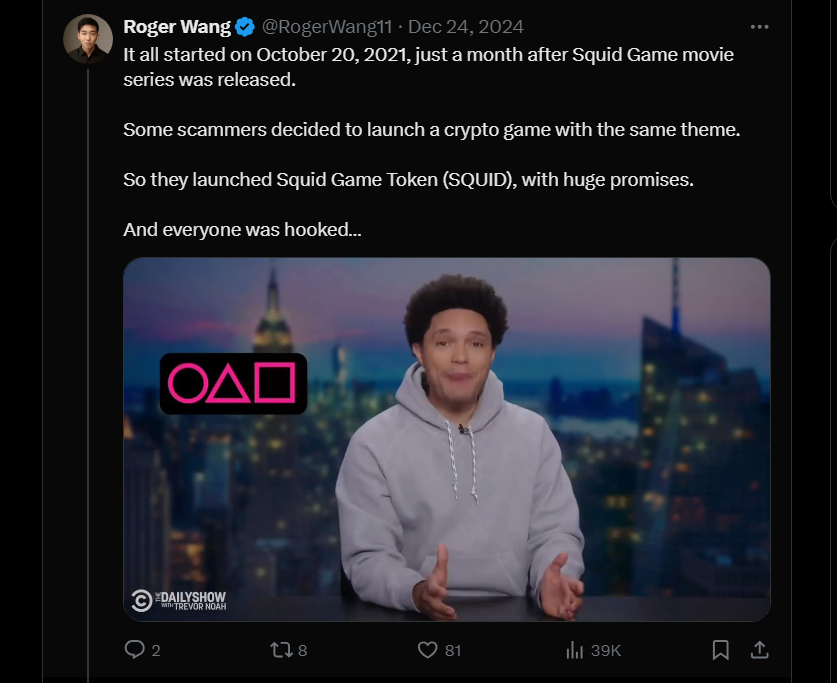
Crypto analyst Roger Wang’s investigation reveals how scammers behind the SQUID token orchestrated their fraud with meticulous timing. They launched their token just a month after the show’s first season release, leveraging its massive global buzz and social media dominance.
The scammers promised a play-to-earn gaming experience mirroring the show’s deadly competitions. Thus, they lured investors with the prospect of earning cryptocurrency through gameplay. Tokens earned could supposedly be exchanged for real money, fueling excitement and driving the token’s value up by 1,000% within its first week.
The scheme’s reach was further amplified by media coverage highlighting the token’s meteoric price surge, which drew in even more investors. Social media chatter predicted SQUID hitting $1.00. It created what Wang describes as “a self-fulfilling cycle of hype” that ensnared countless buyers before the eventual collapse.
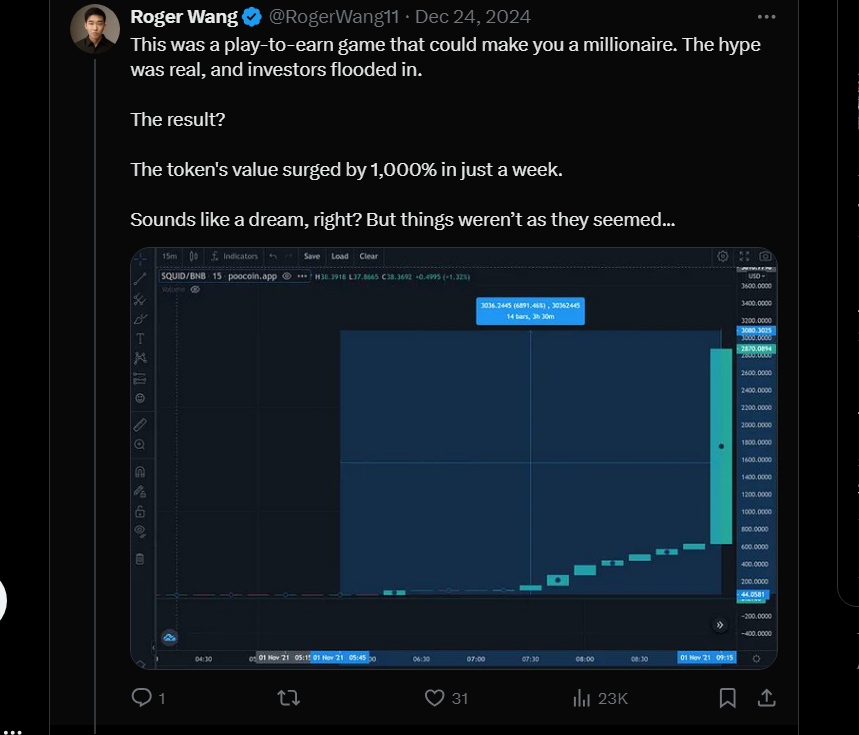
The scammers behind the Squid Game token carefully crafted an illusion of legitimacy. They did so by leveraging the show’s popularity and a compelling play-to-earn narrative to create a perfect storm of deception.
Roger Wang highlights several glaring red flags that investors overlooked during the token’s meteoric rise. Most notably, the project had no official ties to Netflix or the creators of the series, despite marketing materials suggesting otherwise. Additionally, the website was riddled with basic grammatical errors, which was a kind of hallmark of hastily assembled scams.
The most concerning warning was in the token’s mechanics. While investors could eagerly purchase SQUID, they were blocked from selling it. The scammers justified this restriction through a convoluted system they called “marbles.”
To cash out, investors were required to buy additional marble tokens, effectively locking them into the scheme. That forced them to invest more money without any chance of recovering their initial funds.
This strategy wasn’t just financially manipulative; it was psychologically cunning. When critics accused the token of being a Ponzi scheme, the creators defended the marble system as a feature tied to the Squid Game theme. That helped it further in misleading investors and diverting the suspicion.
Wang explains that the scammers’ justification for the “marble system” cleverly worked to their advantage. It presented the restriction as a thematic feature rather than a cause for alarm. This framing made the scheme appear more credible and aligned with the Squid Game concept.
Even after investors purchased marble, they remained unable to withdraw their funds. It locked them effectively into a continuous loop of additional investments with no way out. This tactic not only masked the scam but also deepened the financial losses of those caught in it.
The Major Collapse by Rug Pull & the Lessons It Served the Community
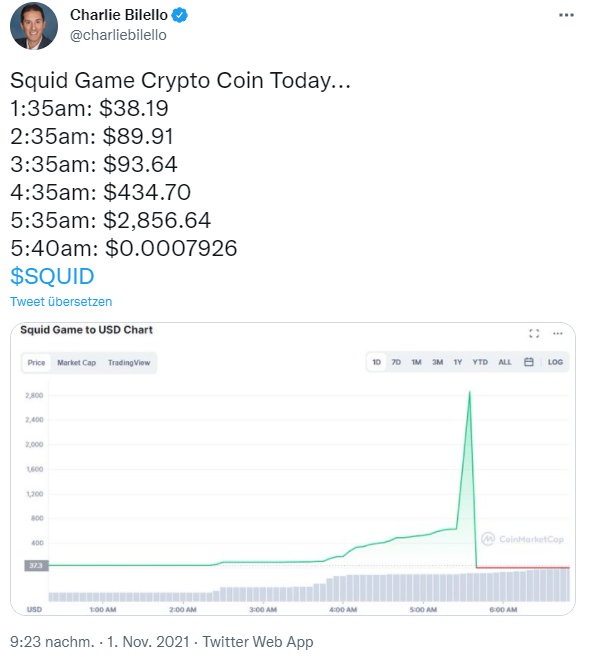
The scam culminated on November 1, 2021, when the SQUID token soared to an astonishing $2,860. Wang outlines how this was the pivotal moment for the scammers to execute their exit strategy.
Within minutes, they vanished entirely by deleting social media accounts. They even shut down their website and made off with $3.3 million in investor funds.
The token’s value plummeted to zero almost instantly, leaving investors with worthless assets and no avenues for recourse.
Wang breaks down why this scam worked so effectively. The creators exploited the fear of missing out (FOMO) by connecting their token to one of the most popular shows in Netflix history.
They built artificial urgency through price increases, making potential investors worry they might miss life-changing returns. The scammers remained anonymous throughout, making it impossible for authorities to track them after the rug pull.
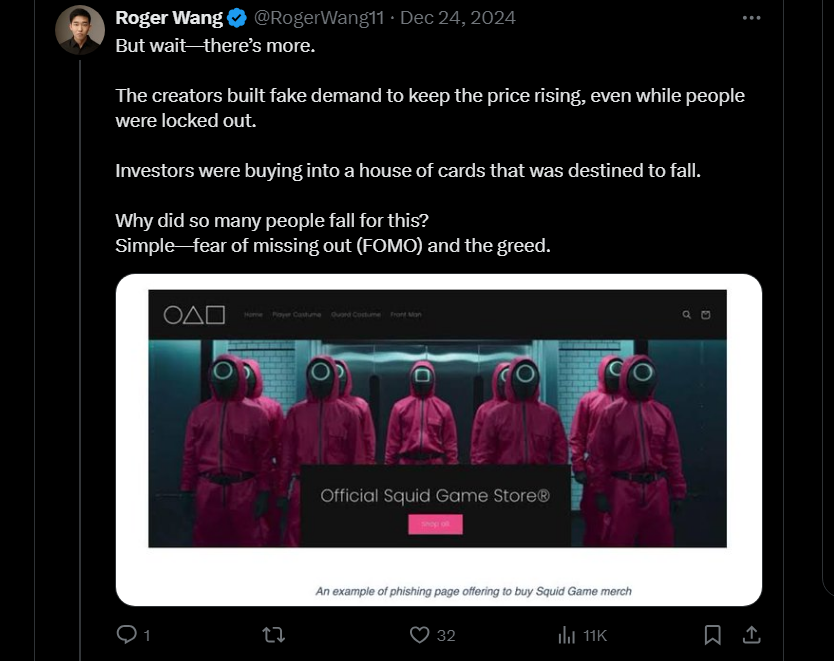
Wang highlights key takeaways from the scam that apply beyond just cryptocurrency. First, cultural hype can overshadow critical research. Investors overlooked obvious red flags, driven by their desire to believe the project was tied to Squid Game.
Second, any investment with restrictions on selling should immediately raise suspicions, no matter the justification given. Lastly, the anonymity of teams behind investment projects demands careful examination and heightened caution.
Disclaimer
In this article, the views, and opinions stated by the author, or any people named are for informational purposes only, and they don’t establish the investment, financial, or any other advice. Trading or investing in cryptocurrency assets comes with a risk of financial loss.