Bitcoin
 Ondo
Ondo Pudgy Penguins
 Walrus
 Pons
Pons Quantus
 NEAR Protocol

Key Insights:
- Bitcoin ETFs record $297M inflow, marking 8th consecutive day.
- BlackRock adds 3,294 BTC worth $394.7 million.
- Ethereum ETFs post $259M inflow over seven straight days.
BlackRock’s $394.7M Bitcoin purchase comes as BTC and ETH ETFs record steady inflows, hinting at rising institutional confidence.
BlackRock’s $394.7 million Bitcoin purchase coincides with eight consecutive days of ETF inflows. The move signals rising institutional demand for regulated crypto exposure, as both Bitcoin and Ethereum spot ETFs continue attracting capital despite broader macro uncertainty.
Bitcoin ETF Inflows Rise Again as Institutions Double Down
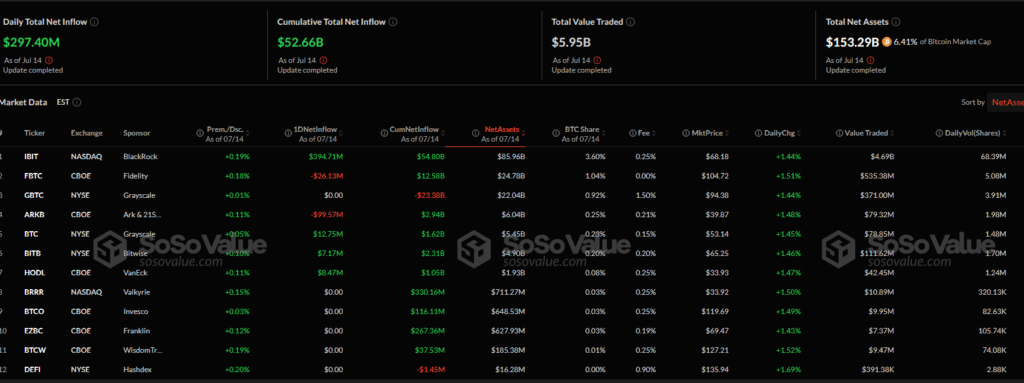
Bitcoin spot exchange-traded funds (ETFs) continued to attract institutional capital, with inflows totaling $297 million on July 14, according to data posted by Wu Blockchain. That marked the eighth consecutive day of net inflows for United States-listed Bitcoin ETFs, signaling growing investor demand.

The rise in flows came as BlackRock, the world’s largest asset manager, purchased 3,294 Bitcoin (BTC) valued at $394.7 million. The development, reported by Ash Crypto and Quinten | 048.eth on X (formerly Twitter), added weight to the growing institutional confidence around Bitcoin allocation.
BlackRock’s Bitcoin ETF iShares Bitcoin Trust (IBIT) has now become the firm’s most profitable ETF, according to Bloomberg via Watcher.Guru. The move underscores the rapid shift in institutional positioning since spot Bitcoin ETF approvals earlier this year.
BlackRock’s BTC Purchase Adds Pressure to Short Sellers
BlackRock’s latest accumulation confirmed a deepening interest from major institutions. The 3,294 BTC purchase ranked among the highest single-day acquisitions for the asset manager since ETF trading began in Jan. 2024.
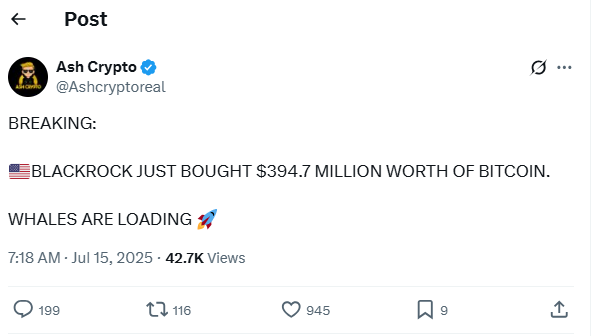
“BREAKING: BLACKROCK JUST BOUGHT $394.7 MILLION WORTH OF BITCOIN,” wrote Ash Crypto in a July 14 post on X. While the tweet drew reactions across the crypto space, it also aligned with a broader pattern of whale accumulation over the past week.
Crypto influencer Quinten shared similar numbers, noting that the 3,294 BTC allocation followed several days of steady ETF inflows.
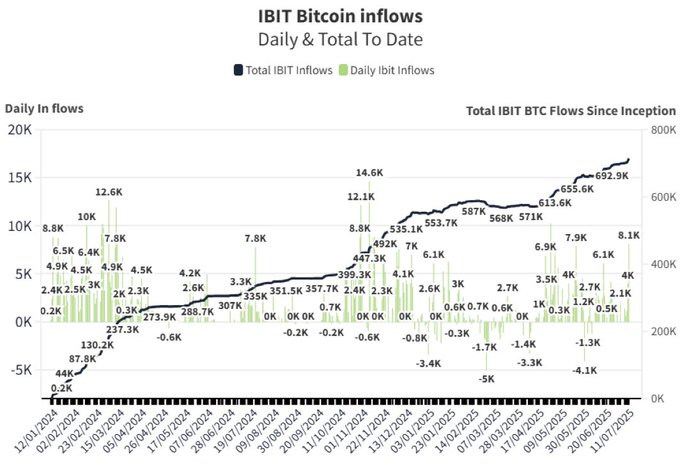
These buys may have also contributed to the recent BTC price rebound. While Bitcoin has faced resistance below the $60,000 level, sustained demand from ETFs could tilt market sentiment in favor of bulls, particularly as short interest declines.
Ethereum ETFs See Inflows for Seven Straight Days
Ethereum (ETH) spot ETFs also witnessed consistent demand, with net inflows reaching $259 million over a seven-day stretch, according to Wu Blockchain. The performance follows U.S. Securities and Exchange Commission (SEC) approval for Ethereum ETFs in late May.
Although trading volumes for ETH ETFs remain below their Bitcoin counterparts, the weekly inflows suggest growing acceptance among investors. Analysts attributed the trend to optimism around Ethereum’s upcoming upgrade cycle, including the Pectra hard fork slated for Q4 2025.
The combined flows into both BTC and ETH ETFs signal a gradual shift in investor behavior. Rather than chasing high-risk altcoins, institutions appear to be rotating into assets with regulated access points and deeper liquidity.
Institutional Appetite Grows Despite Macro Uncertainties
The renewed appetite for crypto ETFs comes amid mixed macroeconomic signals. While inflation in the United States remains above the Federal Reserve’s 2% target, expectations for rate cuts later this year persist.
ETF inflows offer a unique view into institutional sentiment, often detached from short-term retail speculation. BlackRock’s decision to boost its BTC holdings despite uncertain monetary policy adds credibility to long-term bullish positioning.
According to data from Farside Investors, Bitcoin ETFs have seen more than $600 million in combined inflows since early July. The return of inflows after weeks of stagnation suggests a possible inflection point in market structure.
In addition, rising ETF demand may gradually reduce sell pressure on spot exchanges. As ETF issuers accumulate BTC and ETH, the circulating supply on centralized platforms continues to shrink.
Spot ETFs Now Drive Crypto’s Mainstream Access
BlackRock’s expanding footprint in the ETF market may set the tone for other institutions. With IBIT now ranked as the firm’s most profitable ETF, the incentives for competitors to enter the market have grown stronger.
Moreover, the success of Bitcoin ETFs in the United States may prompt similar regulatory shifts elsewhere. Hong Kong and Australia have already approved crypto ETFs, with Europe trailing close behind.
As crypto enters its next adoption phase, the intersection between legacy finance and digital assets continues to deepen. BlackRock’s $394.7 million Bitcoin buy adds weight to that shift, reinforcing the role of ETFs as a bridge between traditional and decentralized markets.
For now, investors are watching whether this institutional demand will translate into higher price floors or if volatility will resurface before the next leg up.
Disclaimer
This article is for informational purposes only and provides no financial, investment, or other advice. The author or any people mentioned in this article are not responsible for any financial loss that may occur from investing in or trading. Please do your research before making any financial decisions.