Altai the Tiger
 IGNITION
 streamoors
 NEAR Protocol
 Sui
Sui Ethereum
 Pudgy Penguins

Bitcoin (BTC) traded near $116,400 on Sept. 17 after consolidating in a narrow 2.3% range since Friday. The focus remained on Wednesday’s Federal Reserve interest rate decision, but on-chain and market factors already pointed toward further upside.
ETF Demand Offsets Shrinking Bitcoin Value Supply
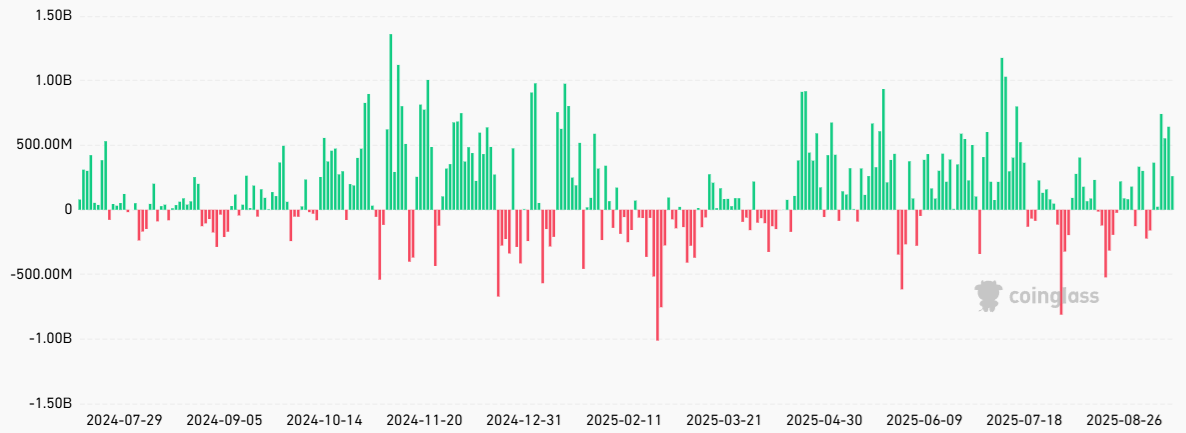
Data from CoinGlass showed U.S.-listed spot Bitcoin exchange-traded funds (ETFs) recorded $2.2 billion in net inflows between Wednesday and Monday. That figure represented daily buying pressure more than ten times greater than Bitcoin’s daily mining supply.
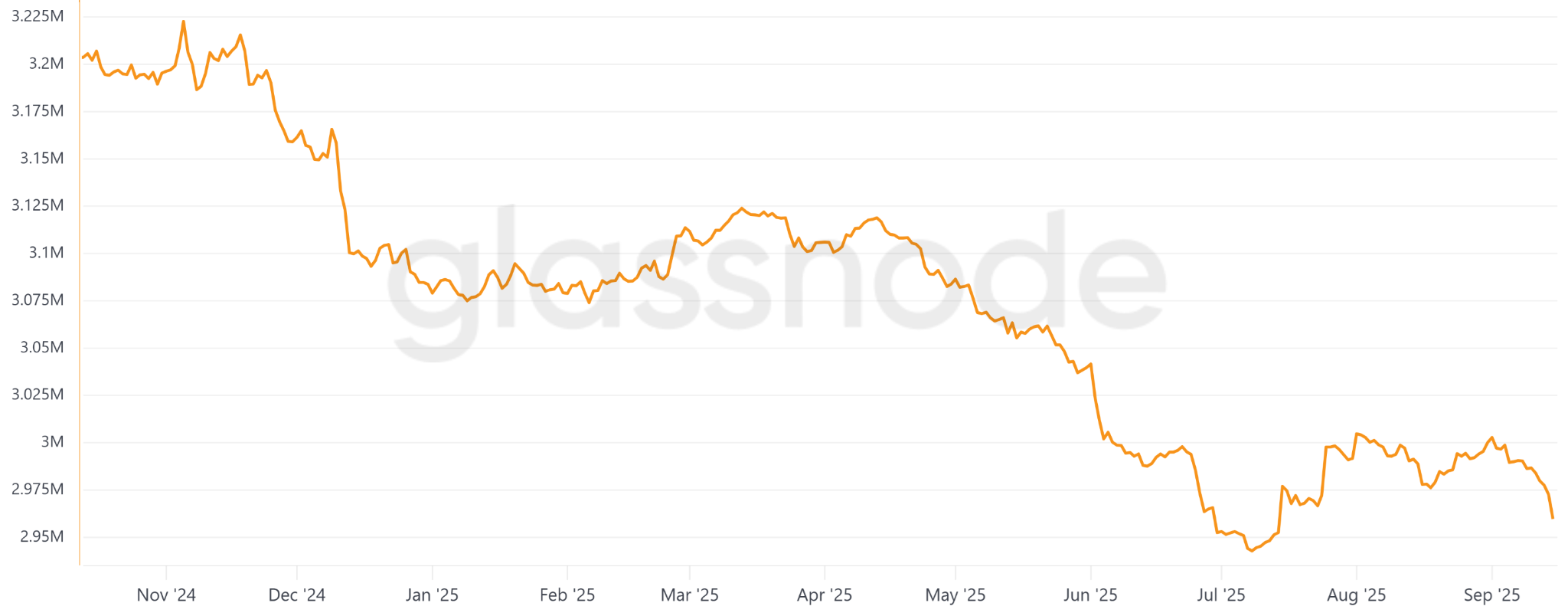
This demand coincided with a decline in exchange balances. Glassnode estimated a net withdrawal of 44,000 BTC in September, reversing July’s high inflows. The drop left around 2.96 million BTC on exchanges, but analysts argued that only a fraction was available for trading. Many coins remained idle in deposit accounts, leaving actual liquidity tighter.
Such supply constraints have historically amplified ETF inflow effects. With fewer coins available to sell, upward price momentum faced less resistance at the $115,000–$120,000 range.
Fed Policy Uncertainty Limits Immediate Reaction
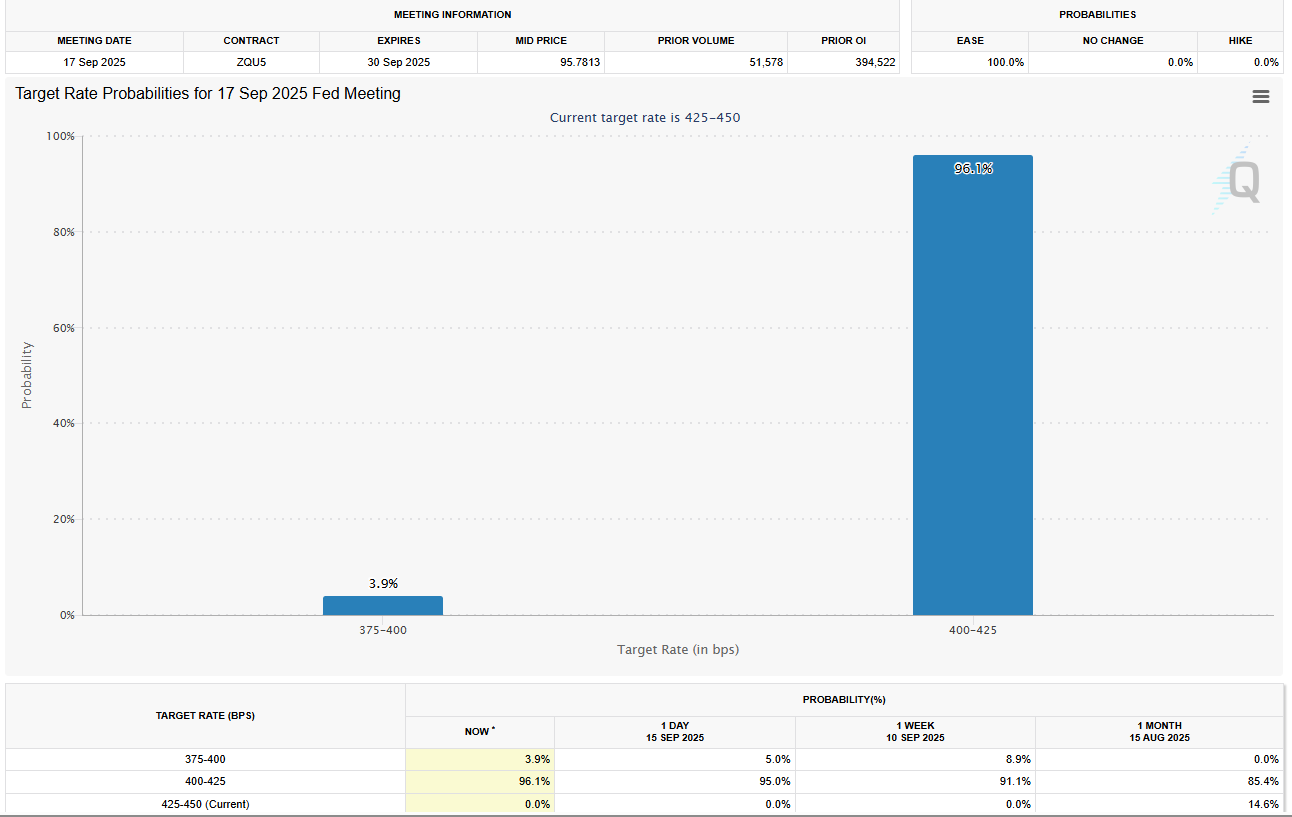
Bond markets priced a 96% probability that the Fed would cut rates to 4.25% from 4.5%. While traders anticipated modest short-term moves, attention shifted to Jerome Powell’s press conference guidance. Risk assets, including Bitcoin, may react cautiously if the Fed signals ongoing inflation risks.
On Monday, U.S. banks borrowed $1.5 billion from the Fed’s Standing Repo Facility, according to Reuters. Overnight financing costs also climbed to 4.42% on Friday, the highest in two months.
Gold surged to an all-time high in response, underscoring Bitcoin’s potential to attract flows as a hedge asset. Despite Powell’s remarks, sustaining ETF inflows could allow BTC to rally past $120,000.
Miners Add Selling Pressure to Short-term Trend
Miner behavior suggested near-term caution. Analyst Ali noted that miners sold over 2,000 BTC in the past 72 hours. Such selling, while not unusual, often signals treasury balancing during uncertain conditions.
Glassnode highlighted that Bitcoin continued to respect short-term holder cost basis bands. Failure to stay above one- and three-month realized price levels could confirm weakening momentum. Conversely, holding those levels would strengthen optimism tied to the Fed’s liquidity stance.
At press time, Bitcoin’s relative strength index (RSI) hovered at 59, leaving room before overbought conditions.
Eric Trump Calls Bitcoin “Greatest Asset of Our Time”
A different layer of support came from political circles. Eric Trump, co-founder of American Bitcoin (ABTC), told CNBC that Bitcoin was the “greatest asset of our time.” He compared it to gold, positioning it as a modern hedge against weaknesses in the real estate sector.
His comments reflected growing adoption of Bitcoin by corporate treasuries and mining firms, reinforcing ETF accumulation trends. While political endorsements rarely move price directly, they often influence longer-term perception and institutional strategies.
Bitcoin Value Technical Picture Favors Continuation
Chart data suggested Bitcoin may be entering the fifth wave of an Elliott Wave structure, projecting a move toward $135,000. Support around $105,000 held firm in August, and the rebound carried BTC back into its ascending channel.
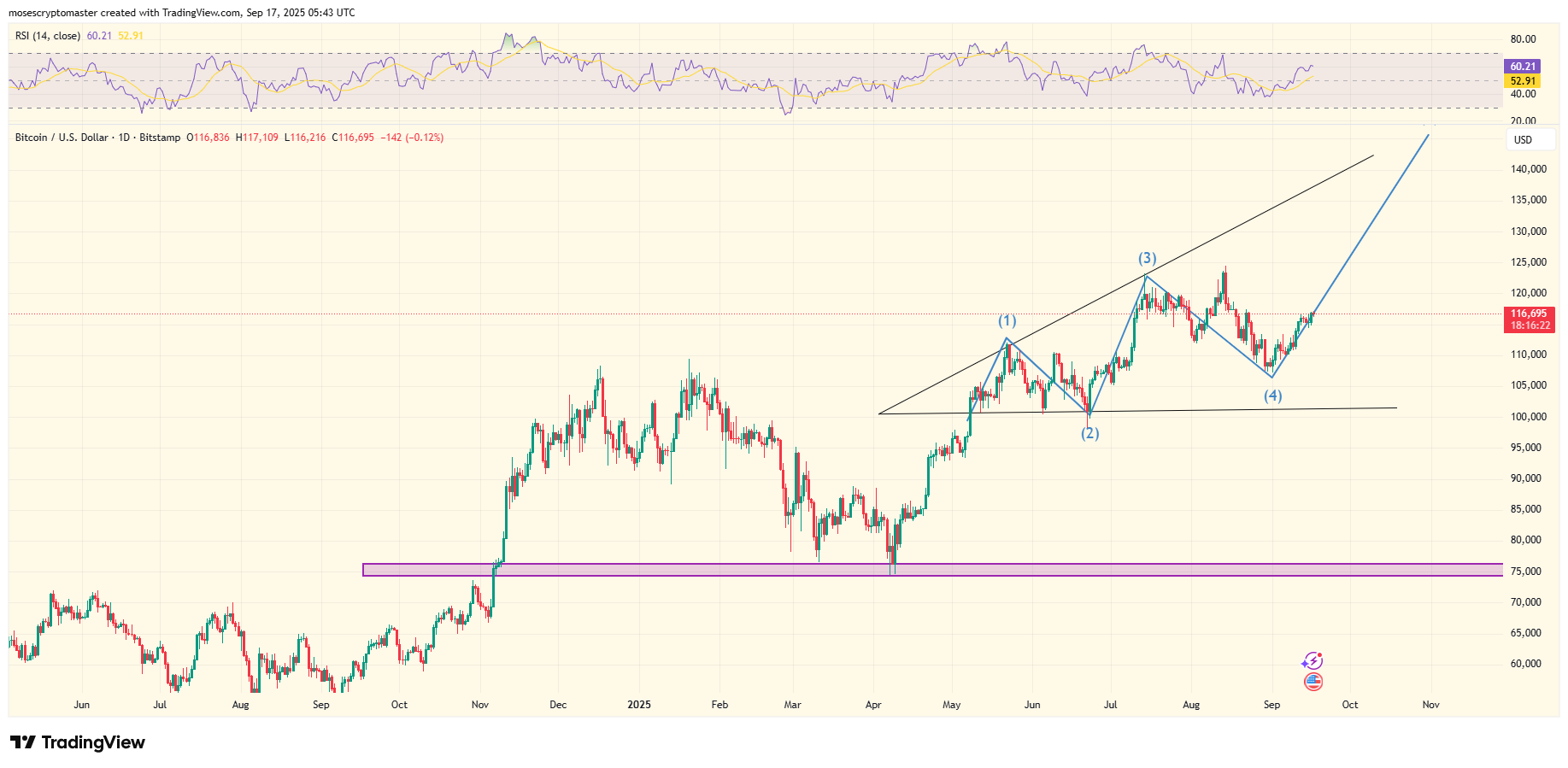
With ETFs providing persistent demand and exchange balances declining, technical momentum aligned with fundamental flows. Still, miner selling and macro uncertainty ahead of Wednesday’s Fed meeting kept short-term caution intact.
For now, Bitcoin’s challenge is sustaining above $116,000 until Powell’s remarks provide clarity. A rejection at $120,000 could prompt a retest of lower support, while a clean break higher may accelerate the projected rally.