
 Minter
 Pearl
Pearl NEAR Protocol
 Pons
Pons Quack AI
 Quantus
 Sui
Sui

The crypto markets have rebounded significantly this week, with Bitcoin (BTC) leading the charge. This suggests a potential market shift. Crypto news shows that the last quarter was bullish primarily across digital asset markets. Early signs suggest this trend could repeat in the current cycle.
The market has shown numerous signals that the structure was shifting. However, three of them stood out as the primary indicators. The inflow of capital, liquidation of massive shorts, and new liquidity injections signified this turning effect.
What remains uncertain is whether the period can replicate previous strength, especially one seen in 2021. This year, 2025, was similar to 2021, as they all came after the Bitcoin halving.
The sentiment on social media was that the market could repeat the season’s rally. At the same time, others disagreed with this prediction. Having touched on these factors briefly, let’s delve deeper and uncover the actual statistics behind these deductions.
Crypto News Highlights Market Rebound with Selective Capital Inflows
Crypto news signaled a bullish shift, reflecting a change in the direction of capital flow. More than $270 Billion was added to the markets, according to Coinglass data.
Capital exited the crypto sector after the surge through August. Now, much of it is flowing back into the market.
The markets were in the green zone, with Bitcoin taking the biggest share of this capital. Despite BTC leading with capital inflow, it only added about one percent to its initial capitalization.
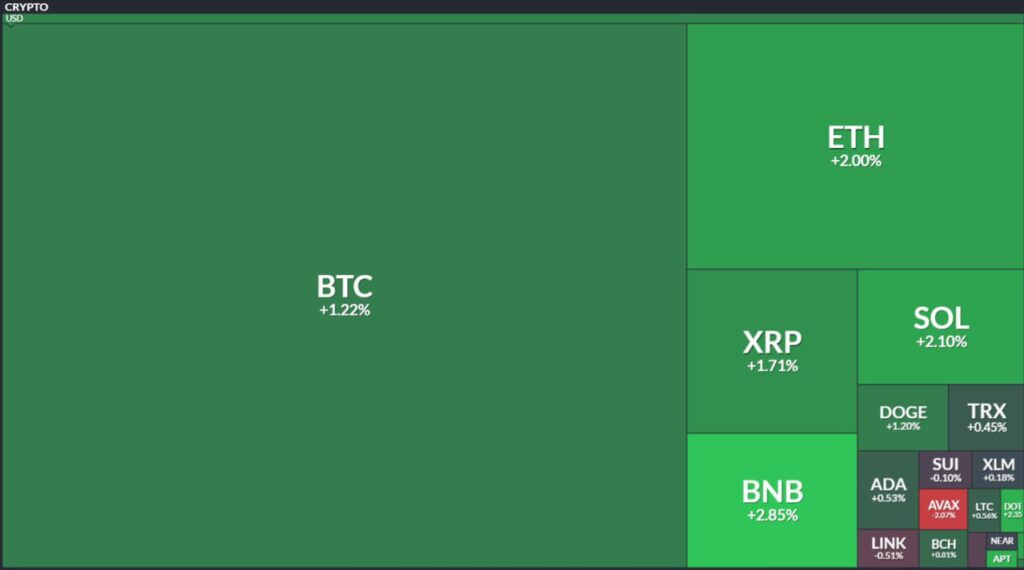
Still, Avalanche (AVAX), one of the top cryptocurrencies, did not experience this capital inflow. Additionally, others, such as Sui Network (SUI) and Chainlink (LINK), were lagging in this regard. In the meantime, the broader market saw inflow, but there was more.
Bulls Liquidate Massive Shorts Orders
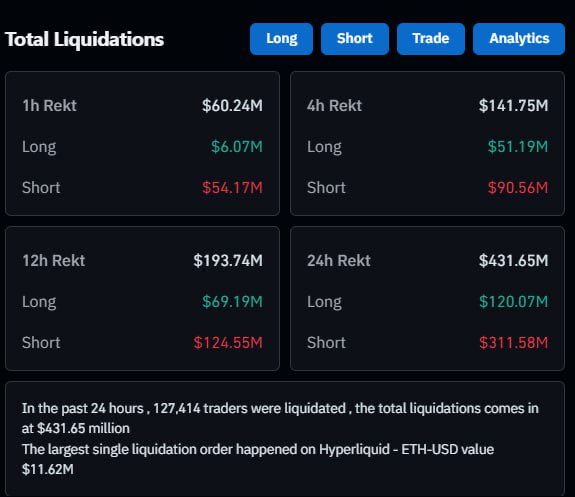
The resurgence in market activity posed challenges for sellers, as another crypto news piece indicated. Bulls were not showing mercy to their stacked shorts as more than $311 Million was liquidated.
The largest single liquidation order was approximately $11.62 Million and occurred on Hyperliquid‘s Ethereum (ETH/USD) pair. While there were also long orders that were getting liquidated, the magnitude of those shorts was greater.
The value of longs cleared was about $120 Million, which is almost three times less than the value of shorts. All these signs suggested that bulls were outpacing bears.
This indicates a shift towards a bullish market. On the smaller timeframes, which shift first, the liquidation ratio of shorts to longs reaches a ninefold ratio.
The massive liquidation of shorts charged up the rally, which intensified as the price gained more liquidity. This meant that near-resistances against further appreciation were getting cleared.
Liquidity Surge and Capital Rotation: Crypto News Signals Strategic Shifts
Speaking of liquidity, the market was not receiving enough of it. Stablecoin issuers were upping the ante, with Circle being at the center of it this time.
Crypto news reveals that Circle minted 750 million USDC on the Solana blockchain. This came just a day after another billion was issued on the same chain.
Circle had issued more than $8 billion in its stablecoin over the past month. This indicated that more liquidity had flowed into the crypto markets, leading to this shift.

Historical data indicate that when stablecoin liquidity floods the crypto markets, it is often followed by expansion and yield capture. The question was, where does this flow into?
Crypto news highlights that major coins with substantial capitalization have drawn investor attention. Bitcoin, Ethereum, and Ripple (XRP) were among the top picks.
Other notable targets included Solana, BNB, DOGE, TRX, and ADA. Altogether, close attention was needed to time profit-taking events that usually slow down these moves.