Puffer
 ZKsync
 Bitcoin
 NEAR Protocol
 Pearl
Pearl Quantus
 Sui
Sui

The cryptocurrency markets crashed again, marking the fourth time in less than a month since the initial significant liquidation on October 10th. The shrinking global liquidity across major economic zones and capital outflows accelerated this crypto crash.
As of press time, the total crypto capitalization plummeted to $3.47 trillion, while the Fear & Greed Index plummeted to 20. Traders have lost confidence in risk-on assets, such as cryptocurrencies. We will be exploring the real fundamental triggers as to why crypto is down.
Crypto News: About $2.1B Wiped Out As Top Buyers Capitulate
One reason why crypto is down today is the number of liquidations in the past 24 hours. This liquidation of more than $2.1 billion was the largest compared to the COVID-19 and FTX crashes, which saw liquidations of $1.2 billion and $1.6 billion, respectively. Longs lost more than $1.68 billion, while short traders lost $417 million.
Additionally, top buyers were capitulating, which led some traders to call the crash the potential bottom. The behavior as depicted by the Short-Term Holder (STH) Realized Profit/Loss Ratio chart completed this prediction. Every time STHs capitulated, Bitcoin rebounded in moves that started at $25K and $54K. The expectation is to replicate the same for $100K.
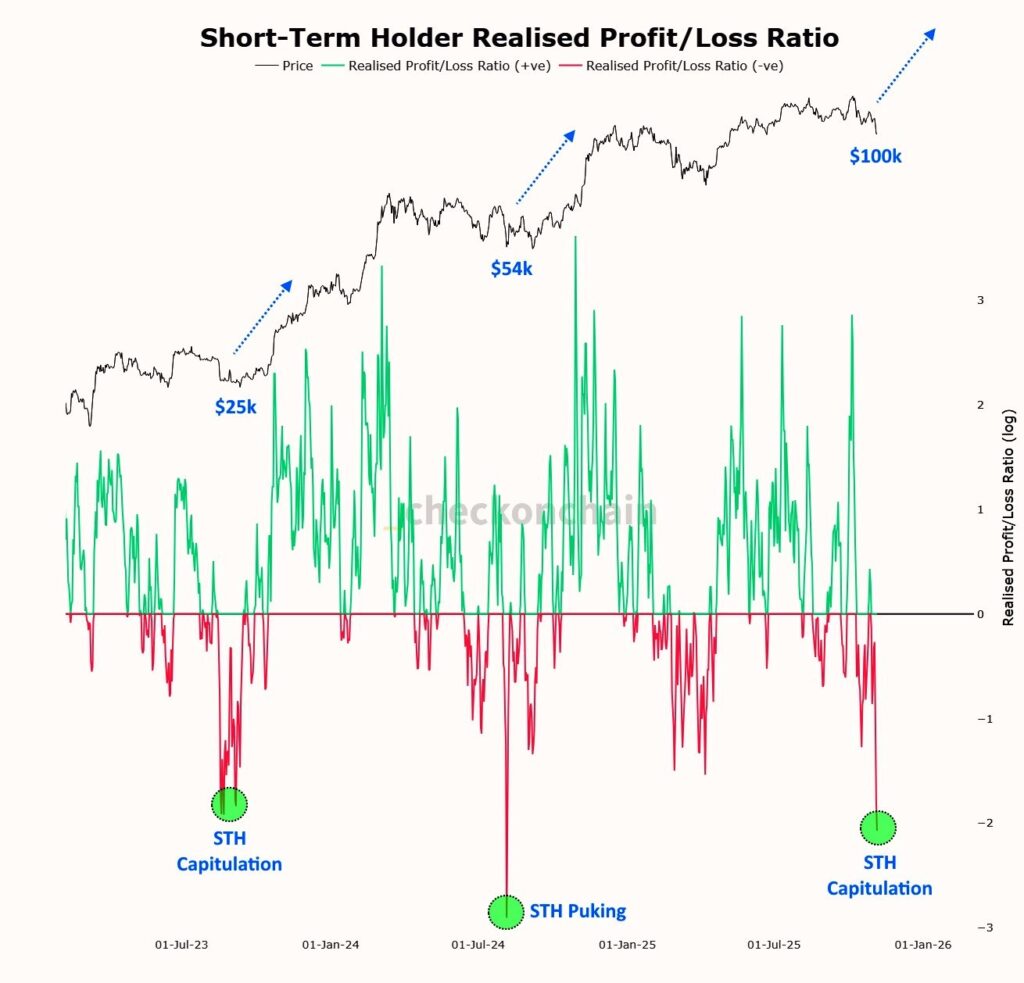
The two outlines indicated a market that was giving signs of a rebound in a long-term price outlook. However, other factors contributed to these forced liquidations.
Global Liquidity Shrinks, Japan’s Stock Market Crashes
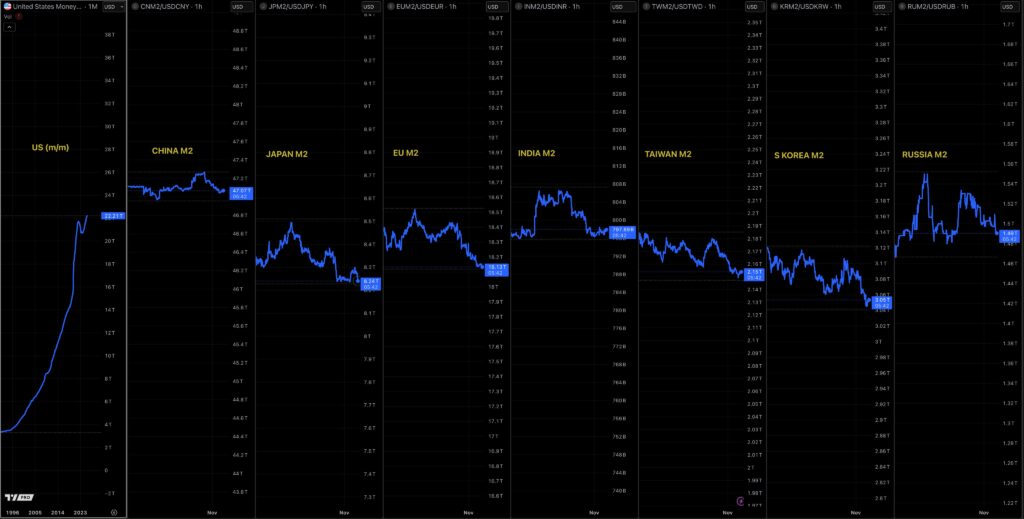
Another reason for the crypto crash today is the shrinking global liquidity over the past week. As per data from CT analyst MartyParty, major economic zones were not inducing liquidity into the markets except the United States.
In the first week of November, the U.S. reached a cumulative total of $22.2 trillion, indicating growth. However, China, Japan, European Union countries, India, Taiwan, South Korea, and Russia experienced liquidity outflows. As a result, global liquidity experienced an outflow, which directly impacted the crypto markets.
Taking note of the Japanese stock market, traders can anticipate a similar move to the August 5th crash that sparked a broader market Reversal. Same as last time, Japan’s stock market played the same role by dropping 4.5%, with global technology stocks affected the most. This analysis was reported in a post by The Kobeissi Letter, but can the market repeat the history of 2024 now?
Similar narratives in crypto followed suit, such as ChainOpera (COAI), which, with a peak cap of over $8.5 billion, plummeted to $170 million.
Capital Inflows Collapse
Moreover, the collapse of capital inflows is also why crypto is down. As per Bitcoin Magazine PRO, new capital inflows shrunk to incredibly low levels, reflecting the lack of confidence.
However, here is the catch. The analysis page wrote on X, “When fresh money slows this much, it often marks local BOTTOMS before major expansion phases. Could we be at the calm before the next wave?” This was another hint to a looming reversal in the markets.
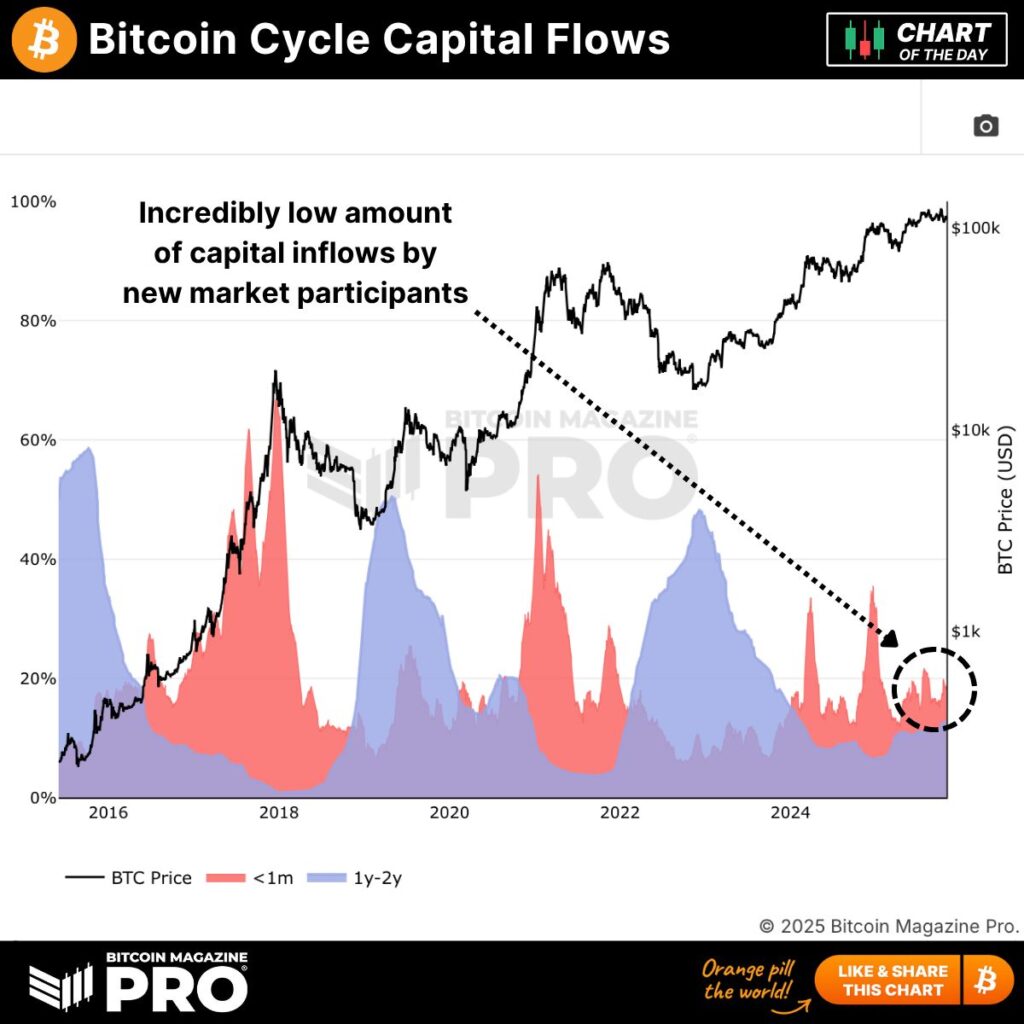
In conclusion, the crypto crash was triggered by high liquidations exceeding $2.1 billion, shrinking global liquidity, and the collapse of new capital inflows. The more positive aspect of this development was the potential reversal in market trends, as suggested by the behavior of STHs and capital inflow analysis. These could provide insights on when to start accumulating cryptos in anticipation of an energetic end of the year. The opposite could also be true, so manage risk.