Bitcoin
 Quack AI
 Pudgy Penguins
 Quantus
 Solana
 Injective
 NEAR Protocol
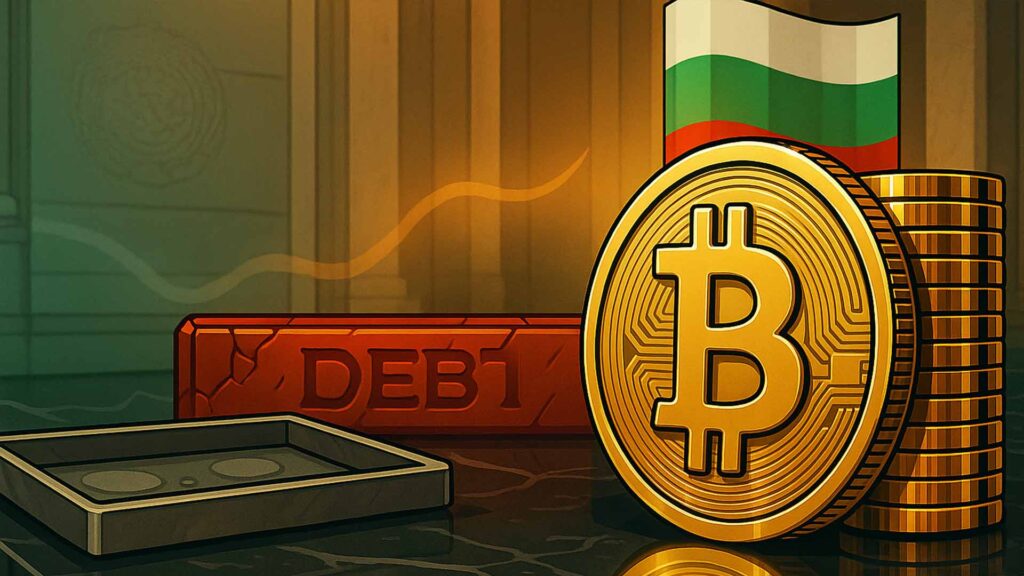
Recent Bitcoin news show that Bulgaria’s 213,500 BTC sale eight years ago could have already cleared its debt if they have held those Bitcoins on to date. The assets are currently worth higher than $21.9 billion, as the Bitcoin price stood at $102,642 as of press time.
The documented debt of Bulgaria stood at about 24 billion then.
The government later liquidated the holdings due to claims that there were no procedures in place for the seizure of assets and no legal restrictions.
In 2017, as the asset reached its current level, the Bulgarian government seized the Bitcoin as part of a cybercrime investigation. The value of the stash was approximately $3.5 billion at that time. This only represented a portion of the country’s overall liabilities.
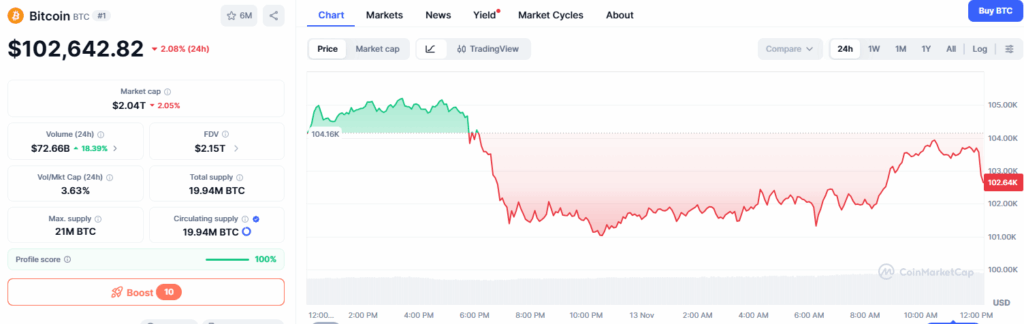
Bitcoin news shows that the token has been trading between $101,000 and $104,000. The movements depict a small trading scope, as opposed to previous cycles.
In 2017 and 2018, Bitcoin went down from almost $20,000 to under $4,000 in a few months. These historical relationships might have been key to the risk measurements, possibly leading to the government liquidations.
Bitcoin News: The Sales Trace Back to Custody Uncertainty and Regulatory Pressure
Re-examiners of the case claim that the liquidation was driven by short-term limitations and not a strategic error.
Obchakevich, a market researcher, previously stated that price fluctuations and the lack of established custody structures would make long-term retention challenging for a national treasury when it comes to Bitcoin.
He pointed out that there was no system to offer security to assets of that magnitude without bringing in macroeconomic risk. Robert Znidar, a researcher on the strategies of governments regarding digital assets, remarked that the sale reflected the attitude of public institutions toward crypto at that time.
In his opinion, Bitcoin was perceived as an unknown land. According to him, the governments had not yet had the means to handle it as something other than a salvageable value to be turned into fiat.
According to Valentin Mihov, a Bulgarian in the Web3 ecosystem, there is a regulatory uncertainty-controlled environment. He points out tight fiscal policies and immature custody infrastructure as the main issues. In that sense, the liquidation itself was considered the easiest solution.
Governments Have Since Shifted Toward Holding Bitcoin as a Strategic Asset
The global environment has evolved very much since the Bitcoin sale of Bulgaria. More than half a million Bitcoins currently exist in the hands of governments in various jurisdictions. This is viewed as a structural shift towards the possession of digital-asset reserves.
The United States, China, and the United Kingdom are some of the countries that have amassed significant on-chain holdings. Ukraine and North Korea are the leading on-chain holders.
However, not only has Bulgaria made an early sale on its BTC holding. As earlier reported, Germany, last year, sold 54,000 Bitcoin at an average price of $57,900. It also represents billions of unrealized returns as Bitcoin surpassed the 100,000 mark in 2025.
In the meantime, El Salvador, Bhutan, and the state of Texas have taken long-horizon measures. The countries viewed Bitcoin as a new reserve asset but not as a one-time asset related to seizure.
Their strategies highlight how sovereign views on online properties have evolved since Bulgaria carried out its sale.