 streamoors
 IGNITION
 Celestia
 Injective
 Starknet
 Pearl
Pearl Quantus

The U.S. financial landscape saw a major development today as the U.S. Treasury executed a historic $12.5 billion buyback of its own debt. It is the largest operation of its kind in the nation’s history.
It seems like the Treasury Department is making an effort to manage market liquidity. It could also stabilize borrowing conditions and address pressures within the treasury market.
This U.S. Treasury action immediately caught global attention. It raised questions about potential implications for interest rates, risk-asset performance, and investor sentiment.
Markets are still processing this surprise intervention as it is a fresh development. Crypto market analysts appear to be positive about this record-breaking debt buyback. Let’s explore how this historic move could impact the rapidly evolving crypto sector.
U.S. Treasury Has Injected $12.5 Billion into the system
Crypto market analyst Ash Crypto has just quoted a news item in his tweet, stating, “ U.S. treasury just injected $12.5 billion into the system, biggest ever in history.” It quickly caught the attention of crypto enthusiasts, and many consider it a bullish move.
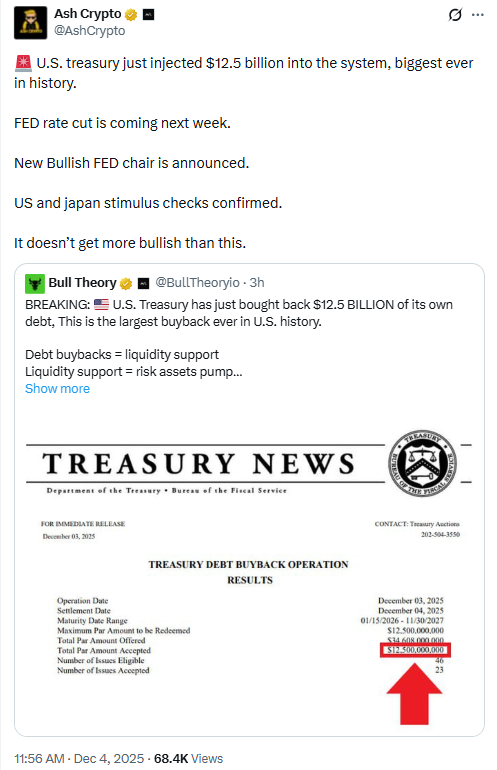
The U.S. Department of Treasury launched its debt buyback program back in 2024. It called this program “regular buybacks”, and its key goals were liquidity support and cash management.
The previous largest U.S. Treasury buyback occurred on June 3, 2025. At that time, the Treasury Department repurchased $10 billion worth of government bonds. Investors offered more than twice that amount, but the Treasury accepted only part of it.
The bonds Treasury bought on June 3 were going to mature between mid-2025 and mid-2027. It was the government’s attempt to retire some of its older debt early so that the Treasury market could run smoothly. It was an attempt to manage the market’s overall financial needs effectively.
The latest $12.5 billion buyback of older Treasury securities is primarily a debt-management measure. As mentioned earlier, it aims to improve liquidity in the Treasury market.
While modest in size relative to the overall market, it may attract attention from investors in risk assets, including cryptocurrencies. It can influence market sentiment and risk appetite.
What This Record U.S. Treasury Buyback Means for Crypto Liquidity?
A record U.S. Treasury buyback, as the one that occurred on December 3, can lower bond yields. That makes risk assets, such as cryptocurrencies, relatively more attractive.
Bull Theory, a market expert, has tweeted this breaking news, stating, “Debt buybacks = liquidity support” and “Liquidity support = risk assets pump”. According to the expert, the Treasury Department is flooding the system with liquidity. It is an attempt to support the bond market.
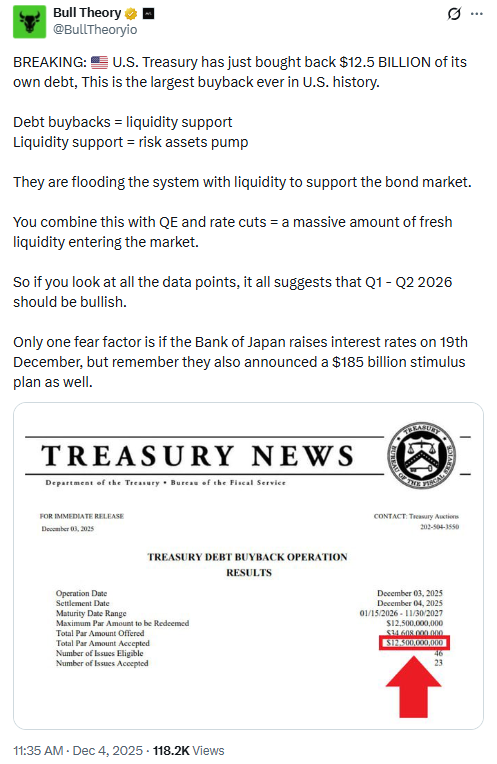
The expert also stated that if we combine this move with rate cuts and QE, a huge amount of fresh liquidity could be entering the market. It indicates Q1 and Q2 2026 will be bullish.
Could It Be a Long-term Booster for the Crypto Market?
The previous record June 3 buyback has given crypto markets a short-term boost and liquidity lift. As the U.S. Treasury made the announcement, Bitcoin reportedly reacted positively.
It provided some temporary liquidity and coincided with a modest uptick in risk-on sentiment, including in cryptocurrency markets. The effect was not long-term, and experts considered the previous major buyback a temporary stimulant.
The latest U.S. Treasury buyback, if combined with future Fed rate cuts, fiscal stimulus, or favorable regulatory developments, could impact market liquidity and risk sentiment, including in the cryptocurrency market. However, its long-term effects remain uncertain.