Zerebro
 Bitcoin
 Aerodrome Finance
 ZKsync
 Pearl
Pearl Pudgy Penguins
 Bitway

Large Bitcoin holders added supply while smaller wallets reduced exposure. That’s a setup analysts linked to continued upside momentum.
Santiment said the divergence increased the probability of market capitalization growth across crypto. Bitcoin USD traded near the top of a tight range after weeks of sideways action.
Bitcoin price mattered because it reflected a classic supply rotation rather than speculative excess. On-chain flows showed coins moving from short-term holders to long-term investors.
Analysts said this pattern often appeared during continuation phases, not cycle peaks. Price action remained compressed, but positioning shifted beneath the surface.
Whale Accumulation Marked Local Bottom
Santiment reported that wallets holding between 10 and 10,000 Bitcoin accumulated 56,227 BTC since mid-Dec. The firm said this buying phase coincided with a local market bottom.
Prices stayed mostly flat, yet accumulation continued despite weak momentum. Santiment described the divergence as constructive rather than complacent.
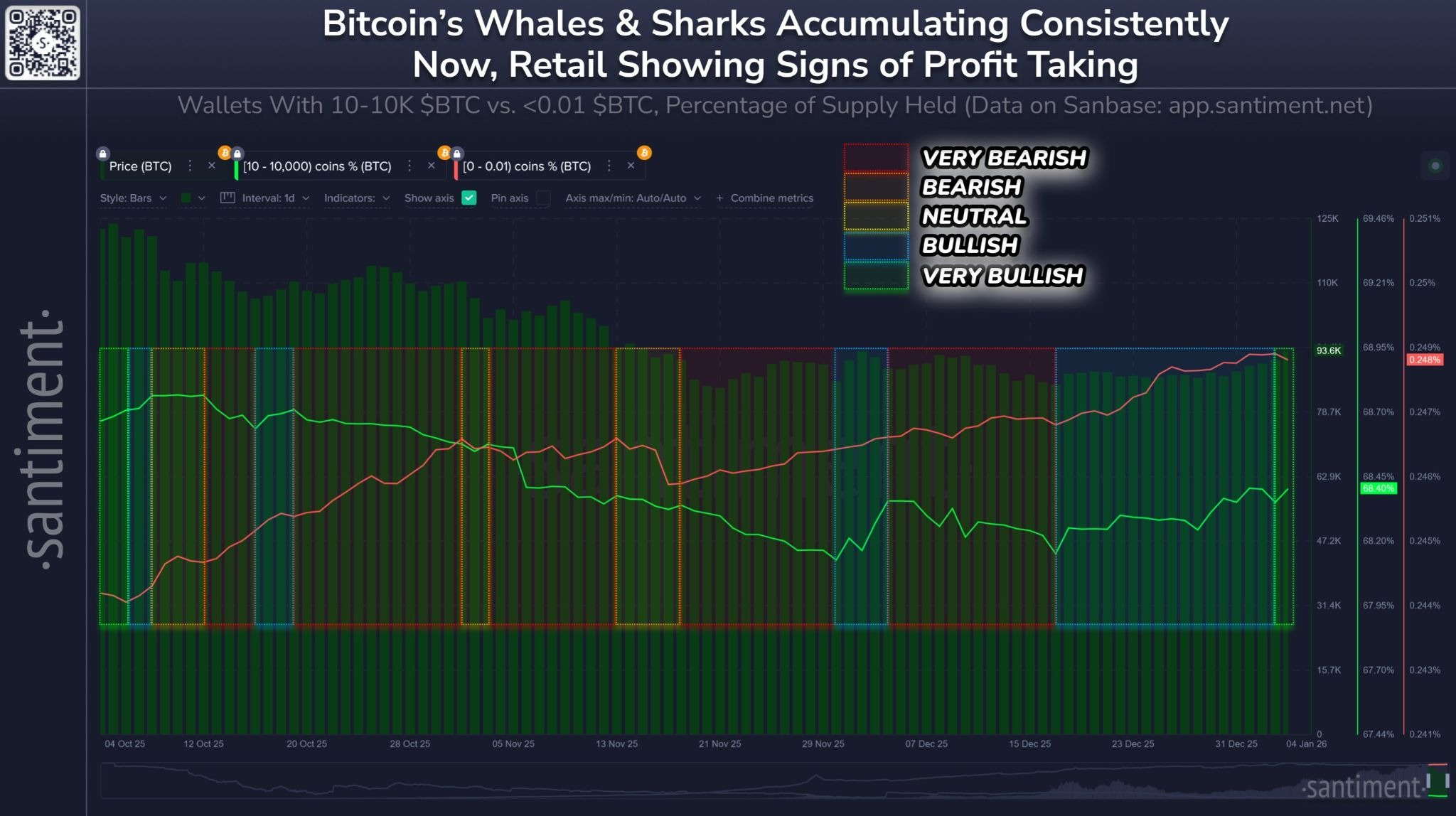
The analytics firm added that crypto markets usually tracked large holders, not retail wallets. It said small wallets often moved in the opposite direction at turning points.
According to Santiment, that behavior appeared again as retail traders trimmed exposure. The firm linked the selling to expectations of a bull trap.
Over the past 24 hours, Santiment said conditions “got even better” as retail profit-taking accelerated. The firm argued that reduced retail risk-taking eased speculative pressure.
That shift improved the probability of sustained upside, it said. Santiment framed the setup as structurally supportive rather than euphoric.
Bitcoin USD Held Range as Supply Shifted
Bitcoin USD traded mostly sideways for six weeks between roughly $87,000 and $94,000. TradingView data showed that a range had formed since mid-to-late November.
On Monday, Bitcoin touched a seven-week high near $94,800 on Coinbase. The move placed the price at the upper bound of the range.
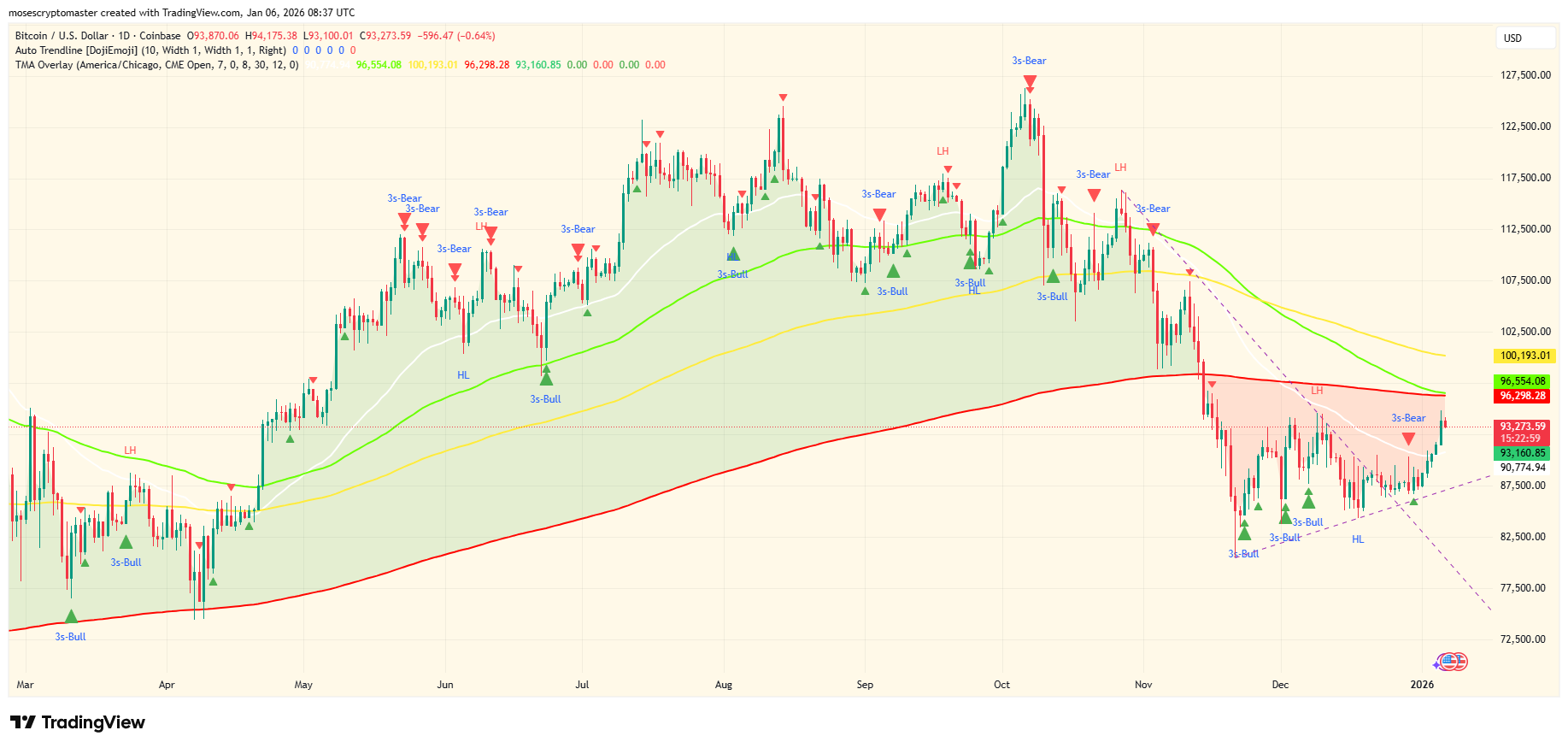
Despite the lack of a breakout, analysts focused on internal market changes. James Check said Bitcoin entered 2026 with a rally to $94,000, but supply dynamics mattered more.
He said “massive supply redistribution” occurred beneath stable prices. According to Check, top-heavy supply fell from 67% to 47%.
Check also said profit-taking “dropped off a cliff” during the consolidation. Futures markets showed signs of a short squeeze, he added. At the same time, overall leverage remained relatively low. He framed the environment as constructive rather than overheated.
Short-Term Selling Meets Long-Term Absorption
Additional on-chain data highlighted a familiar cycle pattern between short-term and long-term holders. Short-term holders distributed Bitcoin during elevated price periods. \
Long-term holders absorbed supply during pullbacks and consolidation. Analysts said this rotation historically defined mid-cycle pauses.
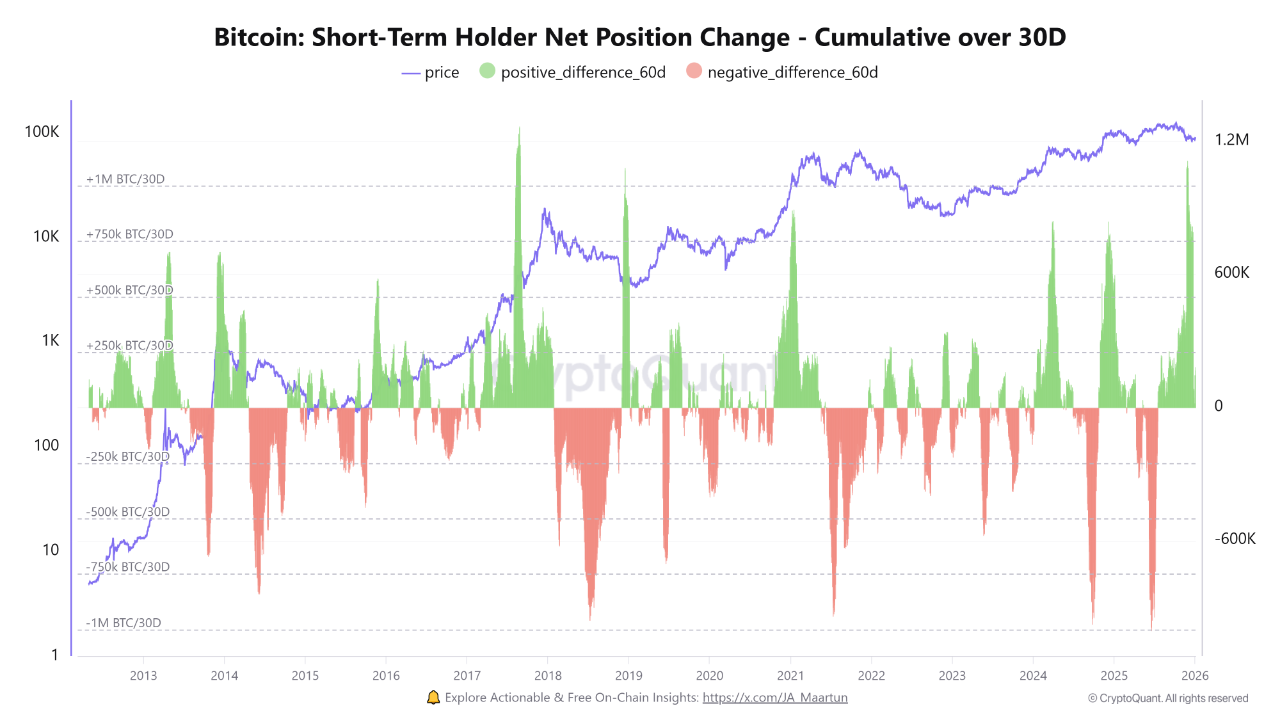
Thirty-day net position data showed short-term holders reducing exposure after sharp advances. That selling introduced near-term volatility, but it also cooled momentum-driven excess.
Analysts said the behavior provided liquidity for longer-term buyers. The process shifted supply toward stronger hands.
In contrast, long-term holder data showed persistent accumulation. Heavy selling from short-term cohorts met steady buying interest.
Analysts said this pattern aligned with continuation phases, not macro tops. They argued that sideways Bitcoin USD price action with accumulation reflected conviction at higher time frames.
From a broader perspective, the rotation supported a healthy bull-market structure. Distribution created liquidity without breaking trend support.
Accumulation helped stabilize price after explosive moves. Analysts said the trend stayed intact as long as long-term holders avoided sustained distribution.
Market Structure Favored Patience Over Bitcoinn USD Price Prediction
Technical traders echoed the focus on behavior rather than forecasts. Analyst EliZ said key areas often created confusion and liquidity traps. He said he waited for confirmation signals after the Bitcoin USD price reached those zones. According to EliZ, levels alone did not justify trades.
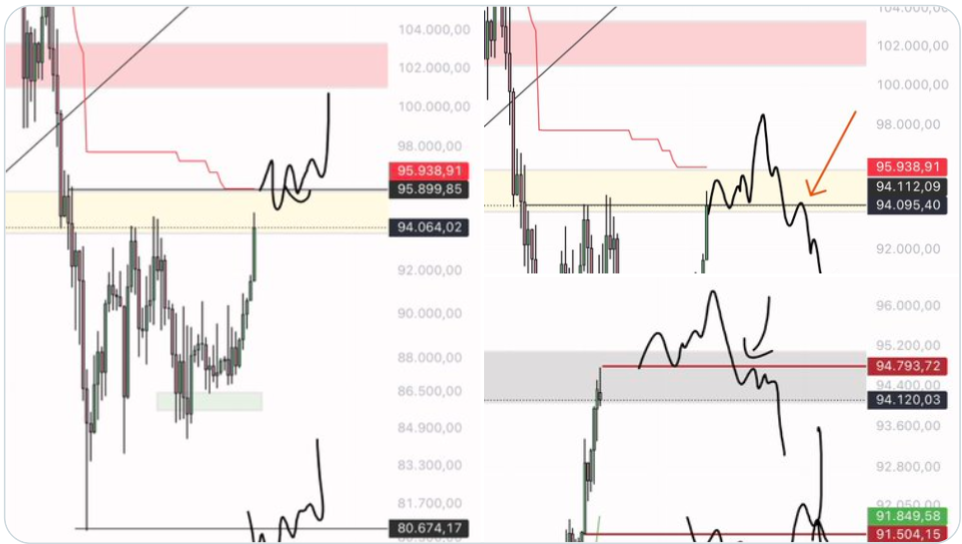
He explained that lower time frames revealed intent through pace and rejection. Triggers appeared when the price stopped behaving like noise. EliZ said staying inactive remained a valid position until confirmation emerged. He framed patience as risk control, not hesitation.
This approach aligned with broader on-chain signals. Price hovered near resistance, yet leverage stayed contained. Supply migrated toward long-term investors during consolidation. Analysts said these conditions reduced downside fragility.