
 Pearl
Pearl Ondo
Ondo Ethereum
 Bitway
 Derive
 Pudgy Penguins
 NEAR Protocol
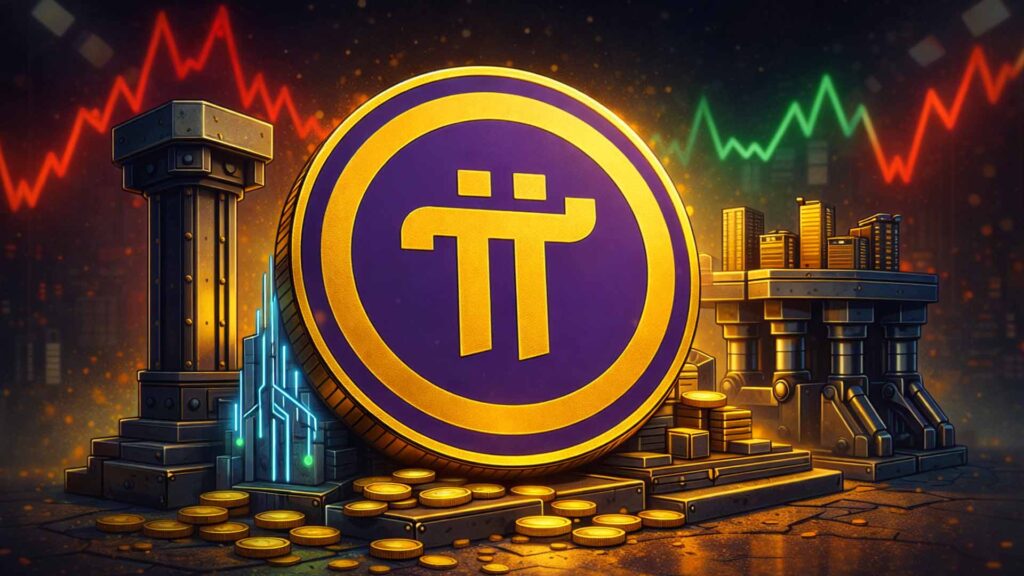
Pi Network’s price has been trading in a narrow range this year. It underperforms Bitcoin, Ethereum, and Monero.
The token has been stuck at $0.2056, a level it has been at since December. This article highlights some of the top reasons Pi Coin price will crash to a record low this year.
Pi Network Price Technical Analysis Points to More Downside
The daily timeframe chart shows that Pi Coin price has formed several bearish patterns. These patterns may trigger more downside this year. It is now forming a rising wedge pattern. This is made up of two ascending and converging trendlines.
These two lines are now nearing their convergence, meaning that a bearish breakout may be about to happen. Pi Network price also formed a double-top pattern at $0.2810 and a neckline at $0.2056. Like the wedge, a double-top pattern often leads to more downside.
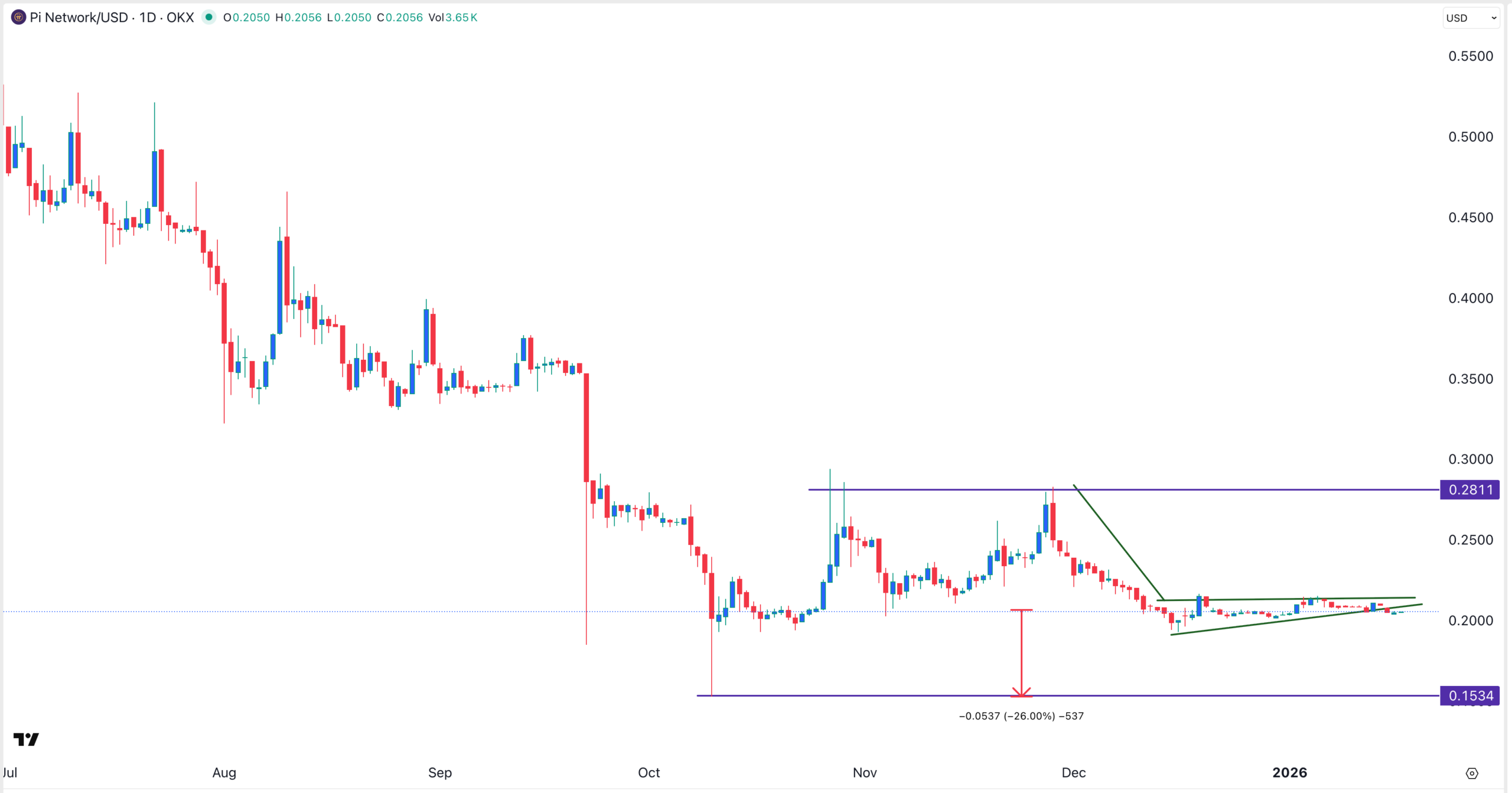
The token has also formed a bearish pennant pattern, which is made up of a vertical line and a triangle. It remains below all moving averages and the Supertrend indicator.
Therefore, the most likely Pi coin price prediction is bearish. With this, the key target is the all-time low of $0.1535. This target is ~25% below the current level.
The bearish forecast will become invalidated if the token jumps above the psychological level of $0.2800. A move above that level will point to more gains, potentially to the psychological level at $0.50.
Fading Demand and Rising Supply
Meanwhile, there are signs that Pi Network’s demand has plunged in the past few months as the consolidation continued.
As the chart below shows, the 24-hour volume dropped by 35% to $7.7 million. Most of this volume was in OKX, followed by Bitget and Gate.
A $7.7 million volume is significantly small for a coin with a market capitalization of over $1.7 billion. One reason why the volume has dropped is that it is not listed by most exchanges like Coinbase and Binance.
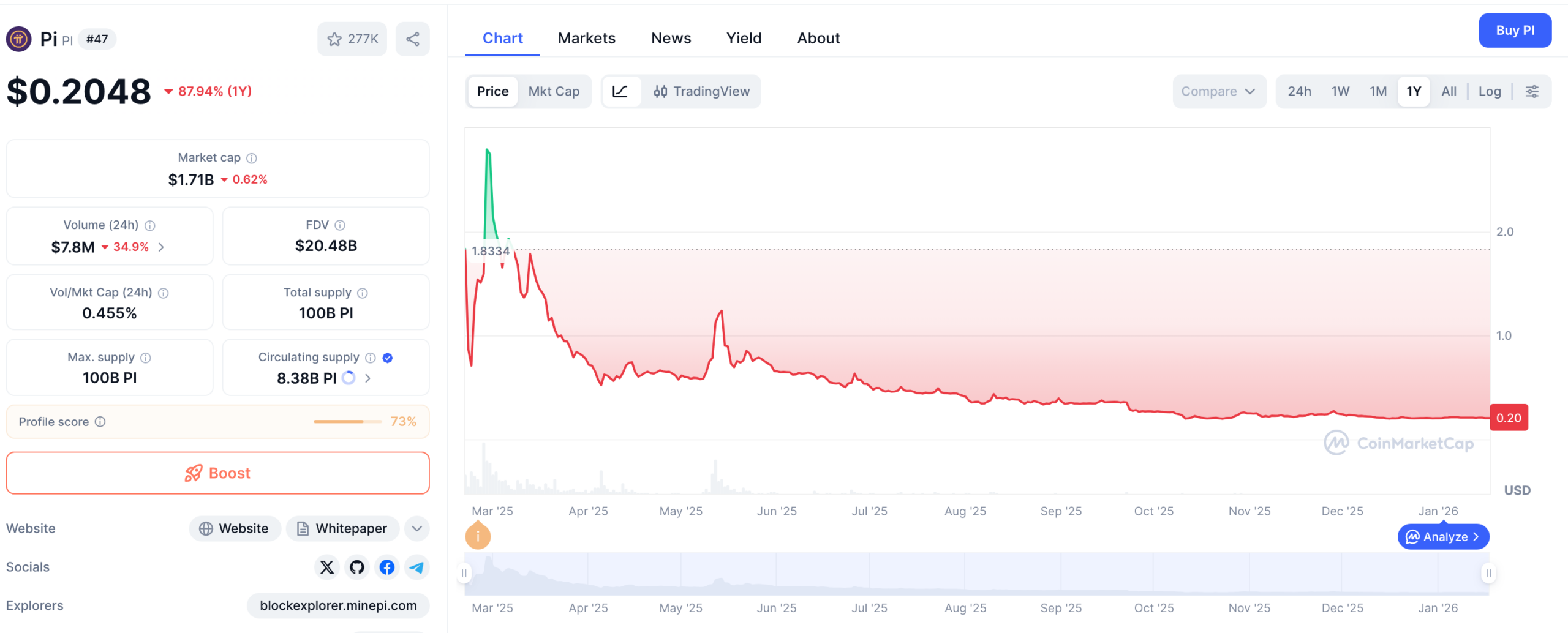
The falling volume is happening at a time when the supply continues rising because of its token unlocks. Pi has a circulating supply of 8.8 billion tokens and a maximum supply of 100 billion.
This means that 91.2 billion tokens will eventually come online over time. 1.2 billion tokens will come online in the next 12 months. In economics, a rising supply combined with falling demand always leads to lower prices.
Pi Network Initiatives May Not Boost Price
Meanwhile, there is a risk that most initiatives made by Pi’s team may not boost its price. For example, it is unlikely that Pi Network will receive a MiCA approval in Europe.
Pi Network is also working on decentralized exchanges (DEX) and automated market maker (AMM) tools. In line with this, the team is working on a token generation feature.
The goal is to have a platform like Uniswap and PancakeSwap where people can trade tokens. While the goal is good, the mainnet launch may not boost the Pi Network price.
Centralization is a Major Concern
Additionally, Pi Network is one of the most centralized cryptocurrencies. Unlike with Solana and Ethereum, Pi holders don’t have a say on its activities through voting.
Additionally, the obscure Pi Foundation holds billions of tokens in hundreds of wallets, creating a centralization risk. This is likely one of the top reasons why many exchanges have largely ignored it.
Pi Coin loses value as investors see it as a ghost chain. It lacks a real ecosystem. It struggles to gain credibility in the market. Also, many pioneers have capitulated and dumped their tokens.
In summary, Pi has weak technicals, including the double-top and the rising wedge and weak fundamentals. All these factors may lead to more downside.