Quack AI
 Pudgy Penguins
 Injective
 Solana
 NEAR Protocol
 Canton
 Zcash
Zcash

A bill to exempt Bitcoin and other cryptocurrencies from property law taxes has passed the first stage in the Arizona Legislature. The Senate Bill (SB) 1044 advanced from the committee stage, with the Arizona Senate Finance Committee voting 4-3 in favor.
With the approval, the proposed legislation is now headed to the Senate Rules Committee. It has already undergone the first and second readings in the Senate.
Arizona Senator Pushes for Constitutional Amendments to Make Crypto Tax Exempt
The bill was introduced by Senator Wendy Rogers, who is a major advocate for pro-crypto rules in Arizona. Along with the bill is a Senate Concurrent Resolution (SCR) 100,3, which also proposes a constitutional amendment to formalize the exemption.
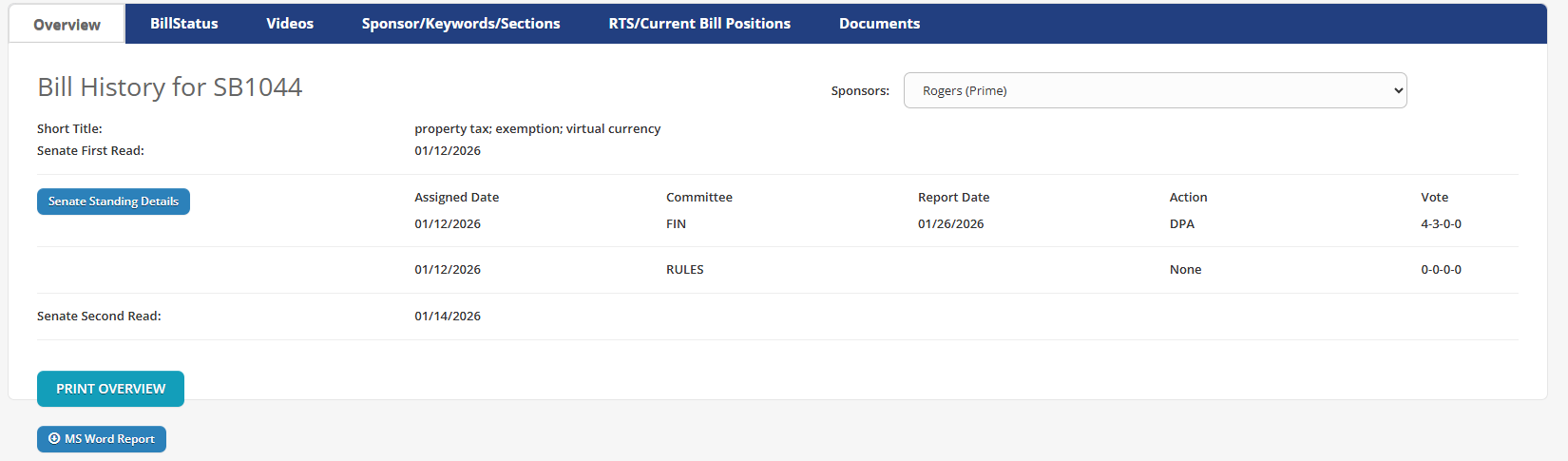
If enacted, the proposed legislation will exempt virtual currency from taxation. However, it would only become effective after a constitutional amendment, which requires Arizona voters to approve the exemption at the next general election scheduled for November.
Under SB1044, a virtual currency is defined as:
“A digital representation of value that functions as a medium of exchange, a unit of account and a store of value other than a representation of the United States dollar or a foreign currency.”
While the bill has already scaled three stages, its eventual enactment remains undecided. A similar version of the bill had previously been sponsored by Rogers, but it failed to advance in the House.
Interestingly, the House is not the only challenge ahead for the legislation, as Arizona Governor Katie Hobbs has consistently vetoed crypto-related bills. In 2025, Hobbs did not assent to four pieces of crypto legislation, including the Strategic Bitcoin Reserve bill proposed by Rogers.
She also vetoed the bill to create a Bitcoin and Digital Assets Reserve Fund, as well as one that would have allowed government agencies to accept crypto payments. However, she assented to HB274,9, which allowed unclaimed crypto assets to be held in their original form rather than liquidated.
Multiple Pro-Crypto Legislation Remain in Progress Across the US
Meanwhile, the pushback from the Arizona governor does not reflect the general approach of US states to crypto. Already, New Hampshire and Texas have enacted laws that allow for the creation of digital asset reserves and allocation of part of the state portfolio to such funds.
While neither state has yet implemented the legislation, interest from lawmakers is a positive sign for the sector. Interestingly, five other states also have Bitcoin reserve bills.
The most recent is Florida, where lawmakers recently introduced a Bitcoin Reserve bill, HB1039, in the House after a previous attempt failed. The new bill proposed establishing the Digital Assets Reserve separately from the State treasury.
At the Federal level, talks of a digital assets reserve continue to surface, although most of the focus at the moment is on the market structure bill. However, Bitcoin’s recent performance, especially relative to precious metals such as gold and silver, might have dampened interest in its potential as an inflation hedge.