Wisp
Wisp Doge Pepe
 Zylo Ecosystem
 Crawlerpad
 Pudgy Penguins
 Pearl
Pearl Basic Attention
The Pattern Observers Have Documented
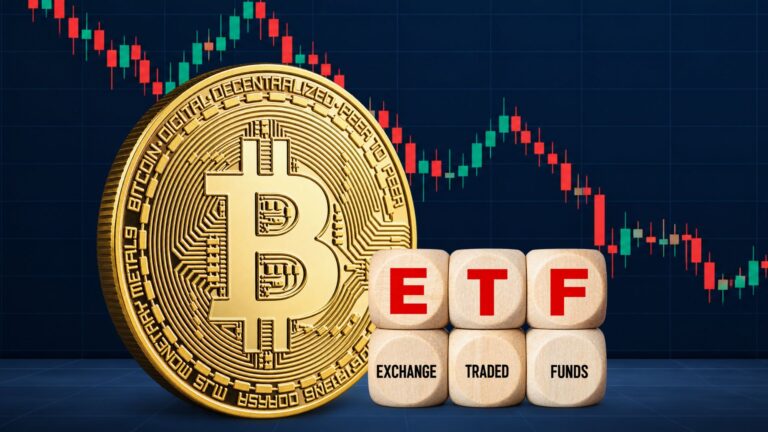
Since Bitcoin‘s first significant price run in 2011, cryptocurrency markets have repeatedly exhibited a recognisable pattern: a period of rising prices that attracts broader attention and capital, a sharp peak, a prolonged drawdown often exceeding 70 to 80 percent from the high, and a recovery phase that eventually establishes a new baseline. The severity and duration of each phase have differed across cycles, and past behaviour does not guarantee future repetition — but the pattern has been observed consistently enough that it merits analytical attention.
Researchers and market observers typically break the cycle into four broad phases: accumulation (a trough period with low sentiment and low prices), expansion (a rising market with increasing participation), distribution (a peak phase characterised by high sentiment and high retail participation), and contraction (a falling market with declining sentiment). These phases are easier to identify in retrospect than in real time.
What Drives the Cycles
Several structural factors have been proposed to explain why crypto markets cycle more dramatically than most traditional asset classes.
The Bitcoin halving mechanism is the most frequently cited supply-side factor. Bitcoin’s protocol reduces the rate of new coin issuance by half approximately every four years — an event called the halving. The halvings of 2012, 2016, 2020, and 2024 have each occurred ahead of significant bull markets, leading some analysts to treat the halving as a supply shock that, in combination with steady or growing demand, exerts upward price pressure. The causal chain is not clean — multiple confounding variables, including macroeconomic conditions, regulatory developments, and the maturation of the asset class, affect prices simultaneously — and the halving’s predictive power may diminish as block rewards become a smaller proportion of total supply.
Liquidity conditions in broader financial markets have become an increasingly legible driver as institutional participation has grown. The 2020 to 2021 bull market coincided with historically loose monetary policy and abundant risk appetite globally. The 2022 contraction coincided with rapid interest rate increases by the Federal Reserve and other central banks. As crypto assets have become more correlated with risk-on assets during stress periods, macro liquidity conditions have become harder to separate from crypto-specific dynamics.
Retail sentiment and narrative cycles amplify moves in both directions. Each bull market has been associated with a dominant investment narrative — smart contracts in 2017, DeFi and NFTs in 2021, and institutional adoption alongside spot ETF approvals more recently. These narratives attract new participants who are often unfamiliar with the asset’s history, driving prices beyond levels that more experienced participants consider sustainable. When the narrative falters, the exit can be rapid.
Leverage and Its Role in Amplifying Cycles
Cryptocurrency derivatives markets — perpetual futures, options, and margin lending — allow participants to take positions significantly larger than their actual capital. During rising markets, leveraged long positions amplify gains; during falling markets, forced liquidations amplify losses. The cascade of liquidations during sharp downturns can turn a moderate price decline into a severe one in a matter of hours.
Data on open interest in perpetual futures contracts — available in near real-time from exchanges and aggregators — has become a widely watched indicator of aggregate leverage in the system. Periods of very high open interest relative to spot market size have historically preceded volatile corrections, regardless of direction.
What Cycle Awareness Does and Does Not Offer
Recognising that markets cycle is analytically useful but does not produce reliable timing signals. The duration of each phase has varied considerably across cycles. Bull markets have ended earlier and later than prior patterns suggested. Drawdowns have been deeper or shallower depending on macro conditions. Analysts who published precise cycle timelines based on historical averages have been wrong as often as right.
What cycle awareness does offer is a calibration tool. It contextualises current conditions against historical precedent, helps investors avoid attributing permanent significance to temporary extremes, and provides a framework for thinking about risk tolerance across different phases of market sentiment. For investors considering the growing integration of traditional finance into crypto markets, cycle dynamics remain one of the more important structural features of the asset class to understand.