
 Backpack
 Pearl
 Bitcoin
 Hyperliquid
 Solana
 Lighter
 Brevis


Wallets tied to the Binance hack and the earlier Bitget hack have moved close to $300 million in stolen crypto over the past two weeks.
On-chain analyst EmberCN reported that addresses linked to the Binance hack sent out 74,881 ETH, worth about $137 million, in small batches within a single hour on November 17.
In a separate report, Arkham said wallets tied to the September 24 Bitget hack moved 2,266.68 BTC, valued near $161 million, over 11 days. Most of that Bitcoin went into mixing services and CoinJoin transactions.
Binance Hack-Linked Wallets Move $137M in ETH
According to EmberCN, the Binance hacker started laundering ETH after getting rid of most of the scam tokens sitting in the stolen wallets. The 74,881 ETH went out in small batches spread across multiple addresses.
Ember expects the transferred ETH to be broken into tiny amounts, scattered across a very large number of addresses and pushed through several cross-chain swap services.
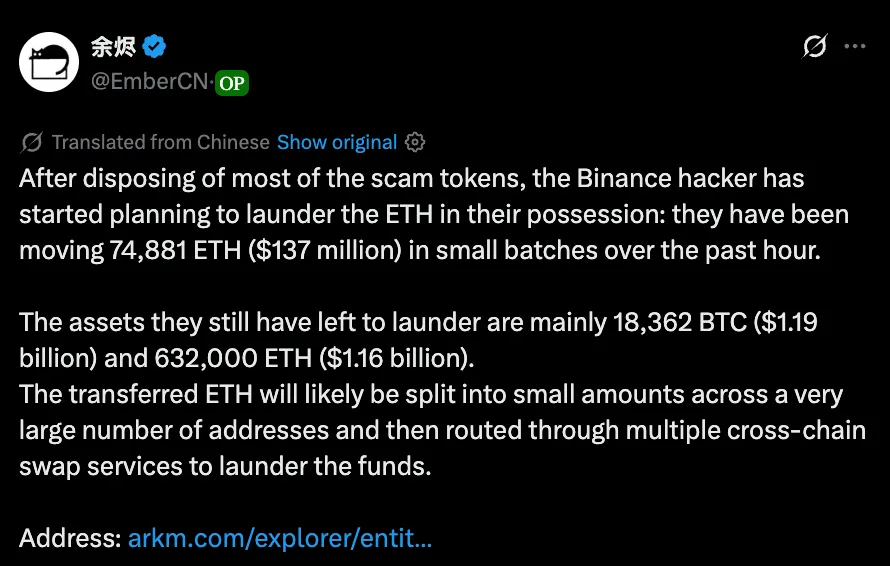
The hackers have already started splitting the ETH into small chunks and swapping it for BTC through THORChain tools.
The $137 million is a small slice of what remains. Ember’s tracking shows the Binance hacker still holds roughly 632,000 ETH, worth about $1.16 billion, and 18,362 BTC, worth about $1.19 billion.
Together, that comes to around $2.35 billion at the cited prices. On-chain data so far shows these coins moving between addresses and through swaps, with no confirmed cash-out on a centralized exchange.
The Binance hack took place on October 29. The FBI has charged North Korea’s TraderTraitor group with stealing more than $6 billion in crypto.
The bureau said the attackers converted most of the stolen assets into ETH and warned that more laundering through DeFi and instant-swap services was likely. Chainalysis puts the total theft at about $6.4 billion.
Bitget Hackers Transfer $161M in BTC Through New Wallets
The second wave of movement comes from the Bitget hack. Arkham reported that wallets it labels as belonging to the Bitget hacker moved 2,266.68 BTC, worth about $161.04 million, over an 11-day stretch. Only around 34.63 BTC now sits in the wallets Arkham still tags to the attacker.
The September 24 crypto hack hit Bitget’s hot and warm wallets, while cold wallets stayed safe. The exchange first put losses at $351.6 million, then raised the figure to about $387.5 million after finding more affected assets on Zcash and TRON.
Stolen Crypto Moves Through Mixing Services and CoinJoin
Of the 2,266.68 BTC that left the Bitget hacker’s wallets, 2,173.76 BTC, or about 96%, went into CoinJoin transactions.
Arkham found that 2,065.43 BTC entered WabiSabi CoinJoin rounds directly, while another 108.33 BTC passed through newly created addresses first.
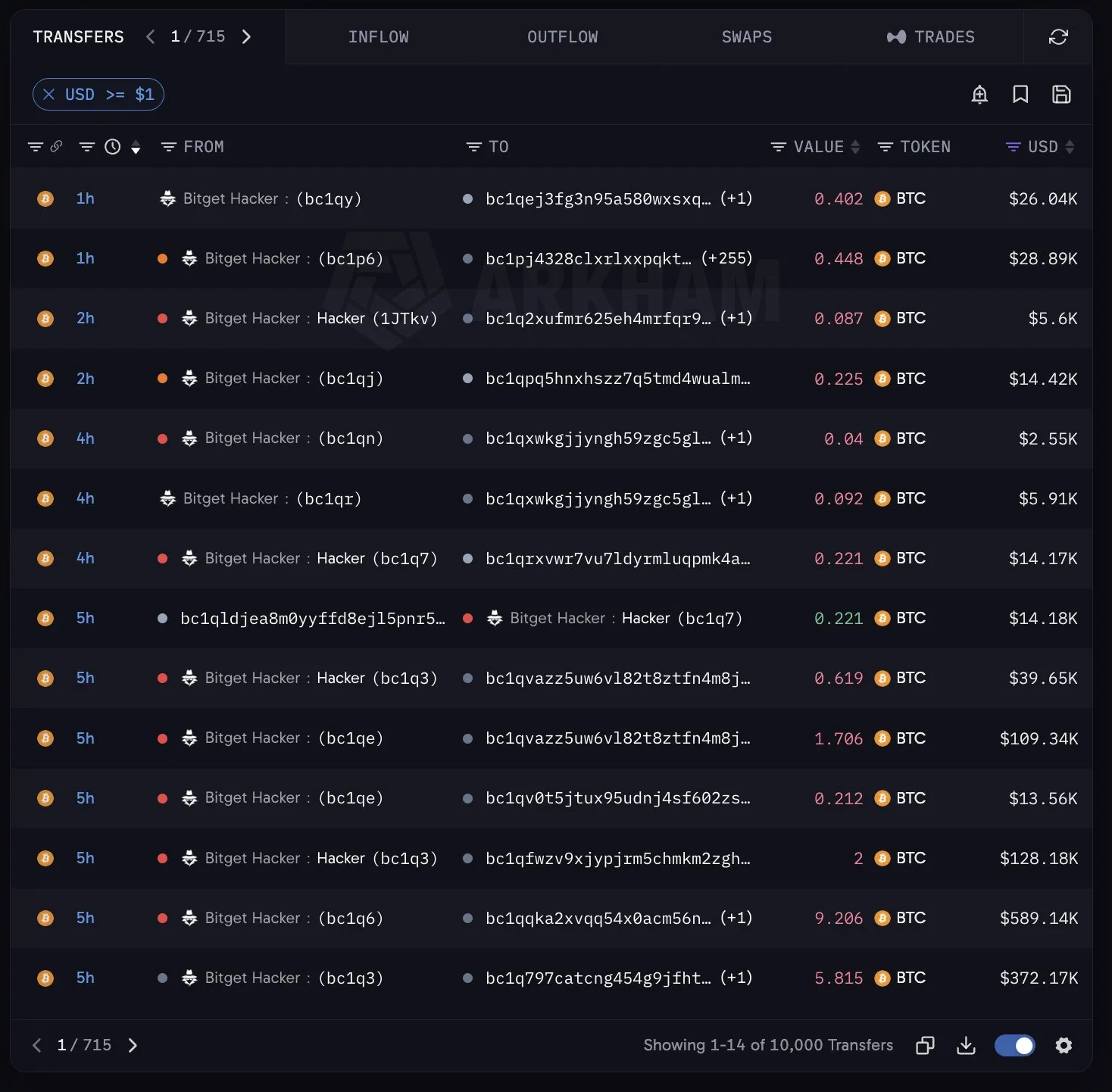
CoinJoin pools Bitcoin from many users into a single transaction with many outputs. Anyone can see the transaction on the blockchain, but matching each output to its original input gets much harder.
So the $161 million figure describes Bitcoin leaving the tracked hacker cluster. It does not prove the attacker has cashed out that full amount.
Where Are the Binance Hack and Bitget Hack Funds Going?
On November 16, Bitget-linked wallets sent several transfers to new addresses with no prior labels.
Arkham said the attacker most likely still controls those wallets, though it did not rule out that some coins changed hands through OTC desks or other services.
The two thefts also appear to be connected. Chainalysis reported that funds from the Binance hack and the Bitget hack were mixed together on-chain.
That overlap was one of the pieces of evidence it used to link the Binance hack to North Korea’s TraderTraitor, the same group the FBI named in its own alert.
Both cases follow a similar playbook. The attackers break large balances into small pieces, scatter them across fresh addresses and route them through mixers or swap services.
With about $2.35 billion in BTC and ETH still tied to the Binance hack, the laundering effort is far from over.
Investigators and exchanges will be watching for the next batch of transfers and for any sign of the funds reaching centralized platforms where they could be frozen.
This report summarizes publicly reported blockchain transactions and investigative findings. Wallet attribution remains subject to revision as additional evidence emerges. Cryptocurrency transactions and associated valuations may fluctuate.