streamoors
 IGNITION
 NEAR Protocol
 Injective
 Pearl
Pearl LayerZero
 Quantus

- Bitcoin’s positive sentiment ratio reaches 1.87:1, a multi-year high.
- Whale wallets holding 100+ BTC grew by 135 in February.
- Bitcoin’s realized volatility stays under 50%, its lowest for a bull cycle.
Bitcoin sentiment remains strong, even after an 11% dip from its all-time high. Large investors, or whales, have increased their holdings, with 135 new 100+ BTC wallets added, while smaller traders have exited during periods of volatility.
This divergence in behavior underscores Bitcoin’s shifting market dynamics, as experienced holders position for long-term gains amid price uncertainty.
Currently, Bitcoin is trading at $96,416, reflecting a 1.30% drop in the last 24 hours. The market cap stands at $1.91 Trillion, while daily trading volume has decreased by 12.34% to $48 Billion, signaling a slowdown in short-term market activity.
Despite these short-term fluctuations, Bitcoin’s annual volatility has dropped to an all-time low, suggesting a more stable market environment.
What makes Bitcoin particularly appealing now is its risk-adjusted returns, which have outperformed most major asset classes. Investors see BTC as a strong option, combining lower risk with high potential rewards.
This stability, paired with robust long-term returns, positions Bitcoin as a key asset for those seeking growth beyond market noise.
Bitcoin Sentiment Hits Multi-Year High Amid Market Uncertainty
The sentiment ratio of Bitcoin surged to 1.87:1 but remained at its highest level since the Trump election era while its value dropped by 11% since January Peak. Hamilton Capital advises that BTC action poses as a retail investor’s choice for risk-free refuge since altcoin prices tumble.
The sudden positive attitude reveals investors are redirecting their capital to the cryptocurrency because of ongoing market volatility.
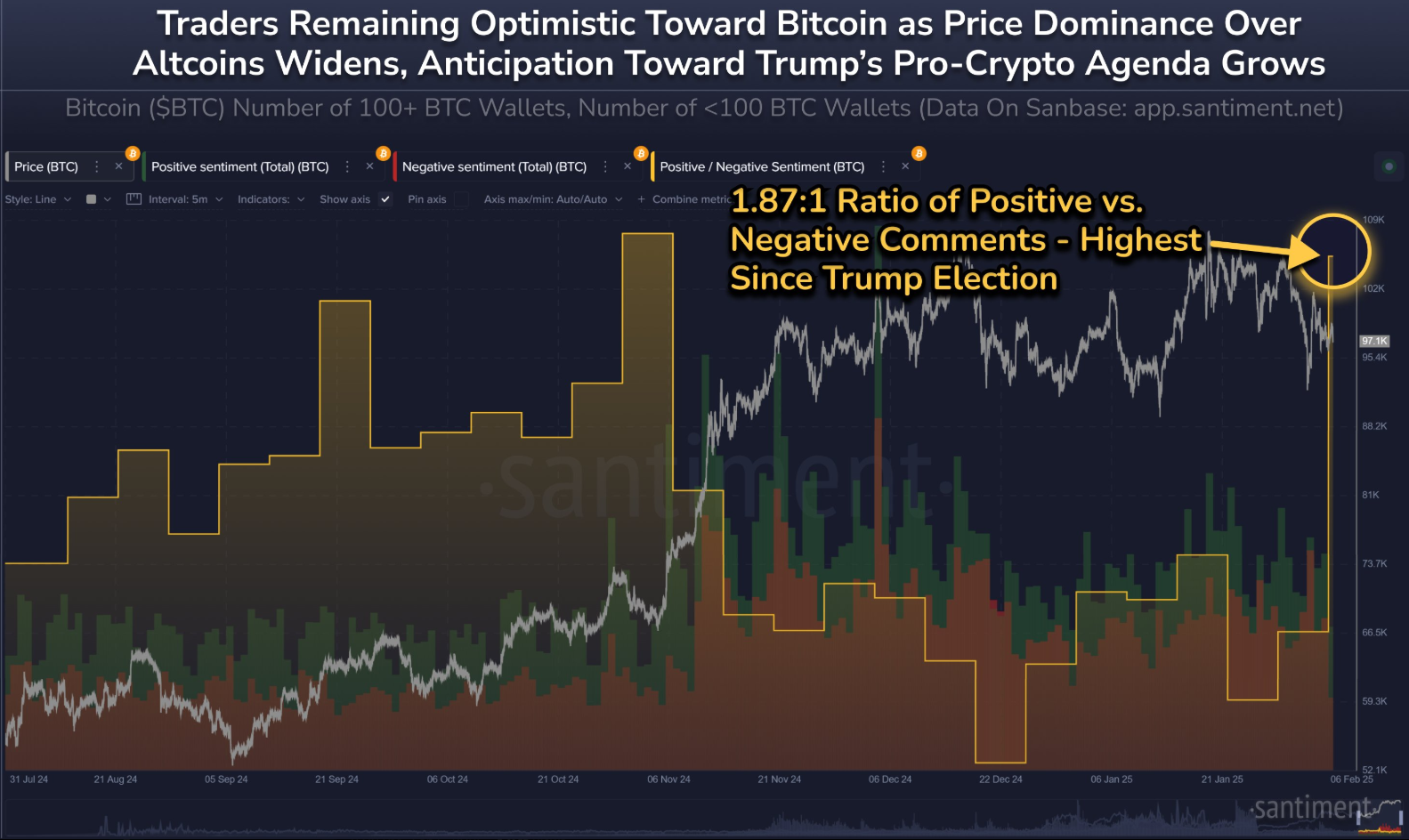
Moreover, the market confidence increased because of beliefs that pro-crypto policies would receive support from Trump’s administration but responds negatively when investors express ultra rational views about cryptocurrencies.
Regardless of history some retail optimism peaks initiate price reduction because panic spreads from small traders during market reversals leads to short-term pricing instability.
Bullish sentiment remains strong among key stakeholders who continue purchasing Bitcoin even with the existence of risks. The strategic whales utilize these market volatility points to display their BTC long-term performance expectation as they make their financial moves.
Thus the power of Bitcoin keeps growing stronger against all alternative cryptocurrencies resulting in a solid position as market leader and general adoption driver.
Whale Accumulation and Bitcoin Volatility Trends
Additionally, Bitcoin wallet accumulation of wallets with more than 100 BTC in February rose by 135 but the number of wallets with under 100 BTC decreased by 138,680. This is due to the volatility that leaves small retail traders exposed with whales using market drops to purchase more coins.
Investments by major holders follow the same historical trends that show them buying cryptocurrencies when prices drop.
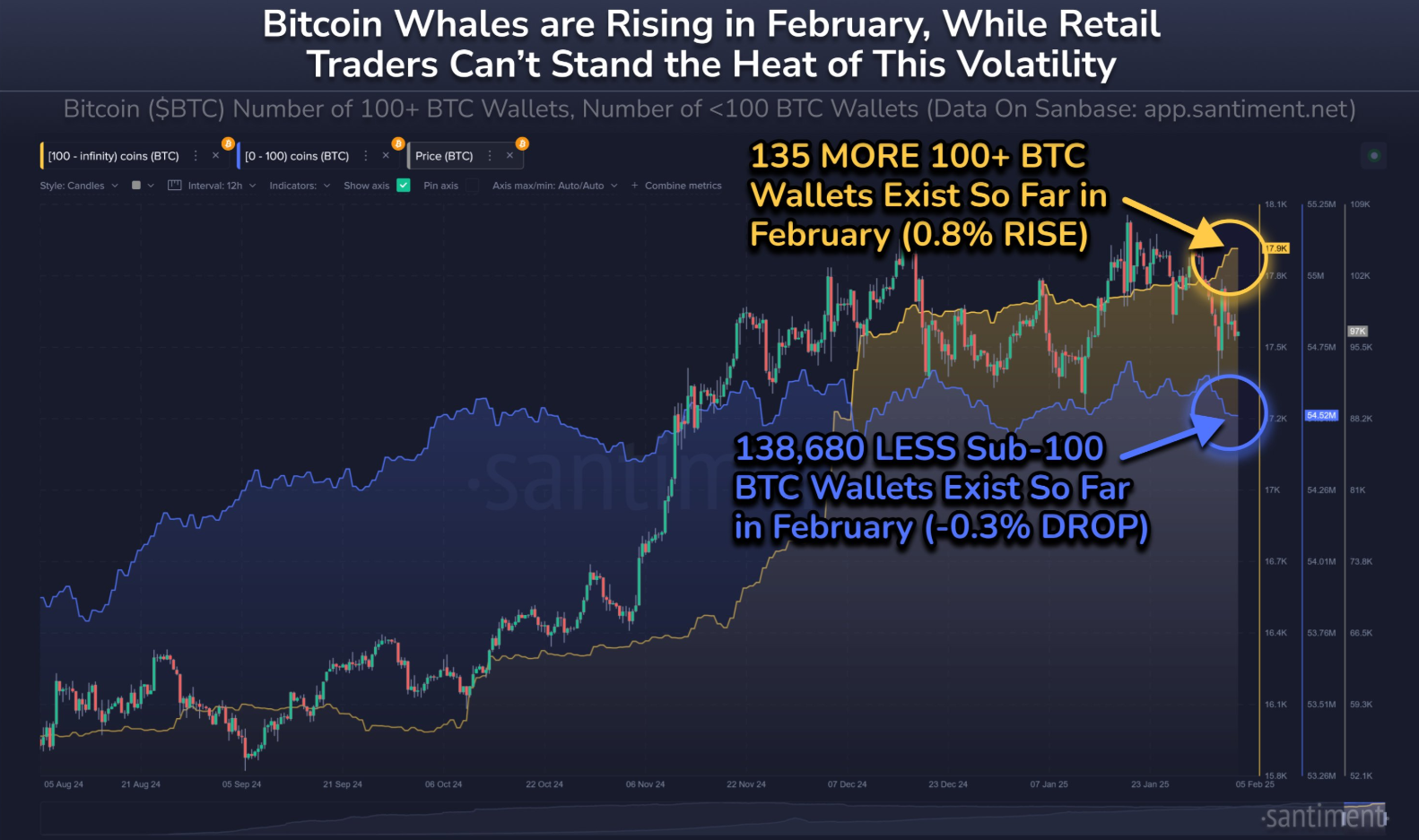
The wholesale purchasing activities of whales breed an environment with diminished selling activity which establishes potential price support mechanisms. The market recovery outlook becomes more positive despite the current short-term trading uncertainties.
Fewer BTC holders from retail categories however create better market sentiment conditions that establish positive opportunities for long-term price expansion.
The present shift of capital represents an opportunity for the token to develop robust support levels in the coming months which will strengthen price stability in the long-term.
According to data from glassnode, further shows that the 3-month realized volatility of Bitcoin is at 50% representing an all-time low versus the past bull run periods of 80% to 100% volatility peaks.
Bitcoin demonstrated its maximum volatility activation of 144% between the years 2015 to 2018 while its price fluctuated regularly above 100% during this time.
The 2018-2022 economic cycle presented its maximum volatility through prices that shot up to 120%.
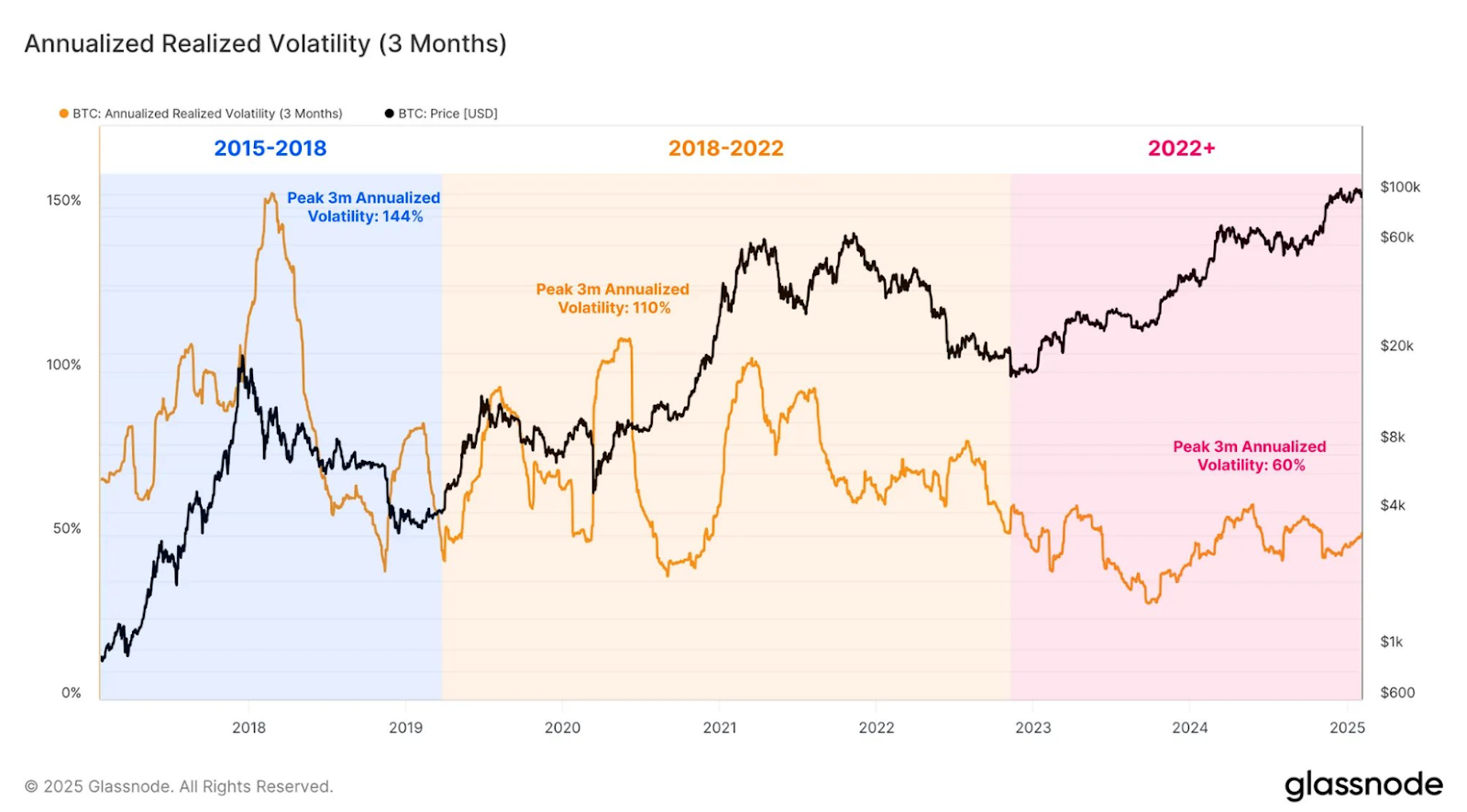
Evidence from current market conditions indicates Bitcoin is undergoing changes in its price fluctuations. The increased institutional investors and less market speculation direct the price movements into stable levels.
The stable prices associated with low volatility restrict the chances of fast profits that would drive short-term speculative interests.
Therefore, market watchers are following Bitcoin’s potential for sustaining a bullish period because its future sustainability remains in question under these conditions of reduced price volatility.
The market seems to enter a stable phase regarding volatility due to maturing market forces even though volatility changes could lead to new momentum.
Disclaimer
This article is for informational purposes only and provides no financial, investment, or other advice. The author or any people mentioned in this article are not responsible for any financial loss that may occur from investing in or trading. Please do your research before making any financial decisions.