Quack AI
 Pearl
Pearl Solana
 NEAR Protocol
 Canton
 XRP
XRP Derive
Key Insights:
- Altcoin Season Index exits Bitcoin zone, signaling potential shift as altcoins begin outperforming BTC.
- Ethereum Layer 2s surge to 533 TPS, fueling usage and laying groundwork for broader altcoin growth.
- Stablecoin market hits $241B, boosting capital availability for altcoin rallies as investor confidence builds.
Altcoin Season 2025 may be starting, as historical patterns, technical indicators, and market activity align with past June breakouts.
Rising altcoin indexes, growing Layer 2 adoption, and strong mid-tier investor behavior suggest a shift away from Bitcoin dominance.
Altcoin Index Patterns and Historical Trends
The Altcoin Season Index exited the Bitcoin zone for the first time in months. The indicator tracks how many altcoins outperform Bitcoin (BTC) in the past 90 days.
A reading above 50 typically marks altcoin dominance. The index currently sits at 23 and is rising. That suggests altcoins are gaining momentum.
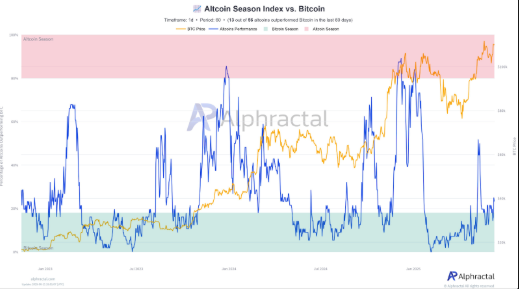
Alpharactal data indicates that each June since 2022 has marked the beginning of an increase in the index. This is because during such times, Bitcoin usually displays characteristics of fatigue following significant rallies, which lead to rotation of capital into altcoins.
Bitcoin has gained a little this month, by 1.42% to approximately $105.8K, which also adds to this story of transition.
Furthermore, Ethereum also recorded such a decline, losing 2.02% to $2,636, against the background of general market cooling.
However, in spite of the drop, smaller-cap altcoins like $GOUT and $MEV rallied hard, indicating that traders are starting to rotate into riskier assets. This deviation is historically one of the early indicators of altcoin season.
Ethereum Layer 2 Networks Signal Strong Demand
Among the most promising signs of altcoin power is the fact that Ethereum Layer 2 solutions have grown exponentially. Together, they have surpassed 533 transactions per second, a 36.26% improvement, with Base contributing more than 300 TPS on its own.
These networks offer cheaper and faster transactions and are infrastructure important to many altcoins.
The throughput increment, coupled with the reduction in cost and the high-security level through Ethereum settlement, presents an optimal environment in which new projects and established tokens can flourish.
The modular design of Ethereum is already showing results, and rollups are stimulating higher user activity and dApp usage in industries.
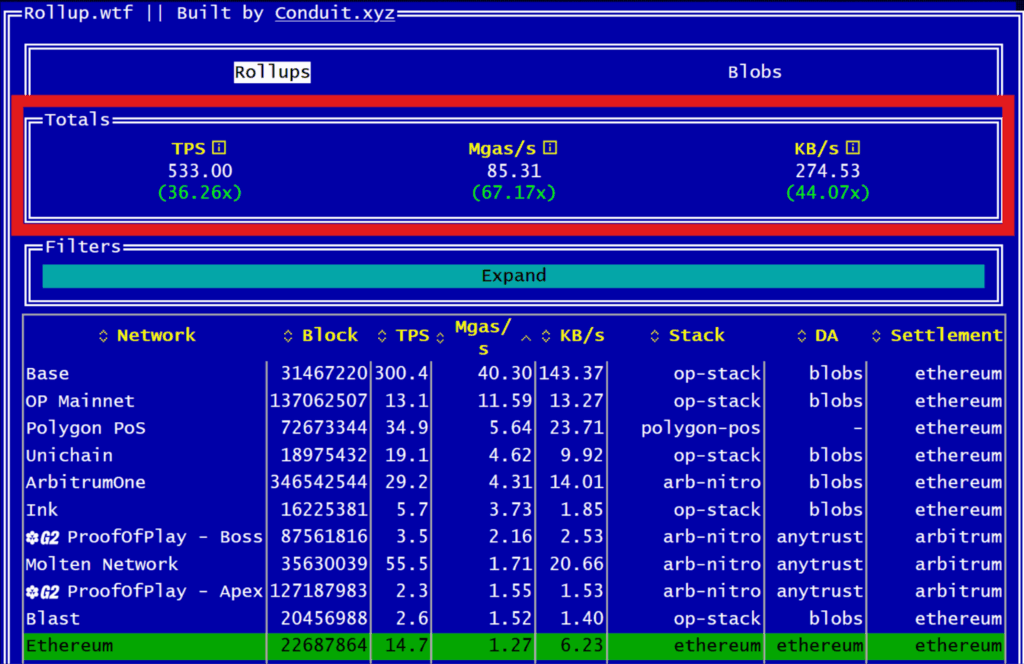
This Layer 2 scaling is not only Ethereum-friendly but also the altcoin ecosystem in general. Several altcoins are built directly on these rollups or rely on the activity Layer 2s create, including NFT exchanges, decentralized finance, and games. Their performance suggests high underlying demand and infrastructure development.
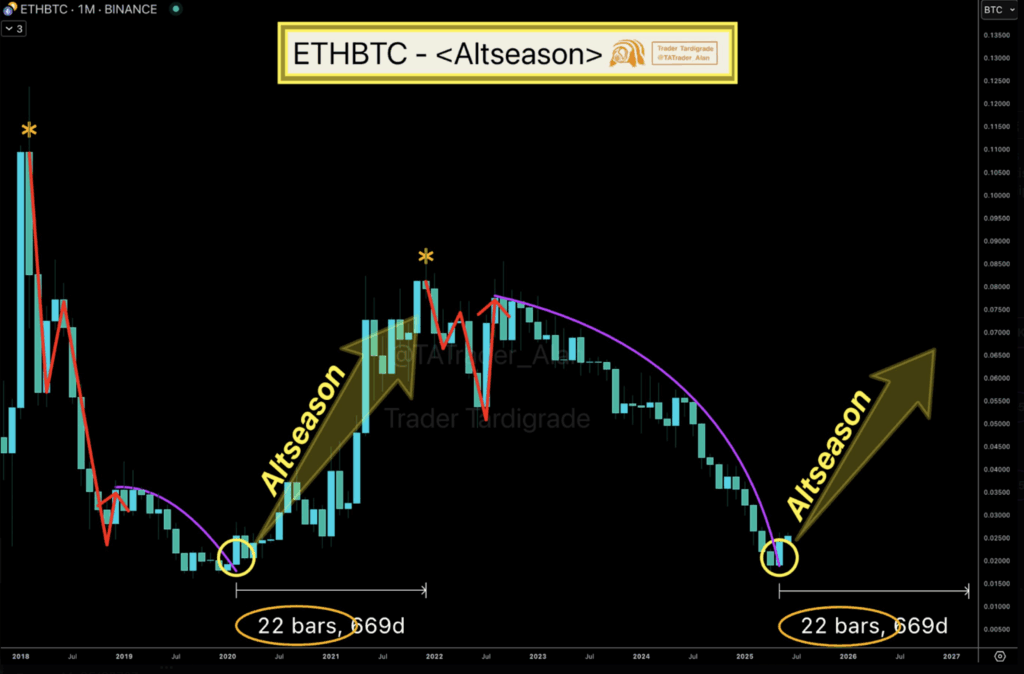
On the other hand, the ETH/BTC trade pair has also indicated a reversal of its 669-day downward trend. Technical charts have the pair building a base, much like in early 2020, which resulted in an extended altcoin season.
Should this pattern repeat, then it may indicate 20 or more months of outperformance by altcoins versus Bitcoin.
Stablecoin Supply and Web3 Investment Trends
Another important force behind altcoin market cycles is capital flow. The current market cap of stablecoins is $241.2 billion, of which $173.7 billion is occupied by non-U.S. stablecoins and $67.5 billion by U.S.-based coins, such as USDC and PYUSD.
The U.S. segment more than doubled, with a growth of 104% over the last year, and offshore stablecoins increased by 41%.
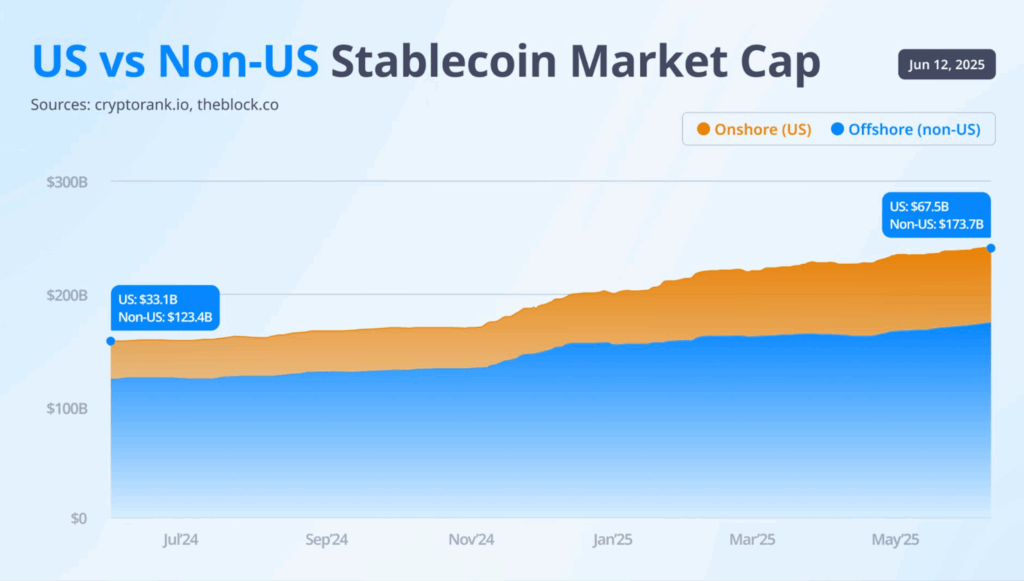
This increasing amount of stablecoins represents a growing confidence in investors and offers the liquidity required to move large amounts of altcoins. This capital can easily rotate into altcoins when sentiment becomes bullish and drive rallies.
Moreover, institutional demand, in particular regarding onshore-issued tokens, has increased following the recent U.S. regulatory clarification around stablecoins.
Funding-wise, Q1 2025 was the strongest since the summer of 2022, with Web3 startups raising a total of $3.8 billion. Nonetheless, Q2 investment fell suddenly to the lowest since 2019.
This disconnect could be a market that is anticipating higher price resolution before allocating capital. In 2021, the biggest altcoin runs corresponded well with high investment quarters.
The caution of the investors is still evident in the wider market. The Fear and Greed Index says 71 (Greed), and 24-hour liquidations amount to $324.79 million, which is a sign of being overexposed.
However, the rise of small-cap leaders such as $SPX and @KaiaChain amid an overall market correction indicates that discretionary optimism is still present.
Although it is not in the euphoria zone, the behaviour and positioning of the market presently give a good indication of a solid future growth.
Disclaimer
This article is for informational purposes only and provides no financial, investment, or other advice. The author or any people mentioned in this article are not responsible for any financial loss that may occur from investing in or trading. Please do your research before making any financial decisions.