Bitcoin
 Pearl
Pearl Quantus
 NEAR Protocol
 Ondo
Ondo Walrus
 Pudgy Penguins
Pi Network has been making progress at a snail’s pace, which has irked community members the most. The Protocol 23 upgrade on the Pi blockchain testnet has been facing roadblocks with recent reports of failed transactions. This development could potentially derail the Pi coin recovery, which has recently jumped from lows of $0.15 to $0.22.
Pi Network Protocol 23 Upgrade Progresses Slowly
According to blockchain developer Dr. Altcoin, the ongoing Protocol 23 upgrade on the Testnet is experiencing delays due to a high number of failed transactions. At the current pace, it may take another month to finalize the Testnet phase.
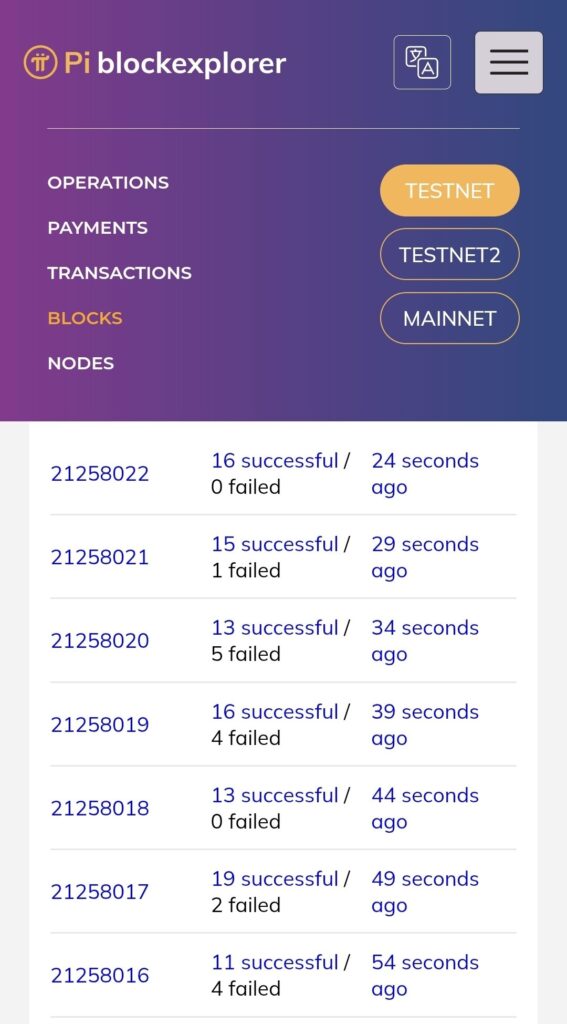
Once completed, the upgrade will proceed to Testnet2 before being rolled out to the Mainnet. Based on this timeline, the full deployment of the Protocol 23 blockchain upgrade is likely to occur by the end of 2025 or in the first quarter of 2026, according to Dr. Altcoin.
Protocol 23 marks a major milestone for Pi Network. It is designed to enhance transaction speed, security, and regulatory compliance. The upgrade will introduce integrated KYC verification, improved scalability through alignment with Stellar Protocol, Linux node compatibility, and Rust-based smart contracts to support more secure app development.
However, the delay in rollout has divided the Pi community. While some members express frustration over the slower progress, others believe the extended timeline is essential for the network’s long-term stability.
Pi Network Ecosystem Continues to Expand
Despite this massive underperformance and uncertainty, the Pi ecosystem has continued to expand further. The Global Pi Market (GPM), a leading decentralized marketplace within the Pi Network ecosystem, has surpassed 208,000 registered users as of October.
In under two years, GPM has evolved into a large-scale trading hub featuring over 17,000 active listings, 22,000 Telegram community members, and daily real-world transactions conducted entirely in Pi.
Users trade a wide range of goods and services, including electronics, digital offerings, and vehicle and property listings. This forms what GPM describes as a “100% Pi-based economy.”
To ensure transaction security, the platform utilizes MultiSig Wallets, escrow protection, and an internal dispute resolution system, all integrated into GPM’s native infrastructure.
One of the key innovations introduced by the Global Pi Market (GPM) is its Franchise Model. This allows local entrepreneurs to operate regional GPM branches and earn commissions from transactions within their respective markets.
Each franchise partner serves as a local ambassador, assisting with user onboarding, managing listings, and fostering trust within their community to strengthen GPM’s global presence.
Where’s Pi Coin Value Heading Next?
Pi Network’s native cryptocurrency, Pi coin, has seen a continuous sideways movement, correcting by 40% over the past month. However, after dropping to $0.15 last month, the Pi coin price has recovered and is currently trading at $0.22, with its daily trading volume remaining around $26 million.
On-chain data shows that investor confidence is growing, with the Chaikin Money Flow (CMF) indicator showing a strong uptick. This indicates that capital inflows are increasing, as traders engage in bottom fishing, driving the Pi Coin price upward.
At the same time, Pi Coin’s Moving Average Convergence Divergence (MACD) indicator is nearing a bullish crossover. This indicates that the buying momentum is returning for the altcoin.
At the time of writing, Pi Coin is trading at $0.214, just below the key resistance level of $0.229. A breakout above this level, backed by strengthening technical signals and investor optimism, could drive the price toward $0.256.
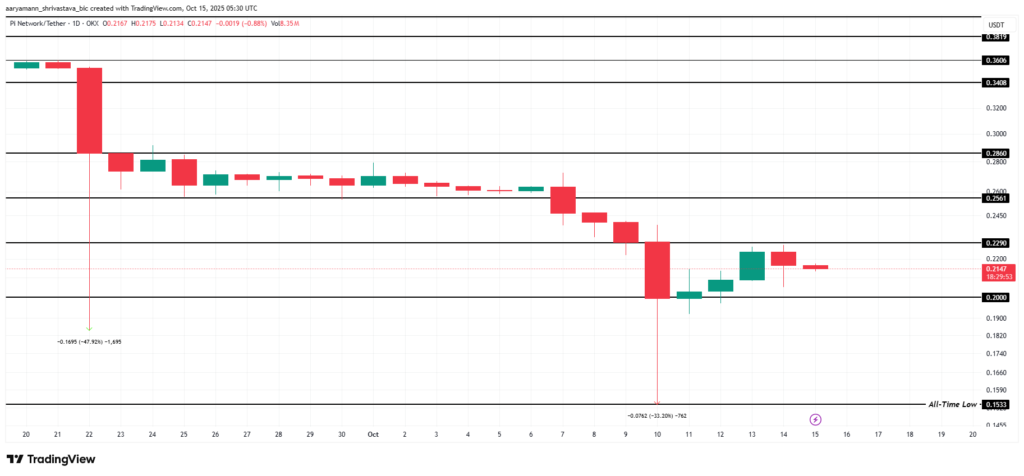
On the other hand, a drop below the $0.200 support zone could trigger fresh selling pressure, potentially pushing the price down to $0.180 or lower.