Wisp
Wisp Identity.md 6900
 Bunker Mode
 Crawlerpad
 Claudia
 Quantus
 NEAR Protocol

Bitcoin price remained under pressure on Sept. 2 as rising bond yields and renewed U.S.-Iran hostilities tightened global financial conditions.
BTC traded around $76,500–$76,700 during the session after falling below $77,000. The cryptocurrency has retreated roughly 6% from its Aug. 28 high, around $81,300–$81,500, depending on the exchange.
The decline coincided with a global government-bond selloff, higher oil prices, and rising expectations for another Federal Reserve rate hike. Those factors have increased pressure on risk assets even as Bitcoin remains well above its mid-August lows.
Bitcoin Price Falls as Global Bond Yields Surge
BTC price remains under pressure this week as concerns about the bond market continued its volatility today. In the United States, the ten-year yield rose to 4.8%, its highest level since January this year. This metric is important because it normally determines the activity in the global bond market.
The same surge is happening in other countries. For example, in France, the ten-year rose to 4.27%, its highest point since 2008. In Germany, the ten-year rose to 3.367%, while in the UK, it moved to 5.22%.
These yields are soaring for several reasons, including the ongoing US-Iran war that has pushed crude oil prices higher. Brent, the global benchmark, jumped to a high of $96.88, its highest level since July 24.
The two countries have resumed kinetic operations, and the escalation may continue. As a result, higher oil prices may lead to a sharp jump in inflation, which could push the Federal Reserve to raise interest rates.
Second, this surge is driven by the ongoing government spending surge. In the United States, public debt has jumped to $40.1 trillion, and this growth will accelerate in the coming months. The same debt binge is happening in European countries like Germany and France, where defense spending is accelerating.
Third, government bonds are now competing with corporate bonds by some of the top cash-rich companies like Google and Apple.
In theory, the rising bond yields should be bullish for Bitcoin, which has a fixed supply of 21 million coins. Bitcoin has always been seen as a safe-haven asset among its proponents.
Rising Crude Oil Prices and Inflation
The challenge, however, this is happening at a time when the US and Iran are continuing to fight. The US-Iran war has already pushed inflation higher, with the average gasoline price remaining above $4 a gallon. Diesel is hovering near its all-time high in several countries, including in the United States.
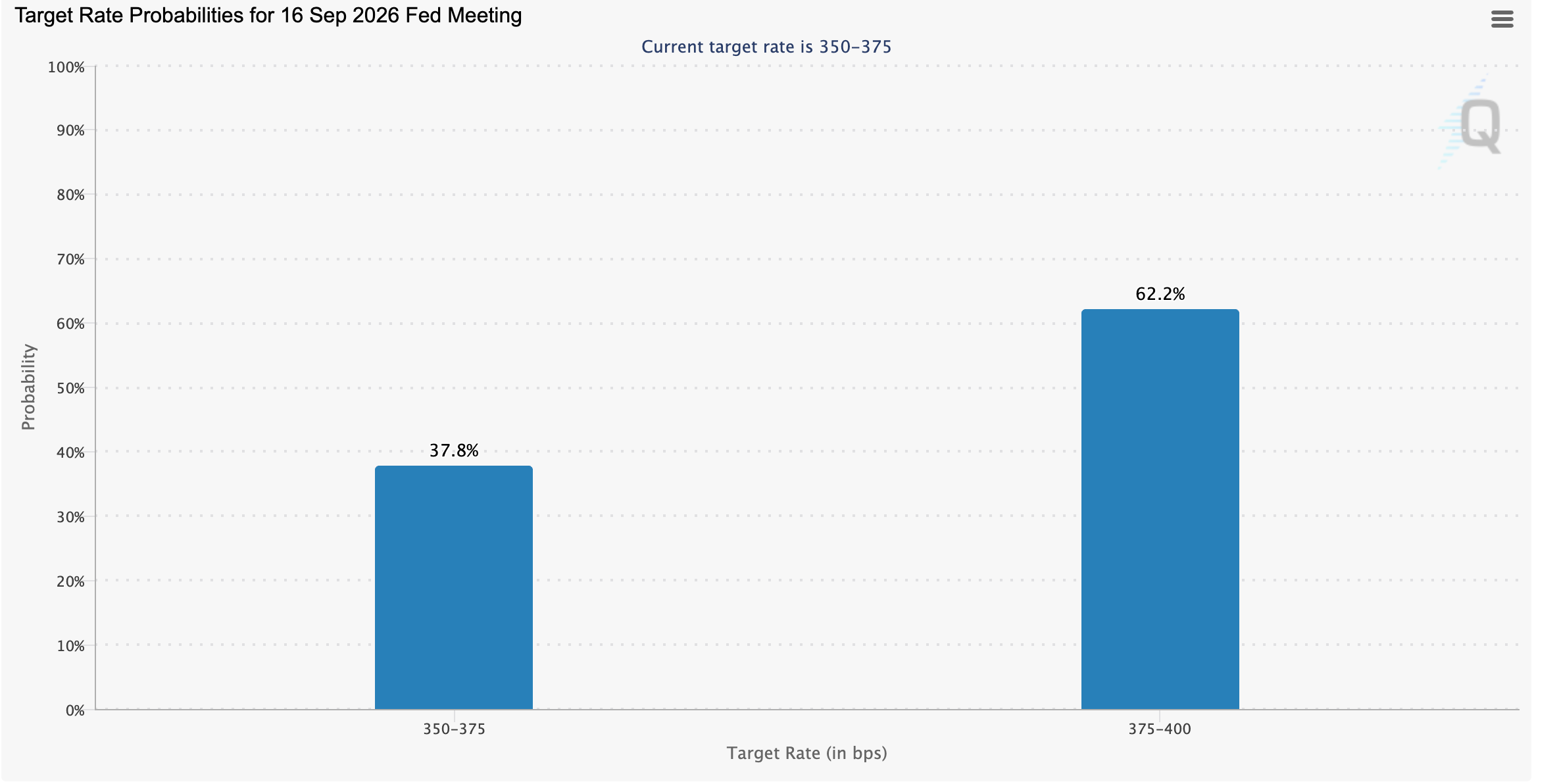
As a result, analysts now believe the Federal Reserve may raise interest rates as soon as this month. As the chart below shows, the CME FedWatch tool shows that the probability of hikes happening this year has jumped to 62.2%. Bitcoin often underperforms the market when these odds are rising.
The rising fears also explain why American investors are selling their Bitcoin ETFs. These funds saw $236 million in outflows on Tuesday, after adding $216 million a day earlier. Bitcoin ETF outflows mean that demand for Bitcoin is falling. Similarly, the futures open interest has remained under pressure in the past few days.
Bitcoin Price Prediction: Technical Analysis
The daily chart shows that the BTC price has retreated in the past few days, moving from a high of $81,365 to the current $76,250. On the positive side, it has remained above the 50-day Exponential Moving Average (EMA).
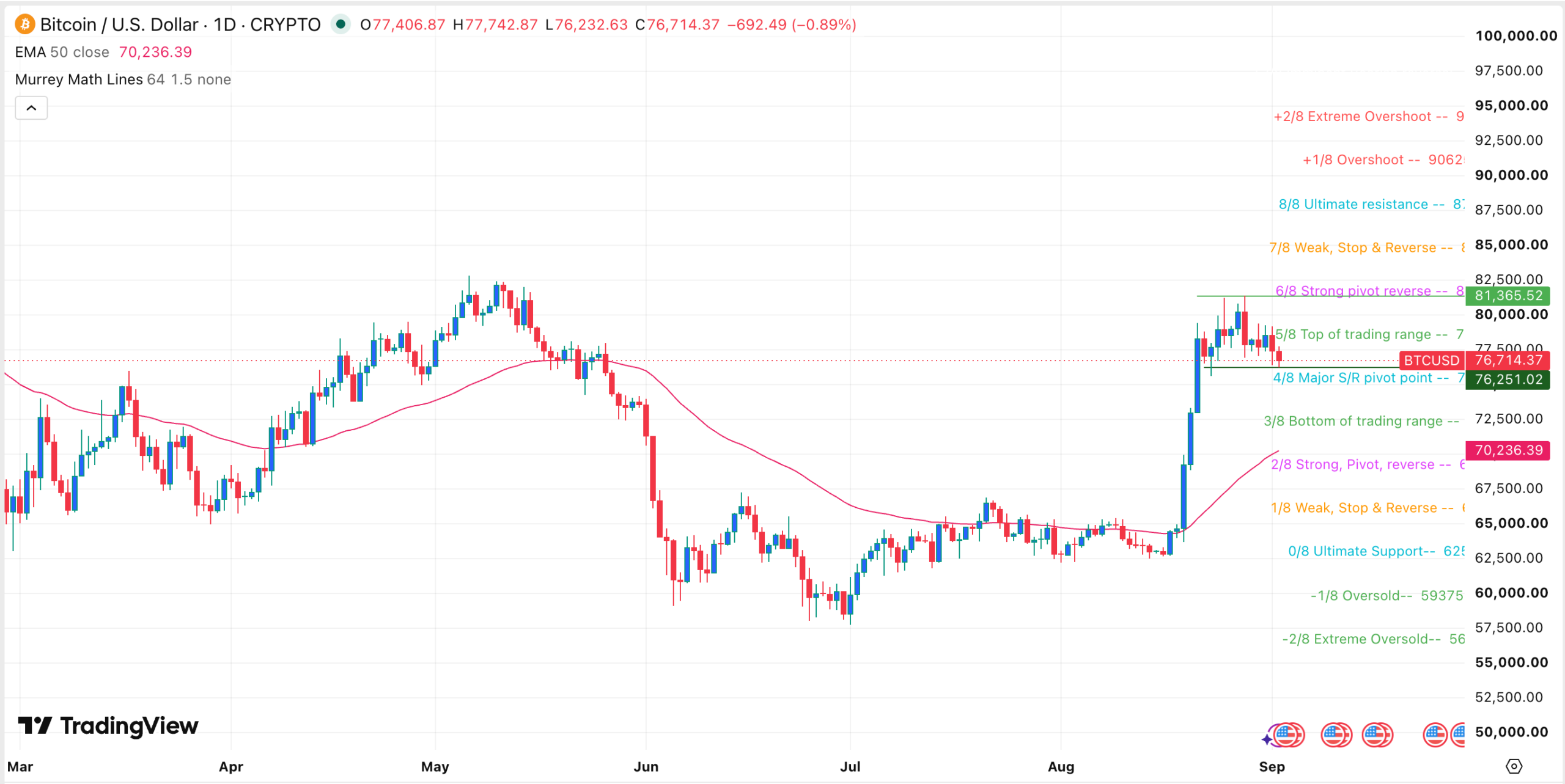
Bitcoin also remains above the Major S/R Pivot Point of the Murrey Math Lines tool. These technicals suggest that the bullish trend is still intact. Also, it remains above the important support level of $76,250, where it has resisted moving below since August 23.
Therefore, the coin may rebound in the coming days. If this happens, the next key target to watch will be at $81,365. A drop below the support level at $73,000 will invalidate the bullish outlook.