Doge Pepe
 Zylo Ecosystem
 Crawlerpad
 Pearl
Pearl Quantus
 Starknet
 Quant
Quant

Senator Cynthia Lummis is pressing Senate Democrats to support the CLARITY Act after months of negotiations over the crypto bill. Lummis said Democrats secured more than 115 changes in the latest text. She pointed to tougher fraud rules, added CFTC funding, and stronger controls for crypto platforms. The Senate schedule sets the next procedural vote for September 15.
Lummis Says Democrats Won Key Changes
Lummis said Democratic lawmakers helped shape the latest version of the Digital Asset Market Clarity Act. In a post on Thursday, she said they secured more than 115 policy changes during negotiations. She now wants those lawmakers to support the bill when it reaches the Senate floor.
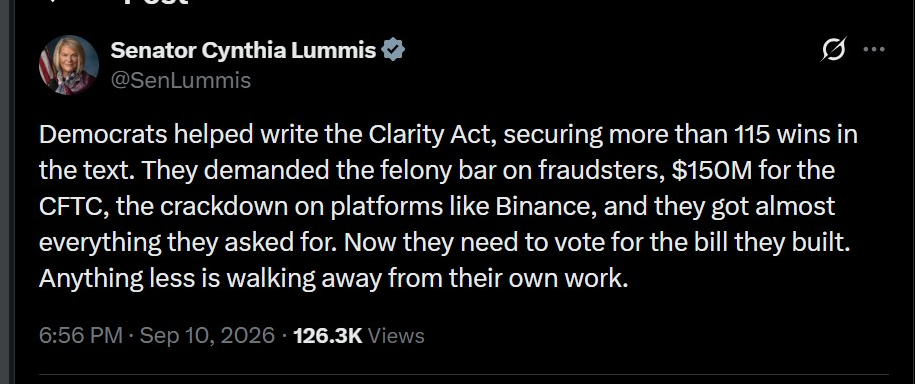
Her latest message named several provisions that Democrats sought during the talks. Lummis cited a felony bar for fraudsters and $150 million in added funding for the CFTC. She also pointed to tighter treatment of platforms such as Binance. Her statement framed those provisions as evidence of bipartisan drafting.
Updated Draft Expands Crypto Rules
The latest Senate work builds on H.R. 3633, which the House passed in July 2025. The House approved the measure by 294 votes to 134. Seventy-eight Democrats joined Republicans in supporting the bill at that stage. The proposal sets federal rules for digital commodities and divides oversight responsibilities between major financial regulators.
Lummis released another updated version in July after work by the Senate Banking and Agriculture committees. Her office said the draft covers fraud, money laundering, consumer safeguards, ethics, vertical integration, and stablecoin balances. The Senate Banking Committee advanced the legislation by a 15-9 vote in May 2026.
The revised crypto regulation addresses when crypto assets fall under securities or commodities rules. The draft gives the SEC and CFTC defined roles across market areas.
Clarity Act News: Vertical Integration Talks Continue
Lawmakers still disagree over parts of the market structure package. Democrats are seeking language that would address conflicts within vertically integrated crypto companies. Such companies can control several functions across trading, custody, token issuance, or other market activities. Republicans have raised concerns about how future regulators could apply those rules.
Negotiations also cover ethics standards and rules affecting stablecoin rewards or yield. These unresolved sections could determine how much Democratic support the bill receives during the coming Senate process.
The vertical integration debate focuses on how regulators should handle firms that combine several market roles. Supporters of new standards want safeguards against conflicts. Opponents want language that closely limits regulatory discretion under future administrations.
Senate Vote Creates 60-Vote Test
The Senate plans to return for regular business on September 14. Its schedule places the H.R. 3633 cloture motion on September 15 at 2:15 p.m. The procedural step will determine whether senators can move toward formal consideration of the CLARITY Act.
Republicans currently hold 53 Senate seats, while Democrats hold 45 and independents hold two. That balance means Republican leaders need support beyond their conference to reach the usual 60-vote cloture threshold. Lummis is now focusing her public case on Democrats who participated in the negotiations.
The bill already has a record of bipartisan support from its passage in the House. However, Senate committees and negotiators have changed the text since that vote. Senators must decide whether the latest version resolves enough concerns to support debate.
Lummis has also argued that Congress faces a limited window to complete digital asset market structure legislation.