Doge Pepe
 Bitway
 Pons
Pons Sui
Sui Pearl
Pearl Ronin
Ronin Zcash
Zcash
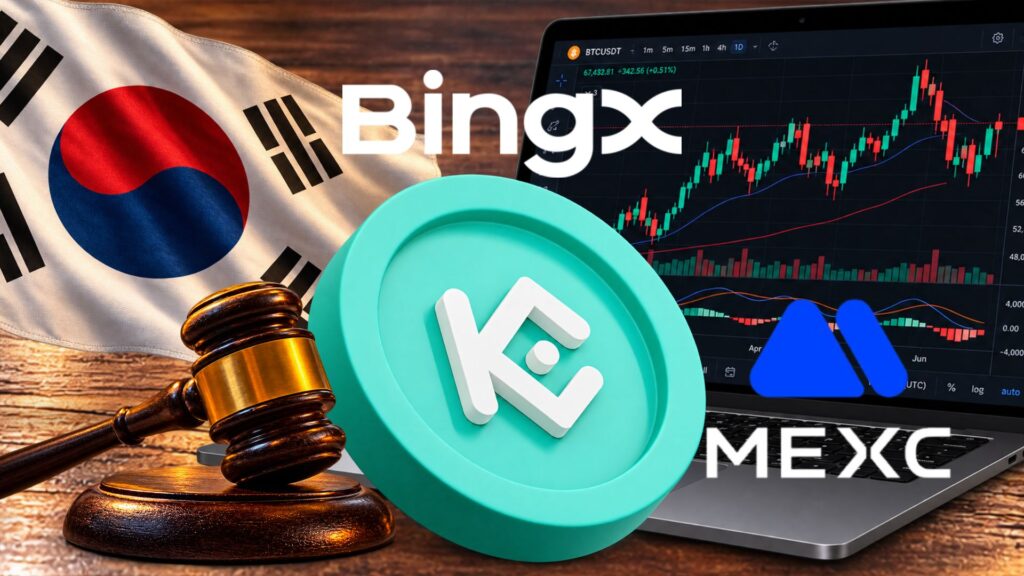
South Korea has widened its fight against offshore crypto exchanges that serve local users without a license.
In the latest crypto news from Seoul, the Financial Intelligence Unit (FIU) said on October 13 that the Korea Communications Standards Commission has ordered access restrictions on 27 websites run by unregistered overseas operators.
Crypto exchanges KuCoin, MEXC and BingX are on the list, according to local outlet Etoday.
Crypto News: South Korea Orders Blocks on 27 Unregistered Overseas Exchanges
The Financial Services Commission confirmed the restrictions in an official statement on Tuesday. The decision covered 27 active websites that authorities had previously identified for enforcement.

Overseas-hosted websites face domestic access restrictions, while domestically operated services face termination measures. The distinction depends on the location of servers or operators.
Previously, South Korean regulators worked with Google and Apple to restrict unregistered exchange applications. Those measures prevented new installations and updates through domestic app stores.
However, users could still access the exchanges through their websites. The latest decision expanded enforcement to those online services.
The FIU also outlined a faster response to suspected unregistered crypto operations. Authorities can now pursue access restrictions without waiting for completed investigations or confirmed customer losses.
Regulatory review remains part of that process, according to the agency. Officials argued that operating without mandatory registration already constitutes a violation of South Korean law.
KuCoin, MEXC and BingX Among Exchanges Facing Website Restrictions
Reports named ten of the 27 platforms. They are KuCoin, MEXC, Phemex, XT.com, Bitrue, CoinW, Poloniex, BTCC, BingX, and BitMart. Several of these crypto exchanges have large global user bases and have courted Asian traders for years.
Under Korean law, a foreign operator falls under local rules once it targets Korean customers. Running a Korean-language website, advertising to Koreans or accepting won payments all count.
To operate legally, a platform must have an Information Security Management System (ISMS) certification and report to the FIU. Skipping that step can bring up to five years in prison or a fine of up to 50 million won.
KuCoin has faced this kind of pressure in other countries too. The Philippines ordered a block on Binance in March 2024 and later went after more unregistered platforms, with KuCoin and MEXC among those reported blocked by late 2025.
Nigeria restricted access to several exchanges, KuCoin included, during its 2024 foreign exchange crackdown.
Why South Korea Is Expanding Its Crackdown on Unregistered Crypto Platforms
For anyone following crypto news out of Korea, the move fits a clear pattern. The FIU has now referred 44 unregistered virtual asset service providers to investigative agencies.
It also bars registered Korean platforms from sending virtual assets to these firms and has blocked credit card purchases of crypto from them.
Consumer protection sits behind the push. Unregistered firms fall outside the Consumer Protection Act and the Act on Reporting and Use of Specific Financial Information, so their security and asset safeguards get no official oversight.
A joint industry investigation in June found average trading fees at these firms ranged from 1.5% to 10%. That is up to 62 times higher than the 0.16% average at Korea’s top five won-based exchanges.
Korea currently has 28 virtual asset service providers registered with the FIU. Officials want local traders on those platforms, where rules on custody, security checks and reporting apply. Regulators elsewhere are tightening in their own ways.
From August 23, 2026, EU sanctions measures banned transactions with listed crypto service providers such as HTX, EXMO and BitPapa, though that action rests on sanctions rather than licensing rules.
Crypto News: How the Restrictions Could Affect South Korean Crypto Users
The most immediate effect is practical. Korean users with funds on any of the 27 sites will find the web interface blocked from domestic connections. Anyone still holding assets there has good reason to move them out while withdrawal routes remain open.
The FIU said it will help with that. If users run into trouble pulling assets from blocked platforms, the Digital Asset Exchange Association (DAXA) will share guidance on withdrawal methods and procedures.
Authorities also plan to track mirror sites that switch domains to dodge the block, and they will request further restrictions as those sites appear.
The FIU’s advice to traders was direct. It told users to be wary of ads offering high returns, guaranteed principal, non-public information or global listings.
This article is for informational purposes only and does not constitute legal, financial, or investment advice.