NEAR Protocol
 Bitcoin
 Puffer
 Hyperliquid
 ZKsync
 Pudgy Penguins
 Pearl
Pearl
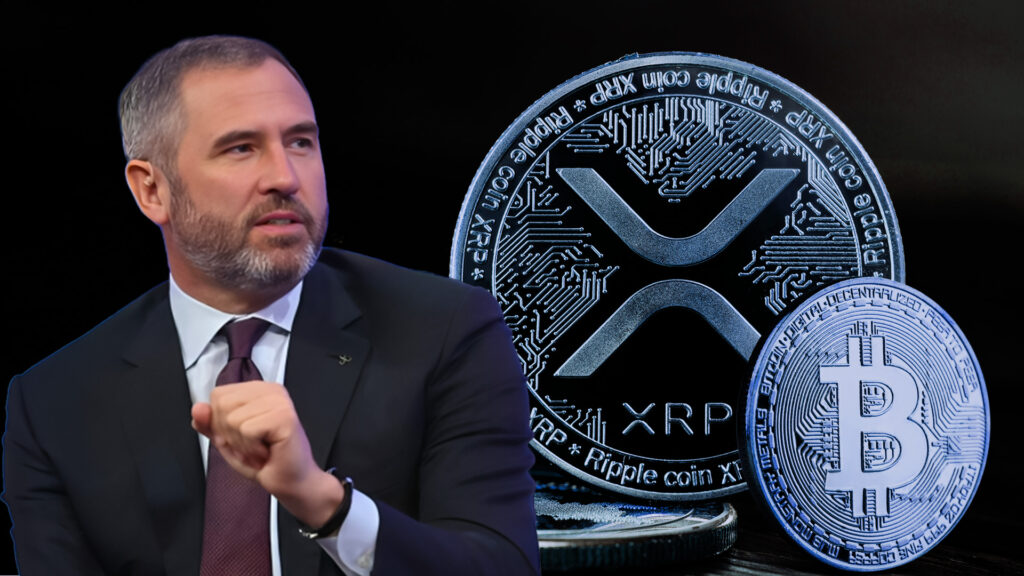
- Ripple CEO has advocated for a diversified U.S. crypto reserve.
- Brad Garlinghouse emphasized collaboration within the crypto sector.
- Bitcoin maximalists oppose the inclusion of altcoins like XRP.
Ripple CEO Brad Garlinghouse believes the US government should take a more diverse approach when developing a digital asset reserve. He suggests that such a reserve should encompass several cryptocurrencies, not simply Bitcoin.
Garlinghouse emphasizes the inclusion of XRP in this reserve. This viewpoint, however, differs from Bitcoin enthusiasts, who believe that only Bitcoin should be in the reserve.
Advocating for a Multichain Reserve
Ripple CEO argued that the cryptocurrency industry’s growth depends on collaboration rather than rivalry between digital assets. In a recent post on X, he said the sector has a “real shot” at achieving its goals if the focus shifts from competition to unity.
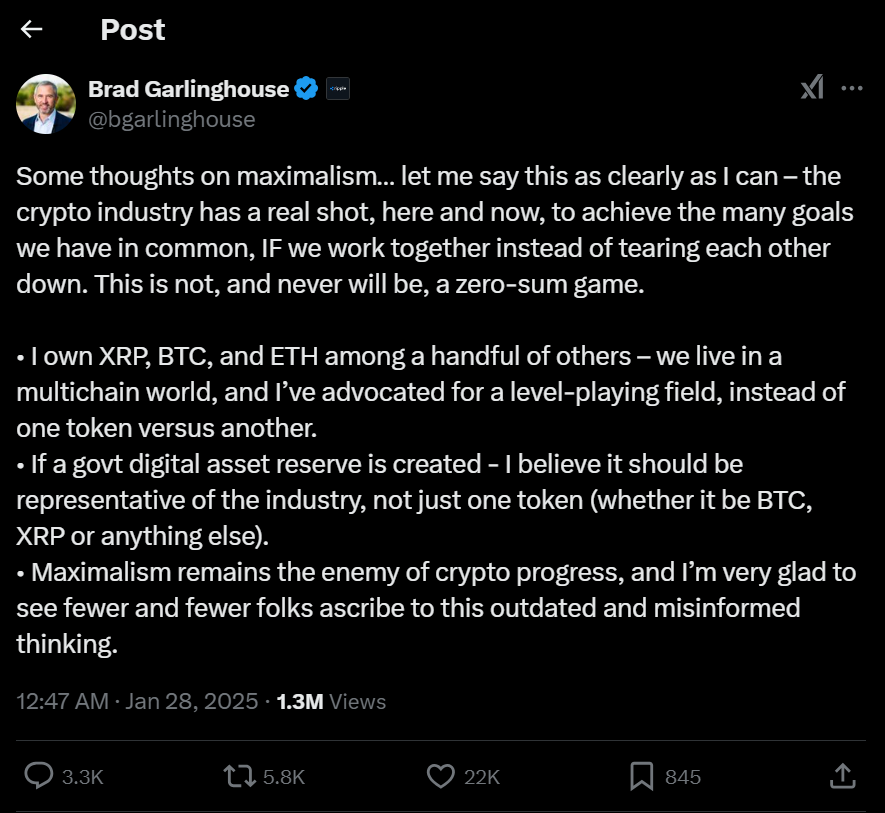
Garlinghouse, a proponent of a multichain future, revealed his investments in Bitcoin, Ethereum, and XRP. He did this to underline the importance of diversity in the digital asset space.
He argued that any government-backed digital asset reserve should include a mix of cryptocurrencies rather than relying on just one. “If a government digital asset reserve is created, I believe it should include more than one token, whether it’s BTC, XRP, or any other,” he said.
Ripple CEO added that widespread crypto adoption hinges on cooperation among industry players and recognition from regulators.
Is Bitcoin Really the Only Option?
Bitcoin maximalists have rejected Garlinghouse’s stance. They claim Bitcoin’s decentralized nature makes it a superior reserve asset.
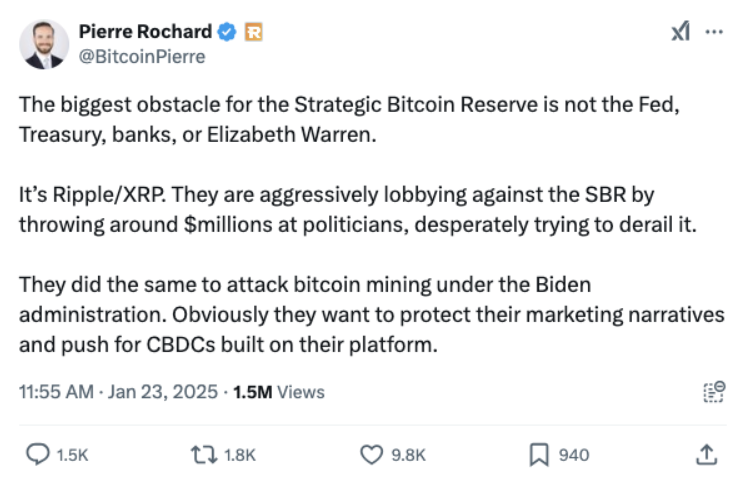
Pierre Rochard, Vice President of Riot Platforms, insists that Bitcoin alone deserves to serve as a government-backed digital currency. He argued that Ripple is using lobbying efforts to promote XRP as an alternative.
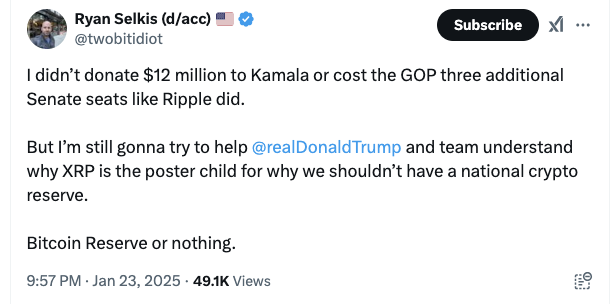
Ryan Selkis, founder of Messari, shared a similar view. He holds that Bitcoin possesses unique features that justify its singular inclusion.
These features include its finite supply and established track record. Critics of the position of Ripple CEO highlight Bitcoin’s strong security model as a reason to stick with one dominant asset. They also cite deep liquidity as one more reason to choose the asset.
Despite this pushback, Ripple CEO Garlinghouse remains firm in his calls for collaboration. He contends that the industry should not adopt a zero-sum game mindset.
He also pointed out that the crypto market has grown rapidly. This further suggests there is room for multiple assets to coexist.
Arizona’s Bitcoin Bill Sparks Further Debate
While the U.S. government contemplates a national crypto reserve, Arizona lawmakers have moved to establish a “Strategic Bitcoin Reserve.” A state Senate committee approved the measure, and it is now facing a full Senate vote.
The bill’s advocates say Bitcoin’s scarcity and decentralized nature make it ideal as a reserve currency.
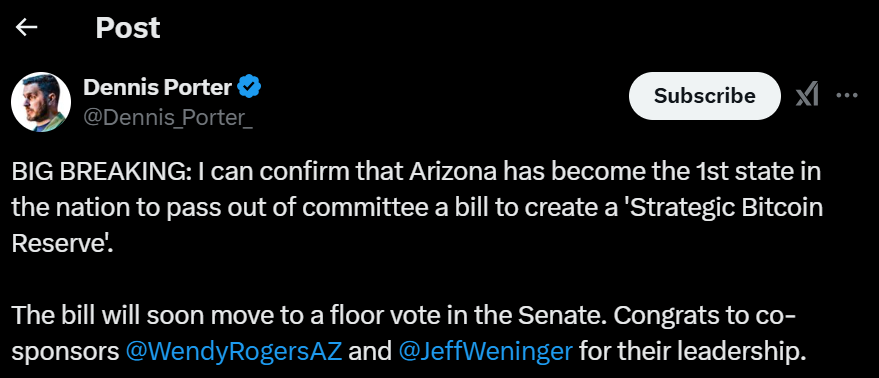
Dennis Porter, a crypto supporter, called Arizona’s move a milestone. He said it marks the first time any state has advanced such legislation. Observers believe this proposal could inspire similar actions nationwide.
The Arizona debate underscores the rift between those who support a Bitcoin-only approach and those who see benefits in multiple tokens.
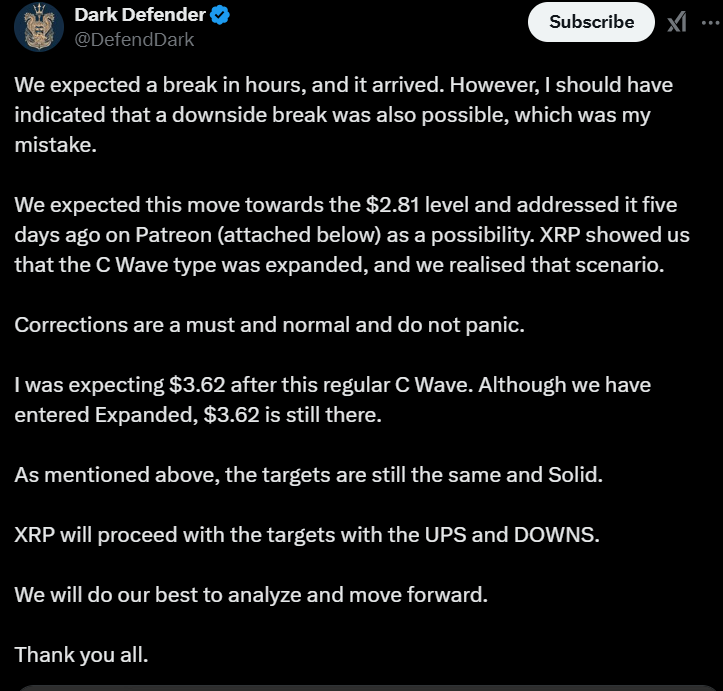
Meanwhile, Crypto analyst Dark Defender predicted a short-term dip to $2.81 before a potential rebound to $3.67. As of the time of writing, XRP traded at $3.10, up from its intra-day low of $2.71. Its market capitalization stood at $178.87 billion, reflecting an 11.44% increase.
The message of Ripple CEO remains focused on a multichain strategy. He believes that if the U.S. creates an official digital asset reserve, it should contain more than one cryptocurrency. His remarks have sparked conversation across the market.
Disclaimer
In this article, the views and opinions stated by the author or any people named are for informational purposes only, and they don’t establish the investment, financial, or any other advice. Trading or investing in cryptocurrency assets comes with a risk of financial loss.