Dacity Coin
 NEAR Protocol
 Quantus
 Bitcoin
 Celestia
 Pearl
Pearl Pudgy Penguins
Key Highlights:
- Short-term BTC holders fall to 2.53M amid price rally.
- Transaction fees triple, showing rising network demand.
- Weekly chart signals breakout above Kijun level.
Short-term Bitcoin holders remain inactive despite rising breakout momentum. The weekly chart indicates continued growth in price dynamics.
At the same time, the speed of transaction fees is increasing rapidly as the network experiences rising usage. Overall, the global mood is transforming as political figures and institutional bodies start to participate.
Short-Term Trader Activity Falls Despite Bitcoin Price Growth
IntoTheBlock reports that BTC addresses remain active for less than a month and have declined to 2.53 million. Since early January, the number of short-term Bitcoin addresses has decreased significantly from 3.06 million.
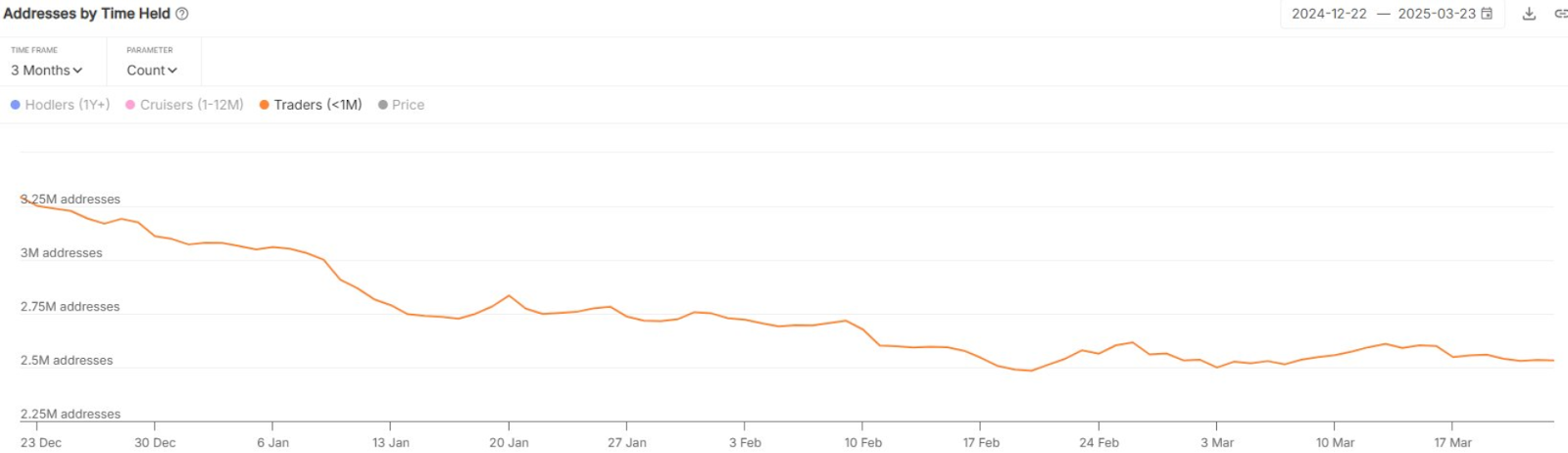
The market data indicates short-term traders have not re-engaged their activities despite the price recovery. Price surge to new highs in March did not motivate traders to rejoin the market.
Additionally, the recent three-month period shows declining numbers of these addresses without any indication of rebounding. Unlike past cycles, the current market shows a contrasting trend.
Short-term holders are not returning quickly during price rallies as they previously did. However, the current market data indicates traders either maintain a reserved approach or show no trading activity.
Network Activity Increases Along With Transaction Fees
Short-term wallet activity shows a decline, yet Bitcoin demonstrates increasing activity levels. According to Glassnode, BTC transaction fees have surged threefold over the past week.
This reflects a heightened demand for transactions on the network. Transaction fees on March 22 reached $825,875, while just six days before, they stood at $344,60
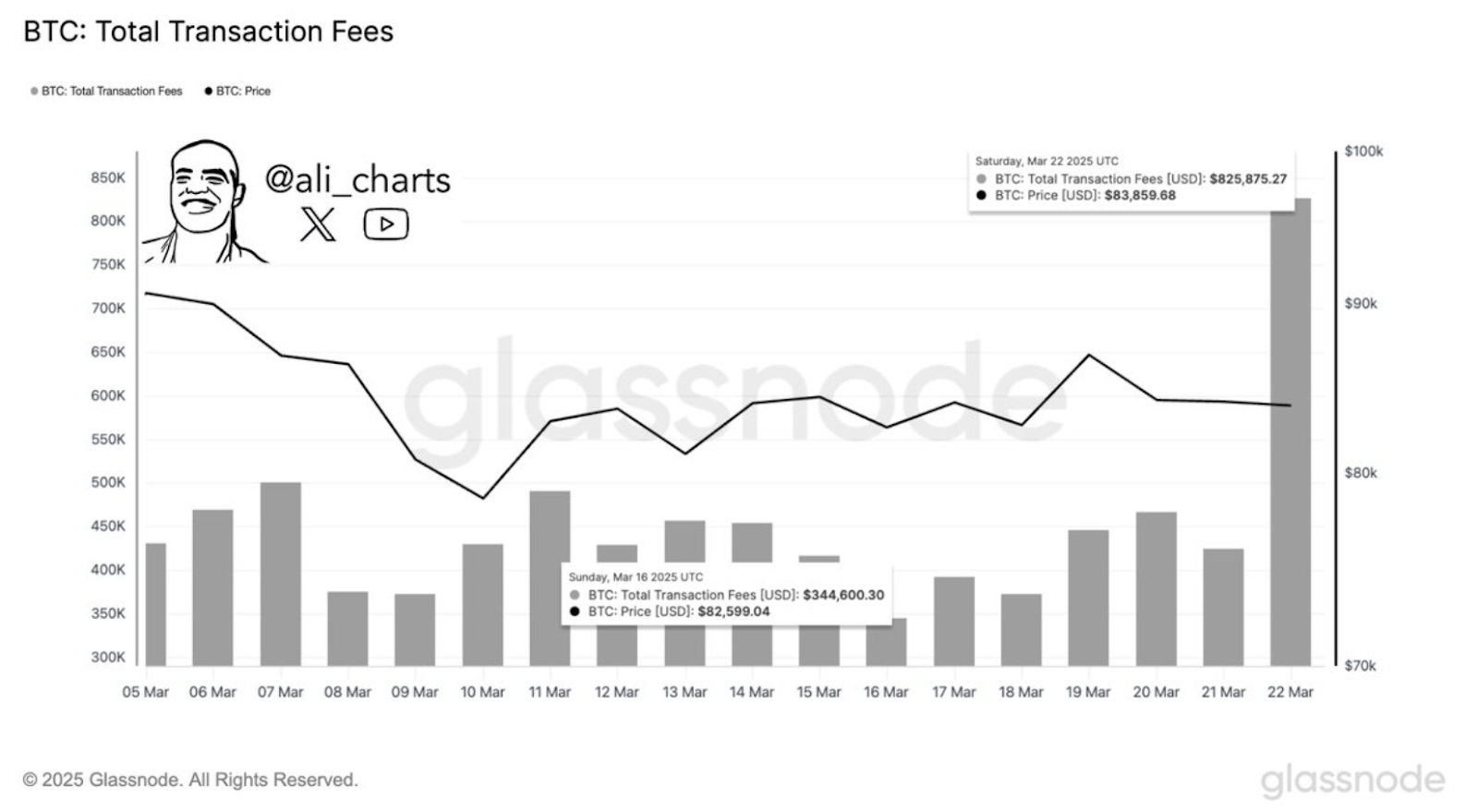
Bitcoin blockchain usage grows when transaction fees increase. Network congestion rises as more users execute coin movements or trade operations, which leads to higher fees.
However, the decrease in trader wallet numbers does not explain the rising transaction fees. This indicates multiple user groups remain active on the network.
Market speculation and news events trigger fee price increases in the Bitcoin system. The movement of assets by long-term holders and institutions could stem from preparations for upcoming events. It also reflects their response to significant breaking news.
Technical Chart Shows Weekly Breakout Above Key Level
According to an Ichimoku indicator analysis from a market analyst, BTC managed to surpass its Kijun line in a weekly chart. The line serves as a common midpoint where the price finds temporary equilibrium.
The breakout has initiated a momentum shift, setting $91,400 as the next target. This aligns with the Tenkan line’s position, indicating a potential bullish trend.
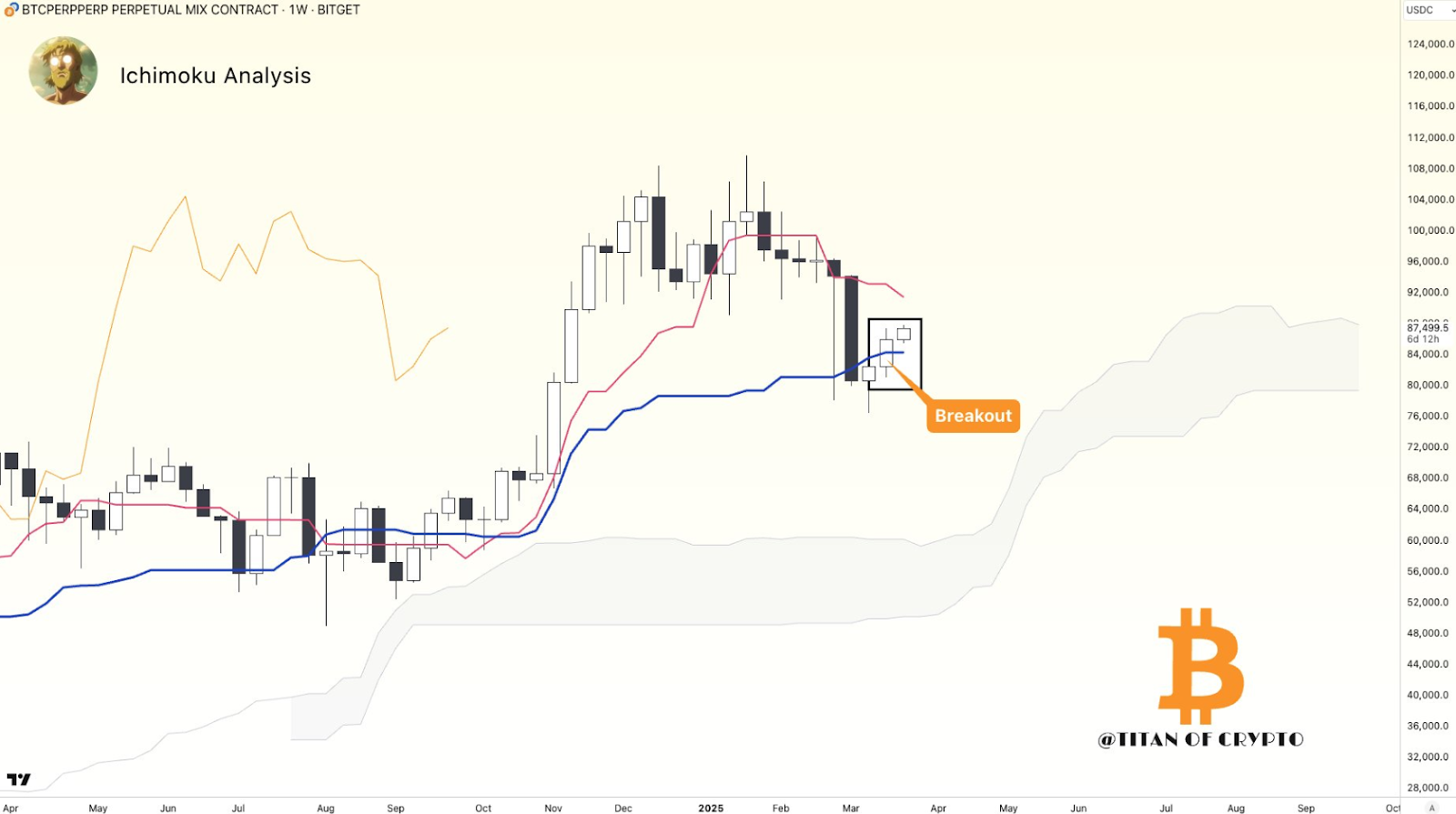
Moreover, the price breakout happened after a period of horizontal trend followed by a price decline. The strong candlestick closure above the Kijun line indicates potential continued upward movement.
Also, the price maintaining its position above this level would create a base for another upward movement.
Global Political and Institutional Sentiment Turns Toward Bitcoin
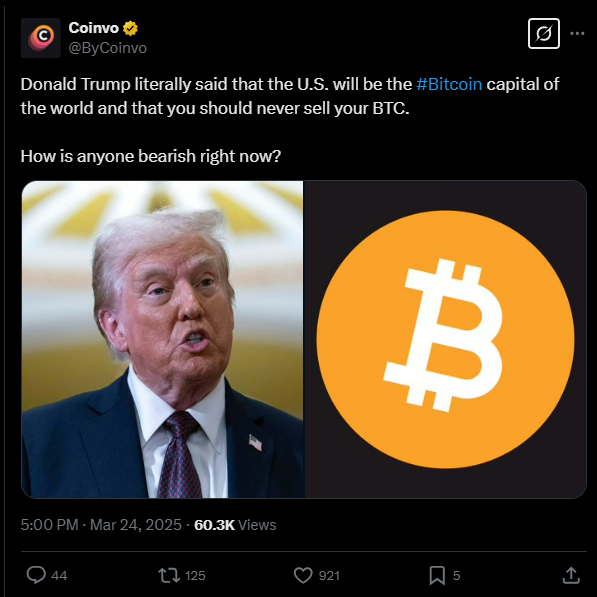
Beyond market trends, public and institutional interest in Bitcoin is growing. President Donald Trump emphasized making the U.S. the “Bitcoin capital of the world.”
He also advised holders to “never sell” their Bitcoin (BTC), signaling strong support for the cryptocurrency. Digital assets face rising political attention as this trend emerges during this period.
Meanwhile, BlackRock identified BTC as a “global monetary alternative” based on information from Coinvo. The asset management firm continues to invest in Bitcoin-related products. This highlights Bitcoin’s dual role as a store of value and a hedge asset for institutions.
Adding to the geopolitical developments, a Hong Kong ETF issuer stated China is “actively considering” changes to its crypto policy. The official confirmation about regulatory changes in China remains absent.
However, the statement has sparked speculation that Chinese barriers might become less stringent. The potential regulatory change in China could draw new capital and users from its massive market into the Bitcoin network.
Multiple political and institutional signals could lead to renewed market attention. Meanwhile, retail traders have not shown a complete recovery.
Disclaimer
In this article, the views, and opinions stated by the author, or any people named are for informational purposes only, and they don’t establish the investment, financial, or any other advice. Trading or investing in cryptocurrency assets comes with a risk of financial loss.