Minter
 Quack AI
 NEAR Protocol
 Pearl
Pearl Sui
Sui Pons
Pons Quantus
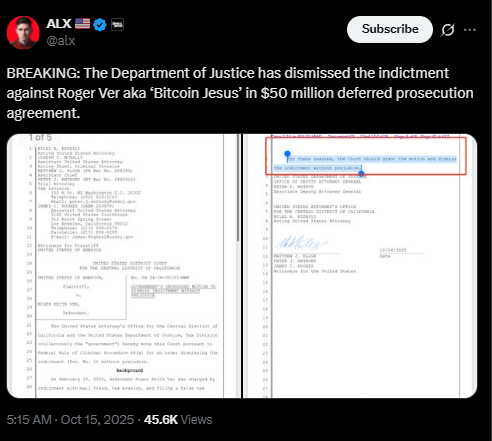
Roger Ver, known as “Bitcoin Jesus,” has reached a settlement with the U.S. Department of Justice (DOJ). Ver admitted that he didn’t disclose his Bitcoin holdings in 2014 when renouncing his U.S. citizenship.
The case has garnered interest due to the intersection of cryptocurrency, tax law, and political lobbying.
Ver’s Citizenship Renunciation and Hidden Assets
In 2014, Roger Ver relinquished his U.S. citizenship and became a citizen of St. Kitts and Nevis. At the time, he owned tens of thousands of Bitcoins, which were worth millions of dollars. U.S. law states that when a person renounces their citizenship, an “exit tax” is due.
This tax applies to all global assets, including cryptocurrency. Ver didn’t report his Bitcoin holdings to the Internal Revenue Service (IRS) and ended up in very hot water regarding taxes.
According to the U.S. Department of Justice (DOJ), Ver caused a $16.9 million loss to the U.S. government. Ver did not file the required tax forms, nor did he pay taxes on his Bitcoin.
The IRS commenced a criminal investigation into the case through its Criminal Investigation Cyber Crimes Unit.
Arrest, Settlement, and DOJ Agreement
In 2023, Roger Ver was taken into custody in Spain. He was subsequently extradited to the United States. The DOJ indicted him for tax evasion and related offenses.
In 2024, Ver entered into a deferred prosecution agreement with the DOJ. As part of this agreement, he accepted the charges against him.
He has consented to pay nearly $50 Million in taxes, penalties, and interest. This payment will include the amount he owes to his tax jurisdiction from the time he renounced his U.S. citizenship.
Under the terms of the deal, the DOJ dismissed its criminal case against Ver. He will not be prosecuted further if he adheres to the terms of the agreement. The case reinforces the importance of reporting cryptocurrency assets on tax returns.
Political Lobbying and Speculation
Ver allegedly paid political consultant Roger Stone $600,000 during the investigation. Stone’s connections to former President Donald Trump are well-known. Ver wanted Stone to advocate against the tax laws that had an impact on his case.
Ver also employed attorneys with political ties. Among them were Brian Ballard and Christopher Kise. Both have collaborated with Trump’s political and legal teams.
There were rumors that the President might pardon Ver. Ver’s chances of receiving a Trump pardon momentarily increased to 50% on the prediction platform Polymarket. Those odds fell to about 13% after the DOJ made the settlement public.
Reports also suggest the White House may consider a pardon for Binance founder Changpeng Zhao. This indicates a rise in political interest in well-known cryptocurrency cases.
Roger Ver’s case is one of the most significant tax settlements involving cryptocurrency. This settlement marks the end of a long legal battle.
It also sends a message to other crypto investors about the risks of hiding assets. As digital currencies grow in value and popularity, tax compliance remains a serious issue.