
 Altai the Tiger
 IGNITION
 streamoors
 NEAR Protocol
 Sui
Sui Ethereum
 Pudgy Penguins
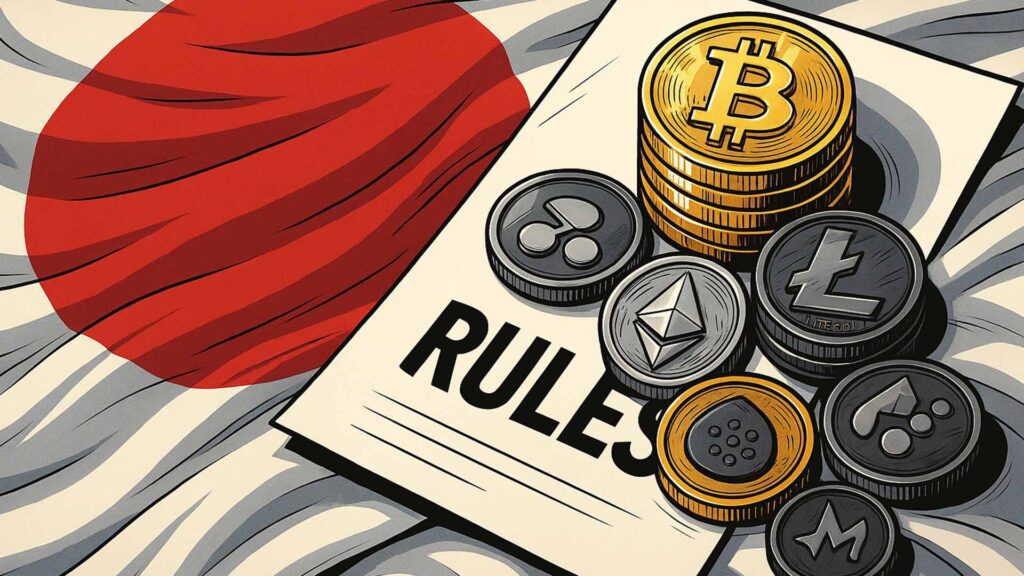
As of May 2025, Japan had approximately 12.4 million crypto-users. That represented roughly 15% of its adult population. The number of crypto accounts has climbed past the 12 million mark. It clearly signals rapid market growth in the East Asian country.
The number of crypto accounts in Japan has grown quickly. The Financial Services Agency (FSA) is drafting new rules. These rules will require crypto exchanges in Japan to set up liability reserves. The reserves will protect users from losses caused by hacks or operational failures.
This system would be similar to the requirements for securities firms operating in the country. They currently hold reserves of $12.7 million to $255 million.
Japan’s FSA to Submit Crypto Liability-Reserve Bill in 2026
The FSA could formally submit the bill to parliament in 2026. It would propose a much wider restructuring of the country’s digital asset rules. The crypto reserve requirement will be a part of the new changes the financial watchdog may suggest.
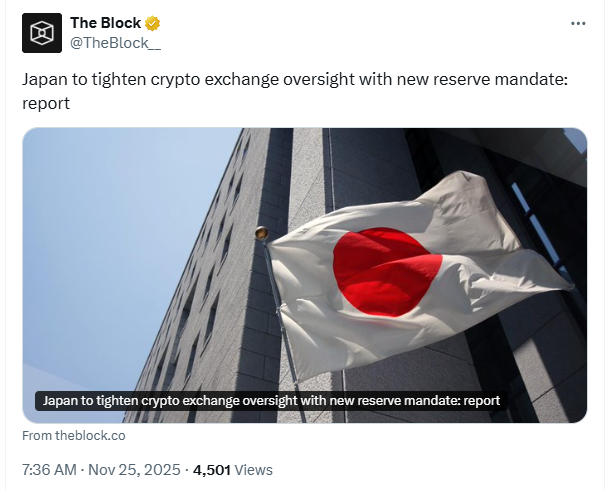
The FSA could support reclassifying cryptos as financial products. Thus, Japanese regulators will have broader authority.
Some market participants have criticized Japan’s high tax rates on crypto-gains. The FSA is reportedly considering, as part of its 2026 regulatory overhaul, reducing the tax rate on crypto gains.
Many new users are going to invest in cryptocurrencies in the coming years. The FSA’s reforms aim to modernize Japan’s cryptocurrency rules. They will give exchanges and investors clearer protections.
A Move to Protect Japanese Investors
Many Japanese cryptocurrency users have suffered significant losses due to security breaches at domestic cryptocurrency exchanges. The MT Gox incident in 2014 shocked the crypto industry when hackers looted 850,000 Bitcoins.
The DMM Bitcoin incident also caused a loss of approximately $3.5 million. North Korean hackers drained 4,502 BTC from the exchange.
Today’s crypto exchanges utilize state-of-the-art security solutions to deter suspicious individuals from accessing users’ funds.
Security breaches still occur, and people continue to lose millions of dollars’ worth of digital assets. That’s why Japan’s FSA is pushing the liability reserve bill to protect investors from potential losses.
The agency sees risks like fraud, weak custody, and hacks as serious threats. These problems hurt crypto users and weaken overall market confidence. Its proposed rules focus on insulating the system from liquidity shocks or collapses.
Supporting Innovation Under a Clearer Regulatory Framework
The FSA aims to offer a stable, trusted environment for crypto and digital-asset businesses to operate in Japan. The Japanese digital assets market could attract many new institutional and individual investors with clearer rules and stronger protections.
This way, the Financial Services Agency’s 2026 bill could support the growth of Japan’s fintech ecosystem. However, it could also pose an existential threat to small exchanges.
Japan’s FSA plans new rules for crypto exchanges. Exchanges must hold large liability reserves. They can also secure insurance to cover customer losses from hacks or failures.
The higher compliance cost may present challenges for smaller exchanges. It could force weaker firms out of the Japanese crypto market.