
 Quack AI
 Pudgy Penguins
 Injective
 Solana
 NEAR Protocol
 Canton
 Zcash
Zcash
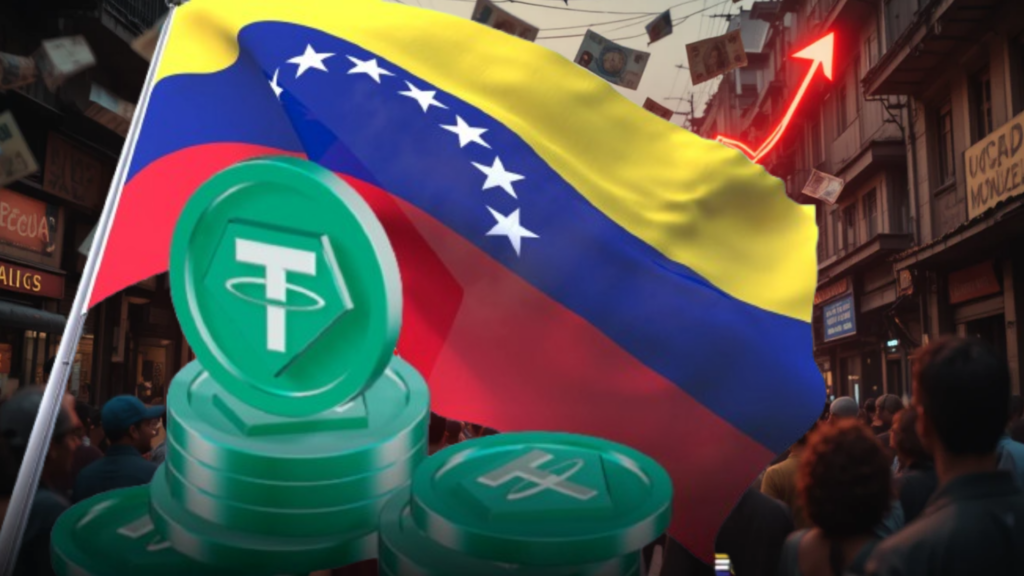
Venezuela is facing one of the world’s worst economic crises. Inflation is soaring, the bolívar is collapsing, and daily life has become extremely difficult. As prices rise and the currency loses value, people are turning to stablecoins like Tether (USDT) to protect their money.
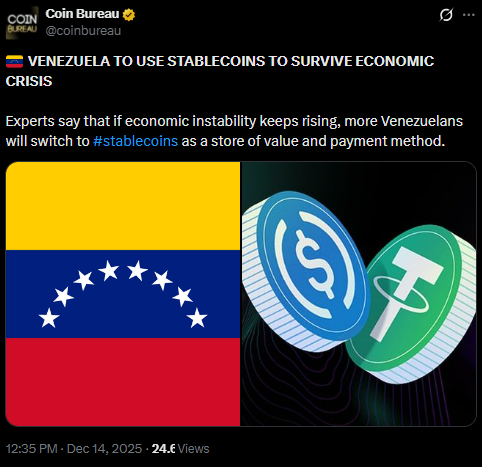
These digital assets offer stability in a country where cash becomes worthless within hours. With inflation projected to reach around 270% by the end of 2025, stablecoins have become a practical tool for survival in Venezuela.
Crypto News: Hyperinflation and the Fall of the Bolívar
The bolívar has lost most of its value over the past decade. Mismanagement, U.S. sanctions on oil exports, and political turmoil have weakened the economy.
Venezuela was once one of Latin America’s wealthiest nations. Today, it faces shortages, unreliable banking, and a GDP that has fallen by more than 75% since 2013.
The IMF’s October 2025 World Economic Outlook projects an average annual inflation rate of 269.9% for the year. Some analyses warn inflation could reach nearly 700% by the end of 2026.
Hyperinflation, defined as monthly inflation exceeding 50%, has rendered cash nearly useless. People cannot rely on the bolívar for savings or daily purchases.
This collapse has prompted Venezuelans to seek digital alternatives. Stablecoins, especially USDT, have become a popular choice because they are pegged to the U.S. dollar and hold steady value.
Stablecoins Become Everyday Money
Stablecoins now play a major role in Venezuela’s economy. USDT dominates peer‑to‑peer (P2P) platforms. TRM Labs reports that stablecoins are used for payroll, vendor payments, remittances, and cross‑border purchases. These digital assets fill gaps left by traditional banks.
TRM notes that “a significant share of crypto‑to‑fiat activity is facilitated through platforms supporting informal settlement rails—even amid reports of intermittent service disruptions.” Local apps with mobile wallets and bank integrations help people bypass the bolívar entirely.
Chainalysis’s 2025 Global Crypto Adoption Index ranks Venezuela 18th in overall crypto usage. When adjusted for population, Venezuela rises to 9th. This shows strong per‑capita adoption driven by necessity, not speculation.
Latin America as a whole is experiencing a crypto boom. The region received $1.5 trillion in on‑chain value between July 2024 and June 2025. Countries like Argentina and Brazil also face economic volatility. In Venezuela, industry estimates indicate that stablecoins account for more than 80% of cryptocurrency activity.
Experts attribute this trend to sanctions, political tensions, and a lack of trust in institutions. Oversight from the National Superintendency of Crypto Assets (SUNACRIP) remains unclear. TRM Labs warns that without economic improvement or stronger regulation, the use of stablecoins will continue to grow.
Daily Life, Challenges, and the Road Ahead
Stablecoins have changed daily life. In Caracas markets, vendors accept USDT through apps like Binance or local P2P exchanges. Payments are quick and stable.
Remittances from more than 7 million Venezuelans living abroad also arrive through stablecoins. These transfers avoid high fees and delays.
A Caracas merchant told local media, “The bolívar changes value by the hour; USDT doesn’t.” This grassroots adoption contrasts with the government’s failed Petro cryptocurrency launched in 2018.
Challenges still exist. Internet outages, platform restrictions, and scams affect users. Global regulators also closely monitor stablecoins due to money-laundering risks.
TRM Labs notes that Venezuelan usage is “overwhelmingly driven by necessity rather than speculation or criminal intent.”
Experts say strained U.S.–Venezuela relations under President Maduro could push even more people toward crypto. Chainalysis projects that Latin America could see $2 trillion in crypto inflows by 2026.
For Venezuela, stablecoins are more than technology. They are survival tools in an economy on the edge. As 2025 ends and inflation rises, stablecoins have become the anchor for millions.