
 Bitcoin
 Ondo
Ondo NEAR Protocol
 Walrus
 Pearl
Pearl Pons
Pons Ethereum
Solana is considering two governance proposals that could materially alter the network’s token economics. SIMD-550 would accelerate the decline in new SOL issuance, while SIMD-553 would introduce a resource-based fee designed to increase token burns.
According to 21Shares, the two proposals would reduce net supply growth from both sides. Lower issuance would reduce the number of new tokens entering circulation, while higher transaction-related burns would permanently remove more SOL from supply.
Solana Inflation Proposal Targets Faster Disinflation
The 21Shares report highlighted how the two proposals combine to reduce SOL issuance by targeting different aspects of the network. Helius SIMD-550 seeks to increase the network disinflation rate from -15% to -30%.
With the Solana inflation rate currently at 3.78%, this proposal will reduce the timeline for the network to reach 1.5% inflation rate from 5.7 years to 2.8 years. It ensures the network achieves the 1.5% rate by the first half of 2029, rather than the first half of 2032.
If passed, the proposal will also affect the Solana staking rate, reducing it from the current average of 5.25% to 2.25% by the end of the third year. This is the biggest impact of the proposal.
Meanwhile, SIMD-553 introduces a burn fee on requested compute units from financial activity. This could cause daily SOL burns, which are around 600-800 SOL, to jump to 7,500–9,000 SOL.
Together, the two proposals could reduce the SOL inflation rate by about $1.5 billion in six years. The third proposal will introduce the Solana Governance Proposal 0001, which is meant to govern the voting process.
SOL Stabilizes around $96 With Proposals Yet to Hit Quorum
The possibility of a sharp reduction in the SOL inflation rate represents a positive development for the token, which is currently rebounding. In the past seven days, the token had risen by almost 20%.
While it briefly climbed above $100, it has stabilized around $96 over the past two days. The token is now up 28% in the past 30 days, even as it remains down by 22% year to date.
If approved, the reduced inflation could cause a surge in SOL value. So far, those in support of the proposals remain the majority, but none of the three proposals has yet reached the quorum.
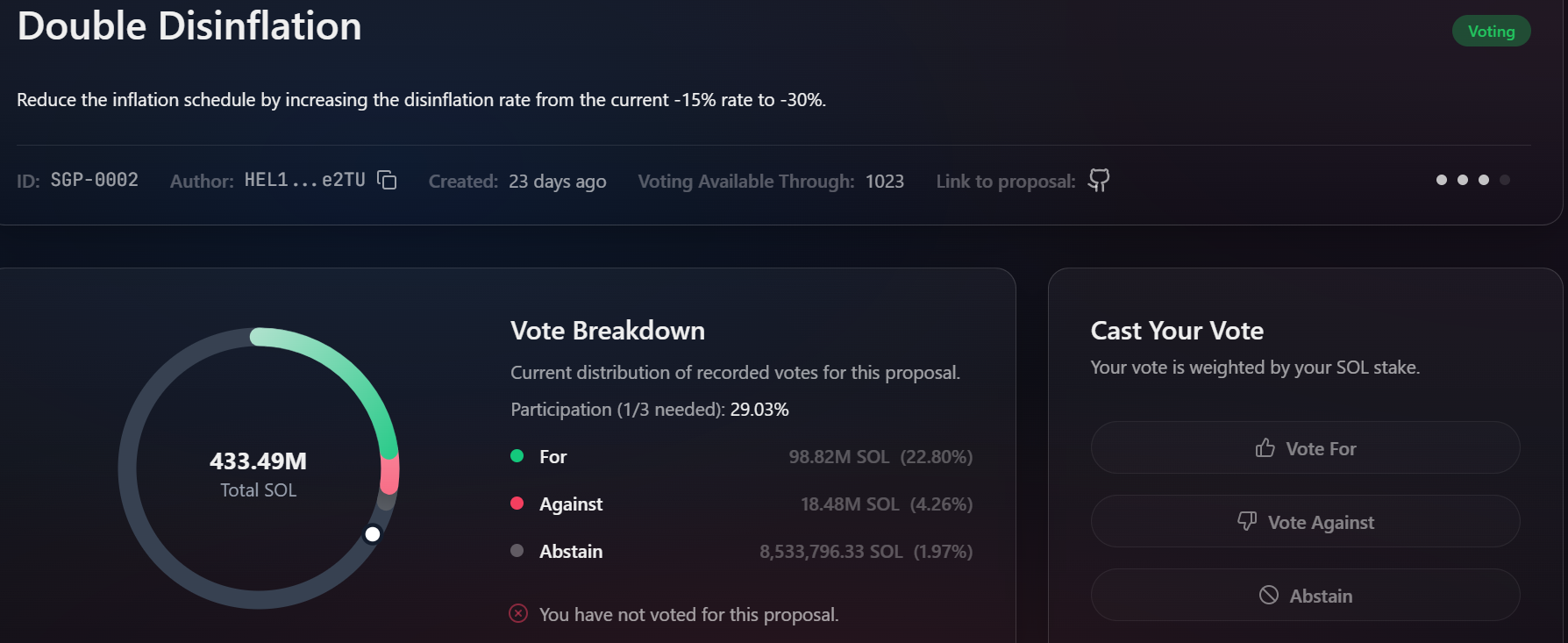
The voting, which started on Sunday, is scheduled to close on Thursday at 15:30 UTC, leaving only about a day for proposals to reach quorum and achieve a majority.
Unsurprisingly, there is also opposition to the proposals, mostly due to their potential impact on staking rewards. If SIMD-550 passes, staking yield could fall by half in just two years, raising concerns that several validators could become unprofitable over time.
However, supporters believe that the proposals could also redirect capital in the Solana ecosystem. Currently, Solana’s staking ratio is nearly 68%, compared to 34% on Ethereum. A lower staking yield could force investors to focus more on DeFi activity.
This article is for informational purposes only and does not constitute financial advice. Cryptocurrency markets can experience sharp price movements.