astronaut
 Pearl
Pearl Zylo Ecosystem
 Bitcoin
 Bitway
 NEAR Protocol
 Zcash
Zcash

Key Insights:
- Bitcoin holds above $100K despite persistent short-selling pressure.
- Exchange outflows hit 2022 levels, signalling accumulation trend.
- Dormant BTC transfers suggest institutional positioning underway.
Bitcoin remains above $100K as data shows rising exchange outflows and dormant wallet transfers. Analysts say BTC may form a new base before its next major breakout, with institutions possibly positioning for the second half of 2025.
Bitcoin Resists Selling Pressure, Holds $100K Line
Bitcoin price has held firm above the $100,000 mark for over two months, defying consistent sell-side pressure and showing signs of possible structural accumulation.
As of July 9, Bitcoin traded at $108,347. Despite dropping briefly to $98,300 on June 22, the asset reclaimed ground quickly and continues to trade near its cycle high of $111,800. The $100,000–$110,000 zone now acts as a potential new price floor, according to CryptoQuant data.
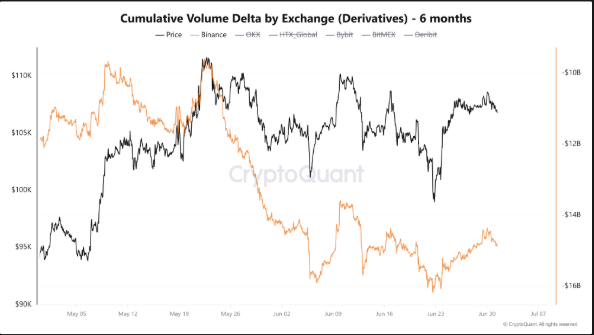
Market data shows that short traders have failed to force a meaningful breakdown below the $100,000 level. This comes despite persistent negative Cumulative Volume Delta (CVD) on Binance derivatives over the past 45 days.
Outflows Dominate as Onchain Metrics Turn Bullish
Data from CryptoQuant shows a steep drop in the 30-day exchange inflow/outflow ratio, now at 0.9. This level was last seen in late 2022, right before Bitcoin’s macro bottom near $15,500. A ratio below one indicates that more Bitcoin is leaving exchanges than entering, signaling accumulation behavior.
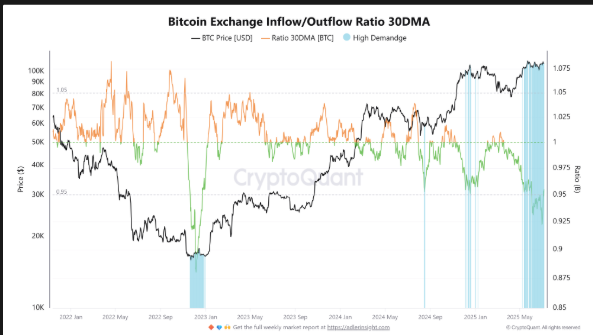
According to CryptoQuant analysts, this shift points to renewed long-term confidence in the asset. “This indicator has historically aligned with cycle lows and demand-driven reversals,” the firm noted in a recent post.
These metrics also highlight a growing divergence between short-term trader behavior and long-term holder activity. Investors pulling BTC off exchanges may be preparing for a longer holding horizon, a pattern seen ahead of previous bull cycles.
Institutions Move Coins From Dormancy
The bullish thesis gains weight from wallet activity flagged by analyst Maartunn. On July 2, more than 19,400 BTC, worth around $2.11 billion, moved from dormant addresses to institutional-grade wallets.
These coins, untouched for 3 to 7 years, shifted to known custodial or over-the-counter (OTC) service providers. Maartunn wrote on X, “Movements like these typically signal high-conviction allocation not speculative flows.”
While the exact origin remains unclear, such activity often correlates with institutional accumulation, especially during low-volatility periods. Historical data shows that long-dormant coin movements often coincide with macro bottom formation and pre-bull trend setups.
Absorption Indicates Strong Underlying Demand
Despite a prolonged phase of aggressive selling on Binance, Bitcoin has not broken its support. The persistent negative CVD suggests that takers have led the market with sell orders. However, the price reaction has remained muted.
This implies that strong bid-side support continues to absorb the pressure. CryptoQuant’s structural interpretation suggests accumulation by stronger hands, possibly institutional buyers, as the market absorbs weak-side flows.
The current setup mirrors past periods of accumulation in 2020 and late 2022. Then, price compression amid negative sentiment preceded long-term upward moves.
$100K Could Mark a Structural Bottom
If the onchain and flow trends persist, $100,000 could serve as a durable structural bottom. The outflow/inflow ratio, wallet activity, and muted downside moves all point to demand outweighing sell pressure.
Bitcoin’s ability to hold this level amid short interest and low volatility may reflect a broader macro shift. Institutional flows, long-term holder behavior, and exchange outflows now paint a picture of accumulation.
While short-term volatility remains a risk, the data-backed signals suggest Bitcoin may be preparing for another upward leg in the second half of 2025.
Disclaimer
This article is for informational purposes only and provides no financial, investment, or other advice. The author or any people mentioned in this article are not responsible for any financial loss that may occur from investing in or trading. Please do your research before making any financial decisions.